A cultural village tour in Zanzibar takes two to three hours and is run by community cooperatives in villages such as Jambiani, Nungwi, Kizimkazi and Bwejuu, covering daily life, local trades and the work that supports the coast. Tours are booked through your accommodation or directly with the village association. Money from these tours goes into the community rather than to an outside operator.
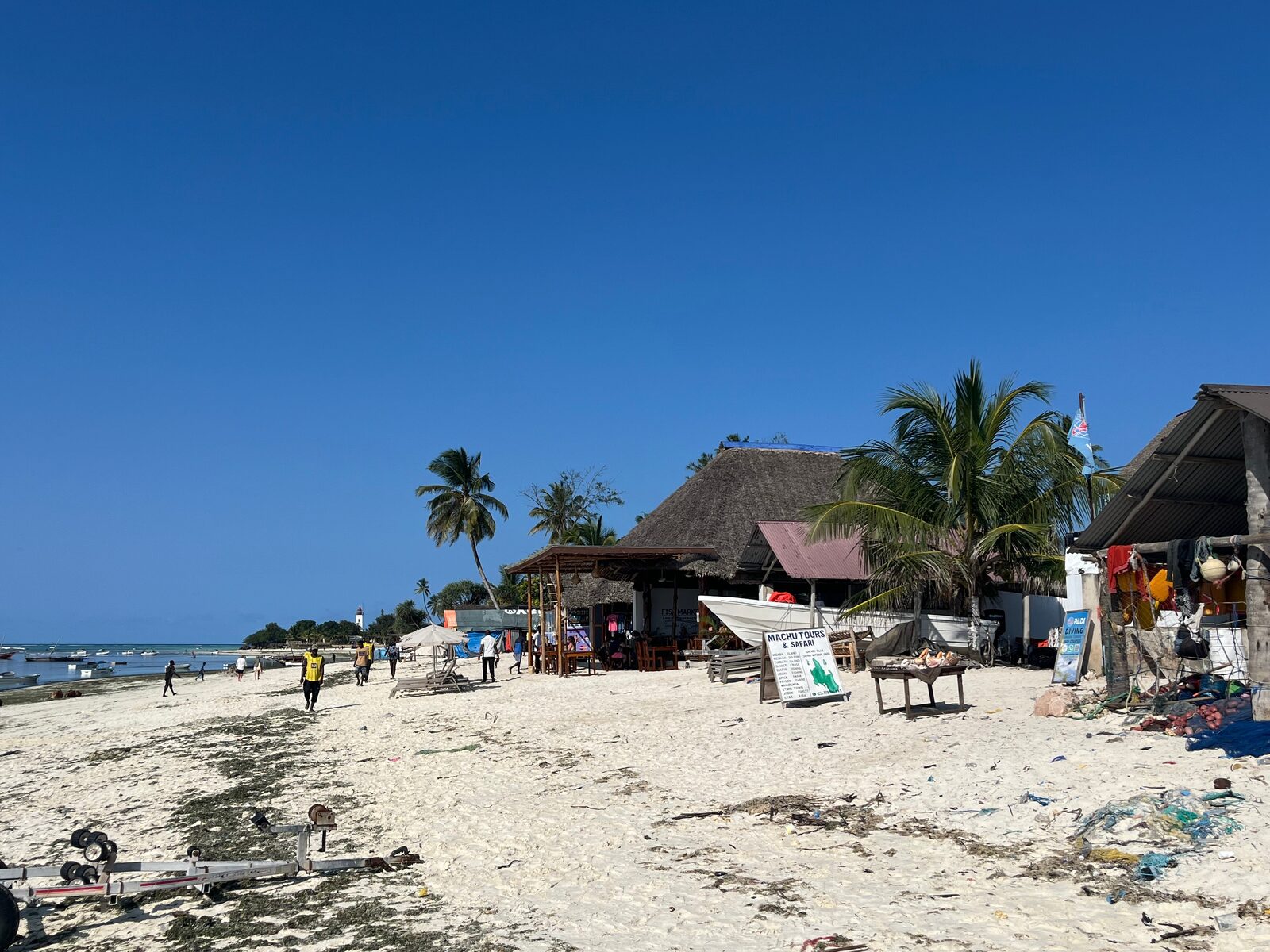
These are the trips visitors most often skip and most often mention afterwards, largely because they are the only part of a Zanzibar holiday that is not arranged around you.
What a Village Tour Actually Covers
The format varies by village, and the outline is broadly consistent.
You walk rather than drive, usually with a guide from the village itself. The route takes in ordinary streets rather than a prepared circuit: family compounds, the school, the mosque from outside, small shops, a workshop or two, and whatever trade the village lives on.
Along the way you stop at working sites rather than displays. A rope maker twisting coconut fibre. Women tending seaweed plots on the tidal flats. A boat builder shaping a hull by hand. Someone weaving palm leaf into matting or baskets. A bakery producing bread for the whole village at four in the morning.
Two to three hours is standard. Nothing is staged, which means some days are busier than others and what you see depends on the tide, the season and what people happen to be doing.
Book through your accommodation or directly with the village association rather than through a platform. The difference in what reaches the community is substantial, and village guides know who is working that day.
Which Villages Run Tours and What Each Shows
Jambiani, east coast. The strongest for seaweed farming, with cooperatives running tours across the tidal flats, plus rope making, coconut processing and village life along a long strung out village where guesthouses sit between family homes.
Nungwi, north coast. Dhow building on the sand at the northern end, where hulls are still cut and formed by hand, alongside fishing and the turtle lagoon. A working edge sitting oddly beside the busiest tourist strip on the island.
Kizimkazi, south coast. Two fishing villages with boats coming in at dawn, nets repaired on the sand, ancient ruins scattered nearby and the Dimbani mosque dated by inscription to 1107.
Bwejuu and Paje, east coast. Seaweed farming again, plus the everyday pace of villages that have absorbed tourism without being replaced by it.
Inland villages around the spice belt run tours too, usually combined with a spice farm tour, showing farming and food production rather than coastal trades.
The Trades You Will See
What holds a village tour together is work, and most of it is unfamiliar enough to be genuinely interesting.
Seaweed farming is the defining trade of the east coast. At low tide the flats fill with women tending rows tied to wooden stakes, harvested and dried on palm leaf matting for export into cosmetics, food and pharmaceuticals.
Coconut is processed for almost everything: the flesh grated and pressed for milk, the husk twisted into rope, the shell used as fuel and utensils, the leaves woven into matting and roofing. A single tree supports a household in more ways than most visitors expect.
Fishing runs the north and south coasts, with hand lines, nets and traditional ngalawa outrigger canoes, and boats returning through the morning to be met on the sand.
Boat building at Nungwi produces hulls built without plans, using techniques passed down rather than drawn.
Village Life and What Shapes the Day
Some background that makes a village walk considerably more legible.
These are predominantly Muslim communities, and the five daily prayers structure the day. The call to prayer carries across the village, shops pause, and Friday midday is the busiest religious hour of the week, when much of the village stops entirely for an hour or two.
Households are extended rather than nuclear, with compounds holding several generations, and children move freely between them. The women’s and men’s spheres of work are more separated than most visitors are used to, which is why seaweed farming is almost entirely women and boat building almost entirely men.
Water is a daily concern. Many households collect from communal taps or wells rather than having a supply at home, and the queues at the tap are one of the more revealing things you will walk past.
During Ramadan the whole pattern shifts. Daylight hours are quiet, the pace slows markedly, and the evening meal becomes the centre of the day. Visitors remain welcome, and eating or drinking openly in the street during daylight is noticed.
Where the Money Goes
This is the reason to prefer a community run tour over a packaged one, and it is worth knowing about.
Village cooperatives and associations run these tours directly, and the income goes into the households involved and into shared village projects, most commonly schools and water supply. Guides are from the village, which is also why the explanations are better than an outside guide could give.
By contrast, a village visit bolted onto a larger packaged tour typically pays a small fee to whoever is showing you round and keeps the rest.
Ask when booking who runs the tour and where the money goes. The answer comes quickly from community operations and slowly from everyone else.
Nothing on a village tour has been arranged for you, which is exactly why it is worth doing. You are looking at a working morning rather than a performance.
Etiquette, Photography and Behaving Well
You are walking through people’s homes and workplaces, and the standards matter more here than anywhere else on a Zanzibar itinerary.
Cover shoulders and knees, for men and women alike. Beachwear in a village reads as disrespectful whatever the temperature, and a khanga wrap bought locally solves it for very little.
Ask before photographing anyone, every time, and accept a refusal without pressing. Children will ask to be photographed and often ask for money or sweets afterwards, and most people working in these communities advise against giving either, since it encourages children to work visitors rather than attend school. Give to the village fund instead if you want to contribute.
Do not enter mosques or private compounds unless invited. Greet people; a simple jambo or habari goes a long way and is expected rather than optional.
What to Expect From the Experience
Being honest about this helps, because expectations vary widely.
These tours are not slick. Timings run loosely, the guide’s English may be functional rather than fluent, and some of what you see is straightforwardly poor: thin housing, limited water, children out of school. That is part of what you came to understand rather than something to be edited out.
What you get in return is the background to everything else on the island. The seaweed on the beach outside your hotel, the price of a room, the persistence of beach vendors and the state of the roads all make more sense afterwards.
Most visitors come away having had one long conversation they did not expect. That is usually the part they describe when they get home.
Combining a Village Tour With Other Trips
Village tours slot easily into a day because they are short and local.
On the east coast, a morning village walk at Jambiani pairs naturally with Kuza Cave a short drive inland, or with Jozani Chwaka Bay National Park around twenty minutes away.
In the north, a Nungwi village tour fits alongside a boat trip or a turtle lagoon visit, and takes about half a morning.
In the south, a Kizimkazi village walk follows naturally from a dawn dolphin trip, when you are already in the village and the boats are coming in.
Inland, community tours around the spice belt combine with a spice farm and often include a cooking element.
When to Go and What to Bring
Timing matters most on the east coast, where the seaweed farming happens at low tide and the flats are only workable at certain hours. Ask your guide to schedule around the tide table rather than the clock.
Mornings are cooler and busier with activity everywhere. Fridays see a pause around midday prayers. During Ramadan the pace of village life slows considerably and daylight hours are quiet, though visitors remain welcome.
Bring closed shoes, water, sun protection and cash in small Tanzanian shilling notes for anything you buy directly from a maker. Repellent helps on inland walks. Leave valuables at your accommodation, as you would anywhere.
Frequently Asked Questions About Cultural Village Tours
How much does a cultural village tour cost?
Community run village tours typically cost around $15 to $30 per person for two to three hours, with the money going into the village. Combined tours that add a spice farm or a cave run higher, at roughly $35 to $50. Tipping your guide separately is customary. Bring small Tanzanian shilling notes for anything bought directly from a maker.
Which village tour is best in Zanzibar?
Jambiani on the east coast for seaweed farming and the fullest picture of coastal village life. Nungwi in the north for dhow building and fishing. Kizimkazi in the south for a working fishing beach and the Dimbani mosque, dated to 1107. Choose by what is near where you are staying, since these are short local walks rather than day trips.
Are village tours exploitative?
It depends entirely on who runs them. Tours operated by village cooperatives put income directly into the households and community projects, and the guides are from the village. Village stops bolted onto packaged tours typically pay a small fee and keep the rest. Ask who runs the tour and where the money goes before booking.
Should you give money or sweets to children?
Most people working in these communities advise against both, since it encourages children to work visitors rather than attend school, and it changes how visitors are received over time. If you want to contribute, give to the village fund or the cooperative running the tour, or buy something directly from a maker at a fair price.
What should you wear on a village tour?
Shoulders and knees covered, for men and women. Zanzibar’s population is predominantly Muslim and beachwear in a village reads as disrespectful. A khanga wrap bought at Darajani Market or locally costs very little and covers it. Closed shoes for uneven ground, plus water and sun protection.
Can you photograph people on a village tour?
Ask first, every time, and accept a refusal without pressing. Many people will agree, some will not, and a few will ask for a small payment, which is a fair transaction if you accept it up front. Do not photograph inside mosques or private compounds, and do not photograph children without a parent’s agreement.
The value of a village tour depends almost entirely on who is running it and whether the money stays in the village, and that is difficult to establish from a booking platform. Holidays To Zanzibar works with community cooperatives directly and will tell you plainly which tours are run by the village and which are not.
For a village walk arranged around the tide and near where you are staying, contact Holidays To Zanzibar and a real person will reply.