Kitesurfing at Paje runs in two wind seasons: the kaskazi from the northeast between roughly December and March at 12 to 20 knots, and the stronger kusi from the southeast between June and October at 15 to 25 knots. A reef protected lagoon gives flat shallow water for learning. Paje sits on Zanzibar’s southeast coast on Unguja, and it is the island’s kitesurfing centre.
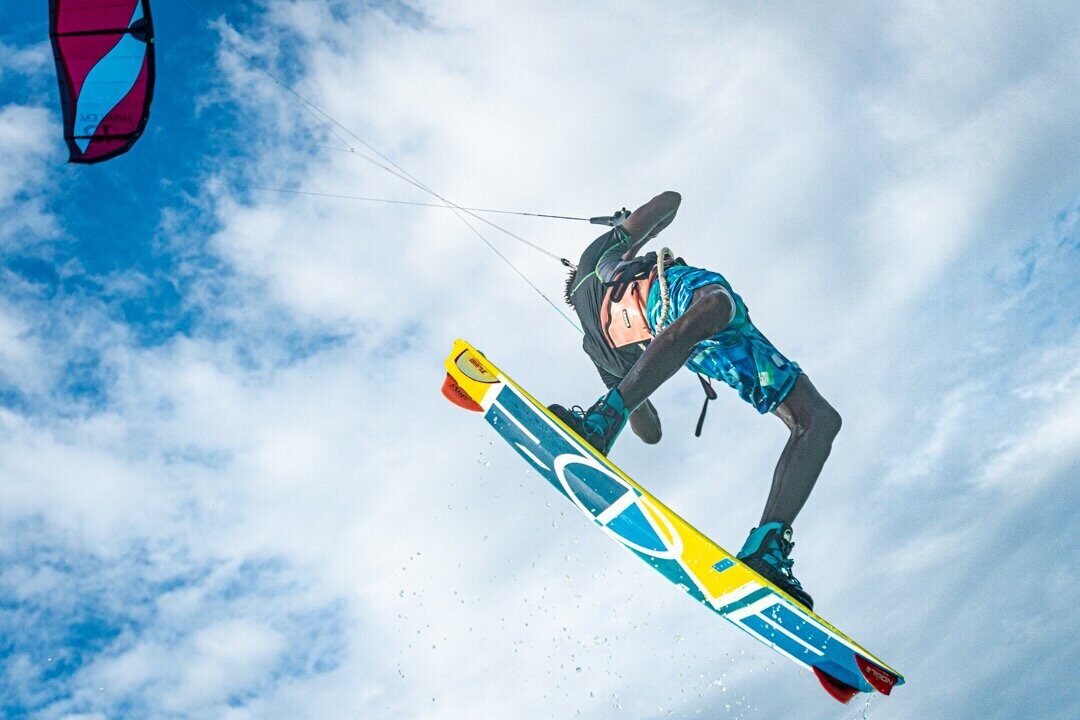
The single most important planning decision here is the month. Outside the two wind seasons the beach looks identical in photographs and the kites stay on the ground.
Why Paje Works as a Kitesurfing Spot
Three things line up here, and it is the combination rather than any one of them that built the reputation.
A coral reef sits well offshore, and between the reef and the beach lies a broad lagoon that stays flat and shallow across a wide area. That gives you standing depth water with no chop, which is what a beginner needs and what a freestyler wants.
The wind is side onshore, which is the safest orientation for learning, since a rider who loses control drifts towards the beach rather than out to sea. Average wind speed sits around sixteen knots and usually builds through the afternoon and into the early evening.
The beach itself is wide, giving room to set up and launch without crowding, and the bottom visibility in clear water makes it easy to see what you are riding over.
Check the wind season before you book anything else. April, May and November are close to dead months for kiting here, and no amount of good accommodation compensates for a lagoon with no wind on it.
The Two Wind Seasons and Which Suits You
Kaskazi, mid December to mid March. Northeast wind at roughly 12 to 20 knots, warmer and lighter. The better season for beginners and recreational riders, and good for freestyle in flat water. Best beginner window runs to about mid March.
Kusi, mid June to mid October. Southeast wind, stronger and more consistent at around 15 to 25 knots. The main season, better suited to intermediate and advanced riders who want power. Experts tend to favour mid June to mid September.
April, May and November. The transitional gaps between monsoons, when wind is patchy and unreliable. Schools go quiet and many riders stay away. April also coincides with the heaviest rain of the year.
Daily pattern. Wind is usually strongest in the mornings and again through the afternoon into early evening, building towards the end of the day. Variations happen, so check the wind history rather than treating the seasons as guarantees.
Learning to Kitesurf at Paje
Paje is one of the better places in the world to learn, largely because the lagoon does so much of the work for you.
Schools along the beach range from locally run operations to international brands, several of them certified by the International Kiteboarding Organisation. A standard beginner course covers kite control on the beach, water relaunch, body dragging and then board starts, typically spread across several days rather than one.
Tides matter to lessons more than most people expect. At low water the lagoon is shallow and calm, which is ideal for beginners still spending time in the water. At high tide there is more space and mild chop, which suits riders who are already up and moving.
Two things worth asking before booking a course: instructor to student ratio, and whether the school teaches in a language you are comfortable learning in. Several schools here teach in English, French, Dutch, Polish and Swahili.
Equipment, Rental and What to Bring
You do not need to bring a board. Schools and rental shops along the beach carry a full range of kites and boards, and hauling equipment across the world for a week is rarely worth it.
What is worth bringing is your own harness, which is the one piece where fit matters and rental stock is hit and miss. A helmet and impact vest if you use them.
Water shoes or booties matter here rather than being optional. The lagoon holds sharp shells and sea urchins, particularly at low tide, and a urchin spine ends a session immediately. A wetsuit is not needed given water temperatures rarely drop below twenty five degrees, though some riders wear a thin two millimetre suit during the kusi season for wind chill rather than water temperature.
A rash vest does more than sun cream for a full day on the water, and reef safe protection matters in a lagoon this shallow.
Flat, waist deep, warm water with side onshore wind. If you were designing a place to learn this sport, it would look a lot like Paje.
Riding the Lagoon: Tides, Seaweed and Hazards
The lagoon is not empty, and knowing what is in it saves both your kit and the environment.
Seaweed farms are worked across the flats by local cooperatives, with rows tied to wooden stakes. They can be crossed at mid to high tide but need care, and they are somebody’s livelihood rather than an obstacle. Riding through them at low water damages the crop.
Sea urchins and sharp coral sit across the flats, which is why booties matter. Tidal range is extreme here, with the waterline moving hundreds of metres, so the rideable area changes completely through the day.
Other users share the water: fishermen, walkers on the flats, swimmers near the shore. Right of way conventions matter more on a busy day in high season than anywhere else on the island.
Dolphins and turtles are seen along this coastline and occasionally in the lagoon, which is a good reason to look where you are going.
Other Spots on the Island for Riders
Paje takes almost all the traffic, and it is not the only rideable water on Unguja.
Jambiani, immediately south, shares the same lagoon, the same reef protection and the same wind, with a fraction of the kites in the air. Riders who want space rather than a scene often base themselves here and ride the same water.
Bwejuu, north of Paje, offers the same again with even fewer people and correspondingly fewer schools and rental options, which suits independent riders with their own gear.
Michamvi on the peninsula and stretches of the northeast coast pick up wind in certain conditions, and local schools sometimes run downwinders along the coast when the direction suits.
The north coast at Nungwi and Kendwa is not a kiting destination. It escapes the tidal flats that create the flat water lagoon, which is exactly what makes it good for swimming and poor for learning to ride.
Where to Stay and What Paje Is Like Off the Water
Paje has grown around this sport and the village reflects it. The crowd is young, international and budget conscious, with a large remote working population that has settled in over recent years, and the beach bars are busy in a way that suits some people and not others.
Accommodation runs from hostels and simple bungalows to boutique properties, and several places operate as kite camps designed around easy lagoon access. Prices on this coast sit well below the north, commonly by thirty to forty percent.
Everything in Paje is within walking distance from the beach. To go further, dala dala minibuses run cheaply to Stone Town and along the coast, and shared taxis operate from town.
Jambiani just south offers the same lagoon and wind with a far quieter village, which suits riders who want the water without the scene.
Beyond Kitesurfing: What Else Fills the Days
Wind does not blow every day even in season, and the surrounding area has enough to absorb a blank one.
Jozani Chwaka Bay National Park is around twenty minutes away, with habituated Zanzibar red colobus monkeys feeding beside the main trail. Kuza Cave near Jambiani is a limestone sinkhole with a swimmable freshwater pool and a Swahili culture centre.
The Rock restaurant at Michamvi sits fifteen to twenty minutes north, and the western side of that peninsula is where east coast residents go for sunset, since Paje itself faces sunrise.
Stone Town is an hour by road, which makes a day trip entirely reasonable on a windless day.
Frequently Asked Questions About Kitesurfing at Paje
How much do kitesurfing lessons cost at Paje?
Private lessons run around $50 per hour at the better equipped international schools, with locally run operations charging less. Multi day beginner courses are priced as packages rather than hourly and work out cheaper per hour. Equipment rental is charged separately unless included in a course. Accommodation on this coast runs $20 to $50 for simple bungalows and $60 to $150 for boutique properties.
When is the kitesurfing season at Paje?
Two seasons. The kaskazi blows from the northeast from mid December to mid March at roughly 12 to 20 knots, warmer and lighter, better for beginners. The kusi blows from the southeast from mid June to mid October at around 15 to 25 knots, stronger and better for advanced riders. April, May and November are unreliable and schools go quiet.
Is Paje good for complete beginners?
Among the best anywhere. The reef sits well offshore leaving a broad flat lagoon that stays shallow enough to stand in across a wide area, and the wind is side onshore, which means a rider losing control drifts towards the beach rather than out to sea. Low tide gives the calmest conditions for early lessons.
Do you need your own equipment?
No. Schools and rental shops along the beach carry a full range of kites and boards, so bringing gear across the world for a week is rarely worth it. Worth bringing your own harness, since fit matters and rental stock varies. Water shoes are close to necessary for urchins and sharp shells, and no wetsuit is needed given water temperatures stay above twenty five degrees.
How do tides affect kiting at Paje?
Considerably. The waterline moves hundreds of metres between low and high water. Low tide gives shallow calm conditions suited to beginners still spending time in the water. High tide opens more space with mild chop, which suits riders already up and moving. Seaweed farms across the flats can be crossed at mid to high tide but need care and are somebody’s livelihood.
What is there to do at Paje when there is no wind?
Jozani Chwaka Bay National Park is about twenty minutes away with entry at $10 to $12 including a ranger guide. Kuza Cave near Jambiani costs around $10 and has a swimmable freshwater pool. The Rock restaurant at Michamvi is fifteen to twenty minutes north. Stone Town is an hour by road, and dala dala minibuses cost around $1.50 per person.
Paje is easy to arrange independently, and the parts worth getting right in advance are the season, the school and somewhere to stay within reach of the lagoon. Holidays To Zanzibar can line all three up and build in the inland trips that cover a windless day rather than leaving you to work them out on the spot.
For a kite trip planned around the wind season rather than a hotel photograph, contact Holidays To Zanzibar and a real person will reply.