Nungwi and Kendwa on Zanzibar’s north coast allow swimming at any hour, while Paje, Jambiani and Matemwe on the east coast sit on a shallow shelf where the sea can pull back hundreds of metres at low tide. Most visitors book a beach holiday around that single difference. All five are on Unguja, the main island of the Zanzibar Archipelago, within one to two hours of Stone Town by road.
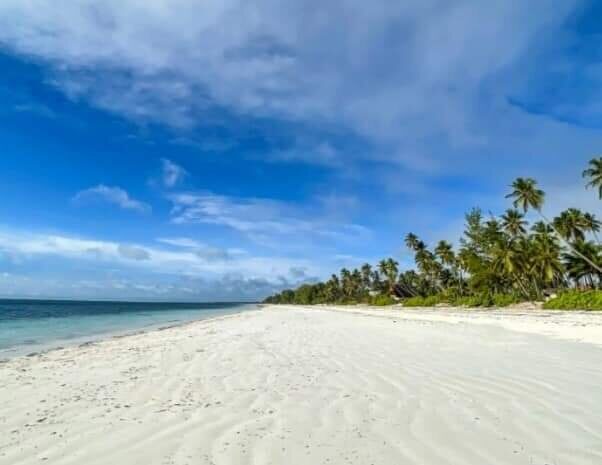
Nobody tells you this before you book, and it is the thing people most often get wrong. The beaches are not interchangeable. Picking the pretty photograph rather than the right coast is how you end up walking half a kilometre across coral flats to reach water you thought was outside your room.
Nungwi Beach Holidays on the Northern Tip
A Nungwi beach holiday sits at the very top of the island, where the coastline turns the corner and escapes the tidal flats that govern everywhere east. The water stays deep enough to swim in all day, every day. That is the whole appeal, and it is not a small one.
Nungwi is also the busiest beach on Unguja. It began as a fishing and dhow building village, and boat builders still work on the sand at the northern end, but the strip behind the beach now runs to hotels, restaurants, bars, tour desks and shops packed tightly together. Boats leave from here for snorkelling, fishing and sunset sailing throughout the day.
The energy suits some people and not others. If you want to walk out of your room, swim, eat somewhere different every night and book an excursion at short notice, Nungwi is the practical choice. If you want quiet, it is not.
Beach vendors and touts along the sand are more persistent here than anywhere else on the island. A friendly, repeated no works fine.
Kendwa Beach Tours and Sunset Evenings
Kendwa lies a few kilometres south of Nungwi on the same north west facing coast, and it shares the same freedom from serious tides. What it has instead of Nungwi’s density is space. The sand is wider, the properties are set further apart, and the whole beach feels calmer without being isolated.
Sunset is Kendwa’s defining feature. Facing west across the channel, the sun drops directly into the sea in front of the beach, with dhows at anchor in the foreground. Most Zanzibar beach tours that promise a sunset end up here or on a boat off this stretch.
There is a nightlife side too. Kendwa Rocks runs a well known party on Saturdays, which becomes a full moon party when the two coincide, drawing people up from across the island. Book elsewhere on the beach if that is not your idea of an evening, since Kendwa is otherwise one of the more relaxed places to stay in the north.
If you can only swim at certain hours, plan around it rather than fighting it. East coast mornings at low tide are the best time for reef walking, seaweed farm visits and long flat walks; save swimming for the incoming tide and use the pool in between.
Paje Beach Kitesurfing Trips on the East Coast
Paje kitesurfing trips are the reason this stretch has an international reputation out of proportion to its size. A reef sits offshore, and between it and the beach lies a broad, flat, waist deep lagoon. Add steady trade winds and you have close to perfect learning conditions, which is why Paje is packed with kite schools.
The wind seasons matter. The kaskazi blows from the north east roughly December to March, and the kusi from the south east roughly June to September. Those are the reliable months. Outside them the wind is patchy and schools go quiet.
Paje has a young, international, budget conscious crowd, a run of beach bars, and a large remote working population that has settled in over recent years. It is social in a way that Jambiani and Matemwe are not.
The tide here is dramatic. At low water the sea retreats a long way across the flats, exposing coral, sea urchins and seaweed plots. Reef shoes are worth having.
Jambiani Beach Tours and Seaweed Farm Visits
Jambiani runs south from Paje along the same coast and offers the same lagoon and the same tides with a fraction of the noise. It is a long, strung out village where the guesthouses sit between family homes rather than in a resort strip, and it feels closer to how the east coast operated before tourism arrived.
Seaweed farming tours are the local speciality. At low tide the flats fill with women tending rows of seaweed tied to wooden stakes, harvested and dried for export to the cosmetics and food industries. It has been one of the main sources of income for coastal women here for decades, and warming sea temperatures have made it harder in recent years. Village tours run by local cooperatives explain the work and put money directly into the community.
Accommodation here skews towards small guesthouses and beach bungalows, and prices sit well below the north coast. Anyone wanting a slow week with village life around them rather than a resort tends to end up in Jambiani.
Matemwe Beach Trips and Access to Mnemba Atoll
Matemwe faces east on the north eastern coast, and its advantage is what lies offshore. Mnemba Atoll, the best snorkelling and scuba ground in Zanzibar, sits directly opposite, a short boat ride out. Nowhere else on the island is closer.
The beach itself is long, quiet and tidal in the same way as Paje and Jambiani, with the water pulling well back at low water. Development here runs to boutique lodges and a handful of high end properties spaced along the coast rather than a strip, which makes it a common choice for honeymooners and for anyone whose trip is built around the reef.
A fishing village sits behind the beach and dhows work the water in front of it, so it does not feel sealed off, whatever the price point of some of the lodges.
Tides and Seaweed: How the Two Coasts Differ
North coast, Nungwi and Kendwa. Minimal tidal variation. Swimming possible through most of the day. No seaweed accumulation on the beach at any point in the year. Busier, more expensive, more to do on foot.
East coast, Paje, Jambiani and Matemwe. Large tidal swings, with the waterline moving hundreds of metres and up to a kilometre on some stretches. Kitesurfing, reef walking and working seaweed plots. Quieter and cheaper, and swims need timing around the tide.
The seaweed point is worth stating plainly, since photographs never show it. Between roughly November and April, and particularly in April, natural seaweed accumulates along the east coast beaches. It is not pollution and it is not debris; it is part of the coastal cycle and part of what people farm. It does change the look of the beach. The north coast stays clear of it year round.
Choosing Between Coasts for Your Zanzibar Beach Tour
The honest test is a single question: do you need to be able to swim in the sea whenever you feel like it?
If yes, particularly with children who will not accept the answer that the sea has gone away for four hours, book the north. Nungwi for convenience and activity, Kendwa for the same water with more space and better sunsets.
If you are happy to work around a tide table, the east opens up quieter beaches, lower prices and better character. Paje if you want to kitesurf or want company. Jambiani for slow days and village life. Matemwe if the reef is the reason you came.
Plenty of people split a week between two: a few nights on the east coast and a few in the north, or Stone Town first and then one beach. Moving once is easy; moving three times eats the holiday in transfers.
Choose the coast first and the hotel second. Doing it the other way round is how people end up somewhere beautiful that does not suit them.
Getting to the Beaches From Stone Town
All five beaches are reached by road from Zanzibar City, and transfers are usually arranged through your accommodation. Nungwi and Kendwa sit roughly one and a half hours north. Matemwe is around an hour to an hour and a quarter north east. Paje and Jambiani are about an hour east and south east.
Shared shuttles run between the main beach areas and Stone Town at fixed times for a fraction of a private transfer. Dala dala minibuses cost almost nothing and take considerably longer. Pre booking an airport transfer through your hotel avoids the inflated quotes waiting at arrivals, particularly for the longer runs north.
Best Time for a Zanzibar Beach Holiday
June to October. The long dry season and the best all round conditions. Clear skies, low humidity, calm seas and good underwater visibility. Kusi winds suit kitesurfing at Paje from June to September. Peak prices.
January and February. Hot, dry and bright, with kaskazi winds for kitesurfing. Good water clarity. Busy but usually cheaper than the mid year peak.
March to May. The long rains, heaviest in April. Sea visibility drops, seaweed on the east coast peaks, and some properties close. Lowest prices of the year.
November and December. Short rains, mostly brief afternoon showers. Decent value until the Christmas and New Year surge, which is the sharpest price spike of the year.
Frequently Asked Questions About Zanzibar’s Beaches
Which is the best beach in Zanzibar?
There is no single answer, and anyone giving you one is selling something. Nungwi and Kendwa for all day swimming and easy access to restaurants and excursions. Paje for kitesurfing and a social scene. Jambiani for quiet and village life. Matemwe for reef access to Mnemba Atoll. Match the beach to what you actually want to do rather than to a photograph.
How much do beach hotels cost in Zanzibar?
Simple guesthouses and bungalows run roughly $20 to $50 per night, most commonly on the east coast. Boutique hotels and mid range beach properties sit around $60 to $150. Resorts and high end lodges start near $200 and reach $800 or more in peak season, with the north coast and Matemwe carrying the highest rates. East coast beaches are commonly 30 to 40 percent cheaper than the north for comparable standards.
Which Zanzibar beaches have tides that affect swimming?
Paje, Jambiani, Matemwe, Kiwengwa, Pongwe and Bwejuu all sit on a broad shallow shelf where the waterline can move hundreds of metres, sometimes around a kilometre, at low tide. Nungwi and Kendwa on the north coast are largely unaffected and remain swimmable through most of the day. Check a tide table for your dates before booking on the east coast.
Is there seaweed on Zanzibar’s beaches?
On the east coast, yes, mainly between November and April and at its heaviest in April. It is a natural seasonal cycle rather than pollution, and much of what you see on the flats is farmed deliberately by local cooperatives. The north coast beaches at Nungwi and Kendwa stay clear of it year round.
How far are the beaches from Zanzibar airport?
Nungwi and Kendwa are roughly one and a half hours by road. Matemwe is around an hour to an hour and a quarter. Paje and Jambiani are about an hour. Pre booked hotel transfers to the north coast run near the official rate of about $37, while unofficial drivers at arrivals quote considerably more.
How many beaches should you visit in one trip?
One or two. A week split between Stone Town and a single beach works well, as does a few nights on the east coast followed by a few in the north. Three or more moves in a week means most of your days include a transfer, and the island is bigger than the map suggests once you factor in road conditions.
Getting the coast right matters more than getting the hotel right, and it is the part that is hardest to judge from photographs online. Holidays To Zanzibar has been placing visitors on these beaches for years and will tell you straight when the beach you have in mind will not do what you expect it to do at the time of year you are travelling.
For help matching a beach to your dates, your budget and whoever is travelling with you, contact Holidays To Zanzibar and a real person will get back to you.