Mnemba Atoll is a protected marine conservation area off Zanzibar’s northeast coast and the island’s best known snorkelling and scuba ground, reached by boat from Matemwe in around fifteen minutes or from Nungwi in about an hour. Half day trips run every morning and are booked through hotels or operators. The atoll surrounds a small private island opposite Matemwe on Unguja, and a government marine park fee applies to everyone entering the water.
It has a reputation, most of it deserved, and one real problem that nobody selling the trip mentions. Both are covered below.
Mnemba Atoll Snorkelling Tours and What You Will See
A Mnemba Atoll snorkelling tour takes you to a series of moorings around the ring of reef, not to the island itself. Boats anchor in shallow water over coral gardens where you slip in from the side and drift with the current while the boat follows.
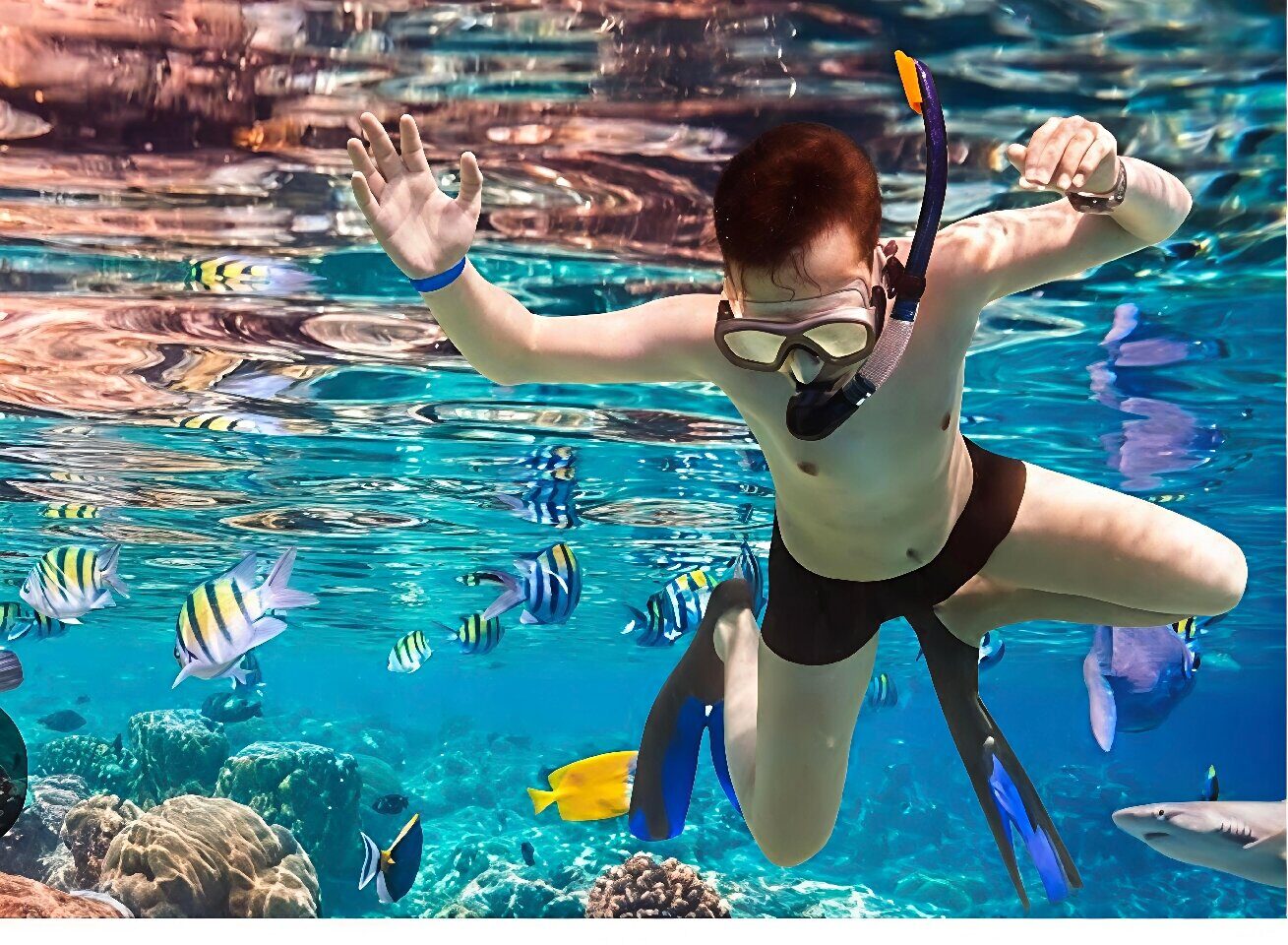
Zanzibar’s waters hold over six hundred fish species and around fifty types of coral, and Mnemba shows off a good share of both. Expect clouds of anthias and fusiliers, angelfish, butterflyfish, parrotfish grinding at the coral, moray eels tucked into crevices, lionfish hanging under overhangs and stingrays working the sand between coral heads. Green turtles are seen regularly. None of it is guaranteed on any given morning.
The water is warm year round and the shallower moorings sit at a depth that suits weak swimmers, though a current runs on some sites. Say honestly how confident you are in open water before you get on the boat. Good crews adjust the mooring to match; poor ones drop everybody in the same place regardless.
Take the first boat out. Departures around half past seven or eight reach the moorings before the fleet arrives, and the difference between an early trip and a ten o’clock trip at Mnemba is not small.
Scuba Trips on the Mnemba Reef Walls
For scuba, Mnemba is the headline destination on Unguja and the reason several operators are based at Matemwe and Nungwi. The atoll offers a spread of sites around the ring, from gentle shallow gardens suitable for training through to drop offs on the outer edge where the reef falls away into deeper water.
Conditions are usually calm inside the atoll and more exposed outside it. Visibility is at its best in the dry months, and drops noticeably during the long rains when runoff clouds the water. Operators run two tank morning trips as standard, with courses from beginner level through to professional qualifications available on the island.
The marine park fee applies per person per day on top of whatever your operator charges, and it is frequently quoted separately rather than included. Ask before booking so the total is not a surprise at the desk.
Dolphins and Turtles Around the Atoll
Bottlenose and spinner dolphins move through the water around Mnemba and many boats will detour if a pod is spotted. This is not a scheduled part of the trip and it should not be sold to you as one. Sightings happen often enough to be worth hoping for and not often enough to promise.
Where dolphins are found, some crews will encourage everyone into the water at once to swim with them. It is worth knowing that repeated boat pursuit disturbs resting pods, and the more responsible operators keep their distance, cut the engine and let the animals decide. If a crew is chasing a pod hard, you are entitled to ask them to stop.
Green turtles are a more reliable sighting, grazing on the reef and surfacing to breathe. Keep back and do not touch them, which applies to every animal out here.
The Private Island at the Centre of the Atoll
Mnemba Island itself sits inside the ring of reef and is occupied by a private lodge. It is not open to day visitors, and any Mnemba Atoll trip that promises you a walk on the island beach is misleading you. Boats stay on the water and the snorkelling happens around the outside.
This confuses a lot of people who have seen photographs of a white sand island with a handful of bandas under casuarina trees and assumed it was the destination. The destination is the reef. The island is a backdrop, and a good one, viewed from a boat a few hundred metres off.
Some operators combine the atoll with a stop on a shallow sandbank on the way back, which is where the sunbathing and the fruit platter usually happen. That is a reasonable substitute and it is what most day trips actually deliver.
You are buying a reef, not an island. Any tour promising to land you on Mnemba’s beach is selling something it cannot provide.
Marine Park Fees and Conservation at Mnemba
Mnemba is a designated conservation area, and Tanzania applies a marine park fee to everyone entering protected waters, charged per person per day and collected separately from tour prices. Operators are inconsistent about whether they quote inclusive or exclusive of it, which is the single most common billing dispute on this trip.
The money funds patrols and reef management, and the atoll’s condition compared to unprotected reefs nearby makes the case for it fairly well. Coral bleaching from rising sea temperatures remains a serious pressure across the western Indian Ocean and Mnemba is not exempt.
Practical things that matter in the water: do not stand on or touch coral, which kills it, do not chase or corner fish and turtles, and use reef safe sun cream or a rash vest instead of chemical sunscreen. Fins do more damage than anything else, usually by accident, so keep them up and behind you in shallow water.
Crowding at Mnemba and How to Avoid It
This is the honest caveat. Mnemba’s reputation has brought volume, and by mid morning in high season the moorings carry a large number of boats with a lot of people in the water at once. Some visitors come away feeling they queued for a reef.
Three things help. Take the earliest departure available, which is worth more than any other decision. Travel outside the July to September and Christmas peaks if your dates allow. And ask your operator which mooring they use, since the busiest sites are not the only ones.
If crowding matters to you a great deal, Chumbe Island Coral Park off the southwest coast holds some of the healthiest coral in East Africa and strictly limits daily visitor numbers. It costs considerably more and it is a completely different day out. Tumbatu Island off the northwest sees far fewer boats than Mnemba as well.
Where to Base Yourself for a Mnemba Atoll Trip
Matemwe. Directly opposite the atoll and the shortest crossing on the island, roughly fifteen minutes. Quiet, boutique and higher end, with strong tidal swings on the beach itself. The obvious base if the reef is why you came.
Nungwi and Kendwa. About an hour by boat around the northern tip. Far more choice of accommodation, restaurants and operators, plus all day swimming off the beach. A longer, bumpier crossing in exchange for that.
Kiwengwa and Pongwe. Between the two on the northeast coast, with a moderate crossing and a quieter beach than Nungwi. A reasonable middle option.
Stone Town and the east coast. Possible as a long day trip but rarely worth it. Two hours of road each way before you reach a boat means an early start and a tired afternoon.
Getting to Mnemba Atoll and Choosing a Boat
All access is by boat, launched from the beach at Matemwe, Nungwi, Kendwa or the northeast coast villages. There is no scheduled service; everything runs as a chartered trip through hotels, operators or captains working the beach.
Small motorboats are the standard. Traditional dhows are slower and more pleasant in calm conditions, and considerably less so when the water gets up. Check for life jackets, look at the engine, and ask what snorkelling gear is provided, since equipment quality varies enormously between operators. Bringing your own mask is a small thing that improves the day out of proportion to the effort.
Confirm three things before paying: whether the marine park fee is included, how long you actually get in the water, and what time you are back.
Best Time for a Mnemba Atoll Snorkelling Safari
The dry months from June to October give the calmest seas and the best underwater visibility, and they are also the busiest. July through September is the strongest window for clarity, and also when the moorings are most crowded.
February and March bring a short dry period with warm, clear water that suits snorkellers and newer scuba divers well, with fewer boats than the mid year peak. From March through May the long rains reduce visibility as sediment washes off the land, and crossings can be rough. Whatever the month, morning conditions beat afternoon ones almost every day.
Frequently Asked Questions About Mnemba Atoll
Small Things That Improve the Day
Before you go in, check your mask by holding it to your face without the strap and breathing in gently through your nose; a good one holds on its own. Sessions in the water usually run twenty to forty minutes at each of two moorings. If you would rather swap the atoll for a protected reef with no other boats, Chumbe Island runs around ninety to a hundred and ten dollars plus a levy of about twenty-five.
How much does a Mnemba Atoll snorkelling trip cost?
Shared boat trips typically run from around $50 per person, with private boats reaching $200 for two people including equipment, transfers and marine park fees. A daily marine park fee of about $10 to $12 per person applies to protected waters and is often charged on top of the tour price rather than included. Scuba trips cost more again, with two tank morning trips and courses priced separately by each operator. Always confirm whether the park fee is inside or outside the quoted price.
Can you visit Mnemba Island itself?
No. The island inside the atoll is occupied by a private lodge and is closed to day visitors. Snorkelling and scuba trips work the surrounding reef and stay on the water. Any operator promising a landing on the island beach is not being straight with you. Many trips include a stop at a nearby sandbank instead.
Is Mnemba Atoll worth it given the crowds?
For most visitors yes, provided you take an early boat. The reef life is the best that is easily reachable from Zanzibar’s main beaches. By mid morning in peak season the moorings carry a lot of boats and a lot of swimmers, which does affect the experience. If quiet water matters more than convenience, Chumbe Island Coral Park limits daily numbers and holds healthier coral, at a considerably higher price.
How long is the boat ride to Mnemba Atoll?
Around fifteen minutes from Matemwe, which sits directly opposite. Roughly an hour from Nungwi or Kendwa, going around the northern tip of the island. Somewhere between the two from Kiwengwa and Pongwe. From Stone Town or the east coast you first need one to two hours by road to reach a northern launch point.
Do you need to be a strong swimmer?
Not for the shallower moorings, where the water is calm and life jackets are available. Some sites carry a current and are better suited to confident swimmers. Tell the crew honestly how comfortable you are before the boat leaves, and a good operator will choose the mooring accordingly.
Will you see dolphins and turtles at Mnemba?
Turtles are seen regularly on the reef and dolphins move through the area often, but neither is guaranteed and no honest operator will promise them. If dolphins are found, the responsible thing is to keep distance and let the pod behave normally rather than pursuing it, which disturbs resting animals.
The difference between a good morning at Mnemba and a disappointing one comes down to departure time, mooring choice and whether the crew reads the water properly. Holidays To Zanzibar works with skippers who leave early and know which sites are quiet on any given day, and they state the marine park fee up front rather than at the jetty.
For a reef morning arranged around your beach and your swimming confidence, get in touch with Holidays To Zanzibar and someone who works these waters will reply.