The Nakupenda sandbank is a strip of white sand in the channel off Stone Town that surfaces at low tide and is swallowed again as the water returns, visited on half day boat trips that include a seafood barbecue served on the sand. Trips leave daily from the Stone Town waterfront and are usually combined with Prison Island. Nakupenda means “I love you” in Swahili, and the sandbank sits inside a protected marine area on Unguja, Zanzibar’s main island.
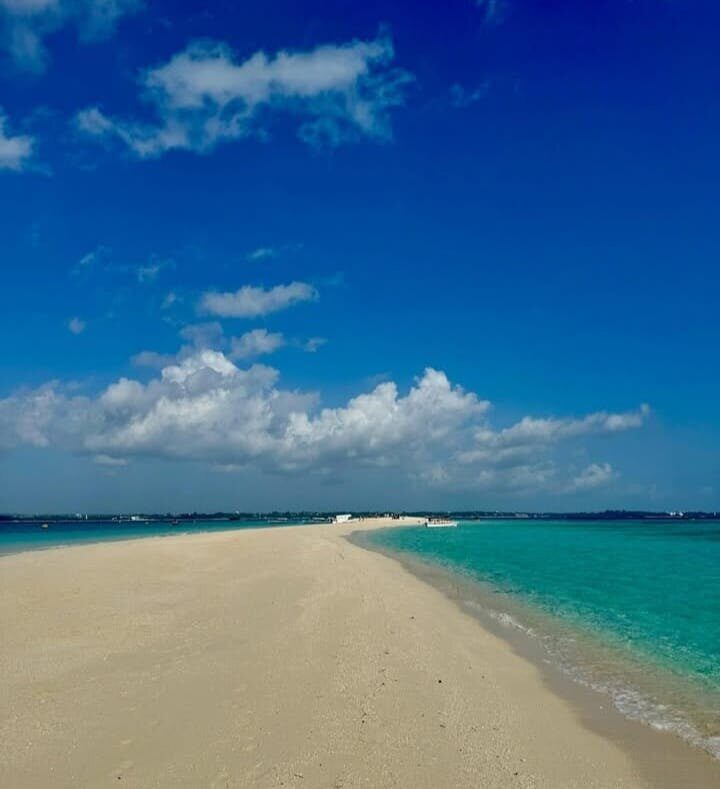
The whole appeal is that it should not really be there. You step off a boat onto a beach with no land attached to it, in water that is turquoise in every direction, and in a few hours the beach is gone.
What a Nakupenda Sandbank Tour Involves
A Nakupenda sandbank tour starts from the beach in front of Forodhani Gardens on the Stone Town seafront. The crossing takes roughly thirty to forty five minutes depending on the boat and the exact bar being visited, since the sand shifts and the usable spot moves with it.
Boats anchor in the shallows and you wade in. Crews set up sun umbrellas, deck chairs and a table, and the next few hours are yours to swim, snorkel, walk the length of the bar or do nothing at all. Lunch is cooked and served on the sand partway through.
Most trips give you two to three hours out there, which is governed entirely by the tide rather than by the operator. When the water starts covering the sand, everyone leaves. That is not the crew cutting the day short.
There is no shade on a sandbank beyond whatever umbrella the crew brings, and the light reflects off both the water and the white sand. Long sleeves, a hat and reef safe sun cream do more for you here than anywhere else on the island.
Tides and Why the Sandbank Disappears
Nakupenda exists because of the tide, and the tide is what governs your day. At low water a broad bar of coral sand stands clear above the surface. As the tide comes in it narrows, then splits, then goes under entirely. By high tide there is nothing to see from a boat.
This means departure times are not fixed. They shift daily with the tide table, and any operator quoting the same departure every day of the week is not paying attention. A good trip is timed so you arrive as the bar is at its widest and leave as it starts to close.
It also means the sandbank is never quite the same shape twice. Currents rework it constantly, so the strip you land on may sit slightly differently from the photographs you saw when booking.
If you are prone to seasickness, the crossing is short and the water inside the channel is usually flat, though it picks up through the afternoon in the windier months.
The Seafood Barbecue on a Nakupenda Beach Tour
Lunch is a big part of why this trip is popular. Crews bring a charcoal grill ashore and cook whatever came off the boats that morning: kingfish, tuna, calamari, prawns and often lobster at the higher end, alongside rice, salad, chapati and a platter of seasonal fruit. Soft drinks are usually included and alcohol usually is not.
Standards vary between operators more than the photographs suggest. Ask before booking what lunch actually includes, whether lobster is part of it or an extra, and whether drinks are covered. Vegetarians should say so in advance rather than on the sand, since the default menu is entirely seafood.
Eating grilled fish barefoot on a bar of sand in the middle of a channel is the memory most people take home from this trip, and it is a fair reason to pay for a better operator rather than the cheapest boat on the beach.
A beach with no island behind it, a kitchen with no walls, and a lunch service that ends when the sea decides it does.
Snorkelling and Swimming at Nakupenda
The water around the bar is shallow, warm and clear, which makes it good easy swimming for anyone including children. It shelves gently rather than dropping away, so you can walk out a long way before it gets deep.
Snorkelling here is modest compared with Mnemba Atoll or Chumbe Island. There are patches of coral and reef fish close by, plus starfish on the sand flats, and several operators stop at a reef on the way out or back where the fish life is better. Ask whether a snorkelling stop is included, because on some cheaper trips it is not.
Masks and fins are usually provided. Quality is inconsistent, so look at what you are handed before the boat leaves, and bring your own mask if you have one.
Conservation and Fees at the Protected Marine Area
The waters around the sandbank sit within a protected area, which is why a separate entry fee is collected in cash on the day rather than being folded into every boat price. It is charged per person and is commonly combined with the Prison Island fee on the standard tour.
Rules on the sand matter more than people assume. Starfish should be left in the water and not lifted for photographs, since removing them from the sea kills them. Shells and coral are best left where they are. Everything you bring ashore needs to leave with you, and Zanzibar’s ban on plastic bags applies out here as much as anywhere else.
The bar itself carries a great deal of foot traffic in high season. Walking on the sand is fine; wading over the coral patches at the edge is not.
Combining Nakupenda With a Prison Island Tour
The standard version of this day pairs the sandbank with Prison Island, properly called Changuu, a small coral island twenty to thirty minutes from Stone Town with a colony of Aldabra giant tortoises, the ruins of a prison that never held a prisoner, and easy reef snorkelling.
The usual running order is Prison Island first thing, then across to the sandbank for lunch as the tide bottoms out, then back to Stone Town in the afternoon. That makes a six to eight hour day and it is the best value excursion available from the old town.
Some operators add a Stone Town walking tour or a spice farm to make a full day. Those work if you have the stamina, though they compress the time on the sand, which is the part everybody actually came for.
Photography and Sunset Trips to the Sandbank
Midday gives the strongest colour in the water, with the turquoise shallows against the white sand at their most saturated, and it is also when the light is hardest on faces. Bring something to shade the camera and expect to be shooting into a lot of reflected glare.
Some operators run sunset trips instead of lunch trips when the tide allows an evening low water. Those are quieter, cooler and considerably better for photographs, with the sun going down over the channel and Stone Town lit up on the horizon behind you. They are less commonly advertised, so ask.
Drone use is restricted in parts of Zanzibar and permissions are required. Check the current position before packing one rather than assuming.
Booking a Nakupenda Boat Trip Without the Common Problems
Trips are booked through hotels, through operators and online platforms, or directly with captains on the beach at Forodhani. The beach route is cheapest and involves negotiating; the boats range from well maintained to visibly not.
Settle four things before you pay. Whether the marine entry fees are included or payable in cash on the day. What lunch covers and whether drinks are in it. Whether a snorkelling stop is part of the trip. And what time you are back at the jetty.
Check the boat has life jackets aboard and that the engine sounds sound. It is a short crossing in usually calm water, but it is open water and the channel gets busy with traffic.
Getting to Nakupenda and Best Time to Visit
Boats leave from the beach in front of Forodhani Gardens on the Stone Town seafront, on Unguja island, with the crossing taking thirty to forty five minutes. From the north coast beaches at Nungwi or Kendwa, allow around an hour and a half by road to reach Stone Town first. From the east coast, roughly an hour. From Pongwe and the northeast, about forty five minutes.
The dry months from June to October and the short dry season of January and February give the calmest crossings and the clearest water. During the long rains of April and May the trip still runs, but the channel gets choppy and a sandbank in the rain is a poor place to spend three hours. Book around the tide rather than around the clock, whatever the season.
Frequently Asked Questions About Nakupenda Sandbank
What to Bring to a Sandbank
There is no shade and nowhere to change on a sandbank, so wear swimwear under your clothes and bring a dry bag, since you wade in from the boat and the spray is constant. Reef shoes are worth it, because sea urchins sit on the coral patches at the bar’s edge. If you are paying any fees in US dollars, note that bills must be printed in the year 2000 or later to be accepted.
How much does a Nakupenda sandbank tour cost?
Combined Prison Island and Nakupenda trips booked through operators typically run around $40 to $70 per person including boat, lunch and guide. Boat hire negotiated directly on the beach costs roughly $50 to $70 for a small group. On top of that, a marine entry fee of about $21 to $25 per person covering both Nakupenda and Prison Island is collected in cash on the day, and it is frequently not included in the advertised price.
How long do you spend on the sandbank?
Two to three hours, set entirely by the tide rather than by the operator. The bar is at its widest at low water and disappears completely at high tide, so departure times shift daily. A combined Prison Island and Nakupenda day runs six to eight hours in total.
Does the Nakupenda sandbank really disappear?
Yes. It is a bar of coral sand with no land beneath it, exposed at low tide and fully submerged at high tide. Its shape also changes over time as currents rework the sand, so the strip you land on will not match the photographs exactly.
Is Nakupenda good for snorkelling?
It is easy and pleasant rather than spectacular. The water is shallow, clear and calm with coral patches, reef fish and starfish nearby, which suits beginners and children well. For serious reef life, Mnemba Atoll off the northeast coast or Chumbe Island Coral Park off the southwest are considerably better. Many Nakupenda trips include a reef stop en route, so check whether yours does.
What should you bring to Nakupenda?
Sun protection above everything, since there is no natural shade at all. A hat, a rash vest or long sleeves, reef safe sun cream, sunglasses, a towel, water, and cash in small notes for the entry fees. Reef shoes help if you plan to wade over coral patches. Leave anything you cannot afford to get wet on shore.
Is the sandbank trip suitable for children?
Yes, and it is one of the better family excursions from Stone Town. The water is shallow and calm, the crossing is short, and there is sand to play on. The lack of shade is the main issue, so bring more sun protection than you think you need and check the boat carries child sized life jackets.
Timing is everything on this trip, and the operators who get it right are the ones reading the tide table rather than the clock. Holidays To Zanzibar runs Nakupenda and Prison Island days with departure times set to the water, boats that carry proper safety gear, and the entry fees stated before you pay rather than at the jetty.
For a day on the sandbank arranged around the right tide, or advice on which trips include a decent reef stop, get in touch with Holidays To Zanzibar and a real person will answer.