The Forodhani night market runs every evening from around six until nine in the seafront park in front of the Old Fort in Stone Town. Entry is free, you buy directly from the grills in cash, and most people eat well for the price of a coffee at home. Forodhani Gardens sits on the Zanzibar City waterfront within the UNESCO listed old quarter on Unguja island.
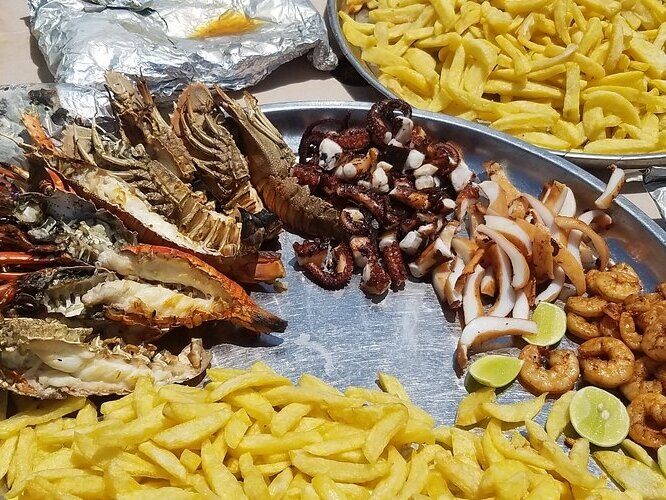
This article is about how to actually work the market rather than what it is, because the difference between a good evening here and a mediocre one comes down to a handful of small decisions.
When to Arrive and How the Evening Builds
Timing changes the market completely, and there are three versions of it depending on when you turn up.
Arrive at six and you watch it assemble: carts wheeled in, trestle tables set out under the palms, charcoal lit, the day’s catch laid on ice. Quiet, easy to browse, and every vendor has time for you.
Arrive between half past six and half past seven and you get the sweet spot. Everything is open, the food is fresh, and there is still room to move between the tables.
Arrive after eight and it is at its fullest and most atmospheric, with local families out along the sea wall, and also at its most crowded, with some of the better stalls running low.
Go twice if you have the evenings. It is a genuinely different experience early and late, and it costs almost nothing either way.
Do a full lap before buying anything. Prices and quality vary noticeably from table to table, and one circuit tells you which stalls are actually turning food over.
How to Order Without Getting Caught Out
The single most useful habit here: agree the price before the food goes on the charcoal, not after.
Prices are broadly fixed but the opening figure quoted to a visitor sits above the local rate at some stalls, and settling it beforehand removes the awkward conversation entirely. Lobster is the one item where the gap can be substantial, so be specific about which piece and what it costs.
Ask for seafood grilled fresh from the ice rather than taking what has been sitting under a lamp. Vendors expect this and will do it without complaint, and it is the difference between very good and merely adequate.
Carry small Tanzanian shilling notes. Dollars are accepted at some tables at a poor rate, cards are not accepted anywhere, and nobody has change for a large bill at seven in the evening.
What to Eat on a Forodhani Food Tour
Zanzibar pizza. Thin dough filled with minced meat, egg, onion, vegetables and cheese, folded and fried flat on a griddle, then cut into squares. Sweet banana and chocolate versions follow as dessert. Nothing to do with Italy.
Urojo. The tangy turmeric soup with bhajia fritters, potato, boiled egg and chutneys. The dish most visitors walk past and the one worth ordering first.
Seafood skewers. Kingfish, tuna, calamari, octopus and prawns laid out raw on ice for you to point at, grilled over charcoal in front of you. Beef and chicken cost less.
Mishkaki. Charcoal grilled meat skewers marinated in spice, the everyday street food of the coast and the cheapest hot thing here.
Sugarcane juice. Whole canes pressed by hand with ginger and lime. Watch the press being rinsed, and skip the ice unless you are confident of the source.
Cassava chips and chapati. The fillers, sold at every second table, and useful for building a meal around a single expensive skewer.
Eating Safely at the Night Market
Street food here is safe with ordinary judgement, and the rules are the same as anywhere.
Busy stalls are safer than quiet ones, precisely because nothing sits around long enough to become a problem. Watch your food cooked in front of you. Skip anything sitting warm and uncovered under a lamp.
Where problems do arise, they usually trace back to water rather than to the grill. Be cautious with ice, avoid uncooked salad garnishes, and remember tap water is not for drinking anywhere on the island.
Zanzibar has banned plastic bags since 2019, so takeaway packaging is limited. Bring your own container if you plan to carry food away.
Every octopus curry and grilled kingfish you eat this week came off a boat that morning. Forodhani is where you meet it at the shortest possible distance.
How the Gardens Became a Night Market
The park has been public space for a long time, though not always in this form.
The name comes from the Swahili word forodha, meaning customs or wharf, which is exactly what stood on this spot. This was the working edge of the port, beside the old customs house, where cargo came ashore from the dhows.
The gardens themselves opened in 1936 as the Jubilee Gardens, laid out to mark the silver jubilee of Sultan Khalifa bin Harub, and served for decades as an ornamental promenade for the town’s elite. After the 1964 revolution the park slid into neglect and stayed there a long time.
Between 2008 and 2009 the Aga Khan Trust for Culture funded a full restoration costing around three million dollars, rebuilding the infrastructure, the lighting and the sea wall while keeping the historic features intact. The same organisation had restored the Old Fort next door during the 1990s. The market you walk into now sits on the back of that work, which is why the park is lit and paved rather than simply worn.
The Setting: Sea Wall, Sunset and the Buildings Behind
Half the appeal of eating here is where you are standing.
The park faces west across the Zanzibar Channel, which makes the sea wall one of the most reliable sunset spots in Stone Town, with dhows anchored offshore and the Old Fort and House of Wonders catching the last light behind you. Get there before six if the sunset matters, since twilight at this latitude is short.
The wall itself is where the town gathers in the early evening. Local boys leap from it into the water at high tide, families take the benches, and the whole park works as public space rather than a tourist attraction with locals passing through.
Three permanent features are worth finding while you wait for the grills: the bandstand dating from 1936, when the gardens opened as the Jubilee Gardens for Sultan Khalifa’s silver jubilee, an arabesque arch erected for Princess Margaret’s visit in 1956, and a battery of eighteenth century cannons along the seaward edge.
Guided Food Tours Versus Eating Alone
You do not need a guide here. The market is a public park and you can simply walk in.
What a guided street food tour adds on a first evening is ordering confidence and context: which stalls to use, what to try beyond the obvious, and what you are actually eating. These typically run about three hours from an early evening start, combining a walk through the lanes with tastings at the market and a drink at sunset.
They cost considerably more than eating here alone, which is the trade off. A reasonable middle path is to take a Stone Town walking tour that finishes at Forodhani as the stalls open, then eat under your own steam once the guide has pointed you at the right tables.
Getting There and Getting Back Safely
Forodhani Gardens is on Mizingani Road on the Stone Town seafront, directly in front of the Old Fort. From the airport it is fifteen to twenty minutes by road, and from the ferry terminal a walk of a few minutes south along the waterfront.
The park is well lit and busy during market hours and is one of the more comfortable places in Stone Town after dark. Petty theft in any crowd is the main risk, so keep bags closed and in front of you.
The walk back is where care is needed rather than the market itself. Stone Town’s lanes are poorly lit and easy to get turned around in, so take a taxi to your accommodation if it is not immediately adjacent, even for a short distance. Agree the fare before getting in.
Frequently Asked Questions About the Forodhani Night Market
How much does it cost to eat at Forodhani night market?
Entry is free. Zanzibar pizza runs about $2 to $4, seafood skewers $2 to $5 each, urojo $1 to $2 and sugarcane juice or a coconut around $1. Lobster is the outlier at $15 or more, so confirm the price before it goes on the grill. Most people eat well for $6 to $15 per person.
What time does the Forodhani night market start?
Stalls set up from around 6pm as the light fades and it runs until roughly 9pm, seven nights a week including through the rainy season, though heavy rain empties the park quickly. Between half past six and half past seven gives the best balance of fresh food and room to move.
Is Forodhani a tourist trap?
No. Zanzibari families eat here at weekends, the sea wall fills with locals every evening, and on most nights locals outnumber visitors. Prices quoted to visitors can start above the local rate at some stalls, which is why agreeing the figure before ordering matters, but the market itself is genuine public space.
What should you not eat at Forodhani?
Anything sitting warm and uncovered under a lamp rather than cooked in front of you. Be cautious with ice and uncooked salad garnishes, since water rather than the grill is the usual source of problems. Ask for seafood grilled fresh from the ice, which vendors expect and do without complaint.
Do you need to book a food tour at Forodhani?
No. It is a public park and you buy directly from the stalls. Guided Stone Town street food tours exist, usually around three hours from an early evening start at roughly $30 to $50 per person, which some visitors find worthwhile on a first night for the ordering guidance and context.
Is Forodhani good for vegetarians?
Better than it looks. Urojo can be ordered without meat and loses nothing, and vegetable Zanzibar pizza, cassava chips, chapati, samosas and fresh juices are all available. Say so when ordering, since the default at a seafood grill is obvious.
Forodhani is one of the few genuinely cheap pleasures on this island, and the only skill involved is knowing which tables to use and when to arrive. Holidays To Zanzibar runs Stone Town walks that finish here at sunset with Zanzibari guides who eat at this market themselves.
For an evening in the old town arranged around the market, or a steer on where else to eat on the island, get in touch with Holidays To Zanzibar and a real person will reply.