Zanzibar’s weather is hot and humid all year, with air temperatures varying by only about three degrees across the calendar and two rainy seasons splitting the year rather than a summer and a winter. Visitors swim comfortably in any month, since the sea rarely drops below twenty five degrees. Zanzibar is a tropical Tanzanian archipelago in the Indian Ocean, six degrees south of the equator, with a climate driven by monsoon winds.
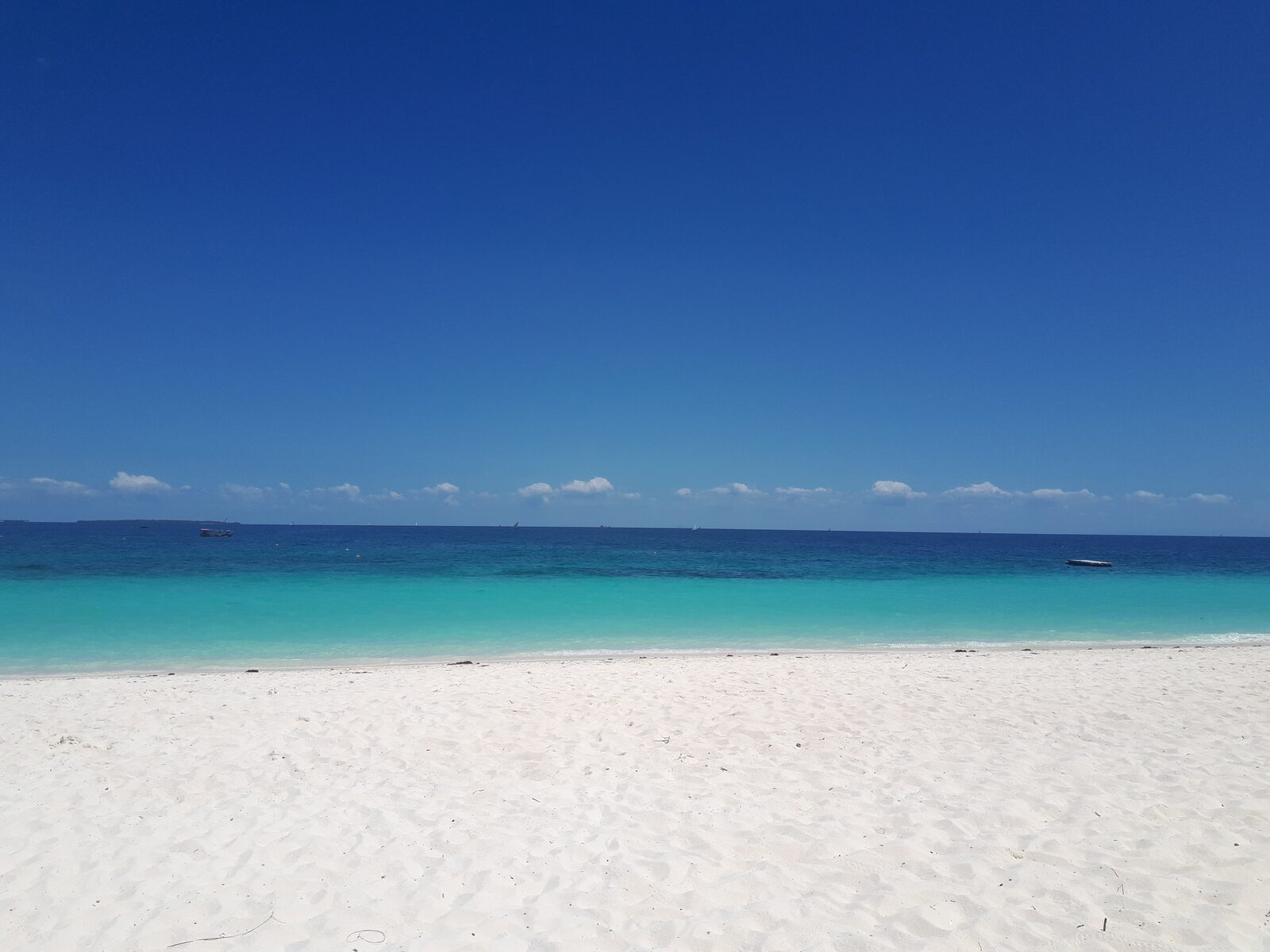
The thermometer is close to useless for planning here. What separates one month from another is rain, humidity, wind and how clear the water is.
Zanzibar’s Tropical Climate on a Beach Trip
This is an equatorial maritime climate, which means small temperature swings, high moisture in the air and rainfall arriving in defined seasons rather than scattered across the year.
There is no cold season. The coolest conditions of the year, in August, still bring daytime highs around thirty degrees. The hottest, in February, push into the low to mid thirties. Overnight lows range from about twenty in the dry months to twenty three in the hot ones.
Sunshine is strong and direct at this latitude, and the sand and water reflect it back at you. People who consider themselves careful about the sun still burn here, particularly on boat days where there is no shade at all.
Day length barely changes. Sunrise and sunset sit close to six in the morning and six in the evening throughout the year, with almost no twilight. Darkness arrives quickly, which catches out anyone planning to walk back along a beach after sunset.
Assume you will need more sun protection than at any Mediterranean beach and more mosquito repellent than you expect. Both are more expensive and less reliably stocked on the island than at home.
Temperature Through the Year on a Zanzibar Trip
Average conditions run from roughly twenty six degrees in August to twenty nine in February, which is a narrower band than most visitors anticipate.
June to October is the coolest stretch. Days sit around twenty eight to thirty degrees, nights drop to about twenty, and the combination with lower humidity makes this the most comfortable part of the year for walking around Stone Town or spending a day on a spice farm.
January and February are the hottest. Daytime highs reach the low to mid thirties, nights hold around twenty two or twenty three, and the humidity is up. It is a fine time for a beach and a hard time for a long city walk in the middle of the day.
March to May sits hot and heavy, often above thirty degrees with saturated air. November and December warm up ahead of the short rains.
Rainfall Patterns and the Two Rainy Seasons
Rain here comes in two distinct seasons with a very different character.
The masika, or long rains, run March through May and peak hard in April. Downpours are sustained rather than brief, often lasting hours through the afternoon and evening. April’s rainfall alone can exceed everything that falls between June and October combined.
The vuli, or short rains, arrive around November as temperatures climb. The pattern is a sunny humid morning, cloud building through the middle of the day, then a heavy but short shower in the afternoon before it clears again. Most days remain usable.
Between them sit the dry periods. June to October averages roughly thirty five to fifty three millimetres a month, which amounts to occasional passing showers, and January and February are similarly dry.
Humidity and How the Heat Actually Feels
Humidity is the measure that matters most and the one nobody checks before booking.
At its lowest, across the June to October dry season, the air is moving and moisture levels drop enough that thirty degrees feels manageable. That is why those months read as the cool season locally, even at temperatures that would count as hot anywhere else.
At its highest, during the long rains and through January and February, the air holds so much water that nothing dries. Washing stays damp, clothes cling, and the same thirty degrees feels considerably heavier. Air conditioning stops being a luxury and becomes the reason you can sleep.
Practical consequence: pack cotton and linen rather than synthetics, bring more changes than you think you need, and choose accommodation with air conditioning if you are travelling in the hot months.
Thirty degrees in August and thirty degrees in February are the same number and not remotely the same experience.
The Monsoon Winds: Kaskazi and Kusi
Two seasonal winds govern the island’s year and have done for as long as anyone has sailed here.
The kaskazi blows from the northeast roughly December to March. The kusi comes from the southeast roughly June to September. Between them sit two transitional periods, in April and May and again in October and November, when the wind is light and unreliable.
These are the same winds that carried dhows down from Arabia, Persia and India and then carried them home, which is the reason Zanzibar became a trading centre at all. They still matter today for two practical reasons: they set the kitesurfing seasons at Paje, and they keep the coast breezy and bearable in the hot months.
The kusi in particular makes the east coast noticeably cooler and windier than the sheltered western side around Stone Town.
Sea Temperature and Water Clarity for Reef Trips
The sea is warm in every month, rarely dropping below twenty five degrees and peaking during February and March. No wetsuit is needed for snorkelling at any point in the year, and even at dawn the water is comfortable.
Clarity is the seasonal variable, and it follows rainfall almost exactly. Sediment washing off the land during the long rains clouds the water from March through May, which is why reef trips to Mnemba Atoll and Chumbe Island are at their weakest then and boats are frequently cancelled outright.
July to September gives the best underwater visibility of the year, with February and March offering a good second window before the rains arrive.
Tides and How They Shape a Zanzibar Beach Trip
Tides are not weather, and on this island they affect a holiday more than the weather does, so they belong in any honest description of conditions.
The east and southeast coasts sit on a broad shallow shelf. At low tide the waterline moves hundreds of metres out, and on some stretches close to a kilometre, exposing coral flats, seaweed plots and urchins. At high tide the same beach is a lagoon.
The north coast at Nungwi and Kendwa escapes this, staying deep enough to swim through most of the day.
Tide times shift daily, so any beach day, boat trip or visit to The Rock restaurant needs checking against a table rather than a clock. Hotels post them and crews plan around them.
How the Weather Differs Across Zanzibar’s Coasts
The east coast. Catches the prevailing wind directly, which keeps Paje, Jambiani and Bwejuu noticeably cooler and breezier than the rest of the island. Comfortable in the hot months, blustery during the kusi.
The north coast. Nungwi and Kendwa sit at the tip and pick up airflow from both sides, with the added advantage of facing west for sunsets and escaping the tidal flats.
Stone Town and the west. The most sheltered, which makes it the hottest and stillest part of the island. In January and February the old town in the middle of the day is genuinely warm work.
Inland and the spice belt. Away from the sea breeze the interior holds heat and humidity, which is why spice farm tours are more comfortable in the morning than the afternoon.
What a Typical Day’s Weather Looks Like
In the dry season, expect to wake to clear skies around six, a bright morning that heats steadily, a hot and still period from about eleven until three when locals move indoors, then a softening afternoon with a breeze off the sea and sunset just after six. Evenings are warm enough to eat outdoors in whatever you wore during the day.
In the short rains, add a build up of cloud through the late morning and a heavy shower in the afternoon that clears within an hour or two.
In the long rains, the morning may still be bright, but the afternoon downpour arrives earlier, lasts longer and often continues into the night. Roads flood in places and unpaved tracks turn to mud.
Whatever the season, the middle of the day is the part to plan around. Nearly everything worth doing on this island happens before eleven or after four.
Frequently Asked Questions About Zanzibar’s Weather
Is Zanzibar hot all year round?
Yes. Average conditions run from around twenty six degrees in August to twenty nine in February, with daytime highs between twenty eight and the mid thirties depending on the month. There is no cold season. What changes noticeably is humidity, which is lowest from June to October and highest during the long rains and through January and February.
When does it rain in Zanzibar?
In two seasons. The long rains run March to May, peaking in April with sustained downpours that can last hours, and April’s total alone can exceed the whole June to October dry season. The short rains fall around November and December, usually as a heavy but brief afternoon shower within an otherwise sunny day. Dry season months average only about thirty five to fifty three millimetres each.
How warm is the sea in Zanzibar?
Rarely below twenty five degrees in any month, and warmest in February and March. No wetsuit is needed for snorkelling at any point in the year. What varies seasonally is clarity rather than warmth, with visibility best from July to September and poorest from March to May when runoff clouds the water.
Does the weather ruin the beaches in April?
It affects them considerably. April is the wettest month, sea visibility collapses, boat trips are cancelled regularly and seaweed accumulation on the east coast peaks. Some hotels close for part of the season and others cut rates hard, with off season accommodation averaging around $63 per night against roughly $118 in peak. The island is green and quiet, which suits some visitors and not most.
How windy is Zanzibar?
Windy in two defined seasons. The kaskazi blows from the northeast roughly December to March and the kusi from the southeast roughly June to September, and both are reliable enough to support the kitesurfing schools at Paje. April, May, October and November are the light wind gaps. The east coast is consistently breezier than the sheltered western side.
Do tides affect the weather experience in Zanzibar?
Not the weather itself, but they affect the beach more than the weather does. On the east and southeast coasts the waterline can move hundreds of metres and up to a kilometre at low tide, leaving exposed coral flats. Nungwi and Kendwa in the north stay swimmable through most of the day. Tide times shift daily, so check a table rather than assuming.
Weather charts for this island flatten out the two things that actually shape a day here, which are humidity and the tide. Holidays To Zanzibar plans around both, and will tell you what conditions to expect on your specific coast at your specific time of year rather than quoting an annual average.
For a straight assessment of what your travel dates are likely to deliver, contact Holidays To Zanzibar and a real person will reply.