Zanzibar’s spice farms sit in the central belt of Unguja north and east of Stone Town, and a guided spice tour of two to three hours is the standard way to visit them. Tours run every morning and afternoon, are booked through hotels and operators, and include transport from Stone Town. Zanzibar was one of the world’s leading producers of cloves, nutmeg and cinnamon, which is where the name Spice Islands came from.
It is the cheapest good half day on the island and the one visitors most often expect to be a tourist trap. It usually is not, provided you pick the right farm.
What a Zanzibar Spice Tour Involves
A spice farm tour is a walking tour of a working smallholding, known locally as a shamba, rather than a plantation in the industrial sense. You follow a guide along paths between plots, and the whole thing runs on smell, taste and touch rather than on signage.
The guide crushes leaves for you, splits pods, digs up roots and hands things across to be identified. Half the tour is a guessing game, and it works. Most people cannot name turmeric from the root, cinnamon from the bark, or nutmeg from the fruit until they have had it in their hands.
Expect two to three hours including the drive out from Stone Town. Longer versions add a Swahili lunch cooked on the farm, and some include a stop at ruins or a beach on the way back.
Wear closed shoes and long trousers. The paths are uneven, mosquitoes work the shaded plots even in the middle of the day, and you will be pushing through vegetation rather than walking a manicured trail.
What Grows on a Zanzibar Spice Farm
The range on a decent farm is wider than most visitors expect, and very little of it is native. Almost everything was brought here by Omani, Indian and Portuguese traders over several centuries, which is a story in itself.
Cloves. The crop that built the island’s wealth. Unopened flower buds picked by hand from the tree and dried in the sun until brown. Zanzibar dominated world production through the nineteenth century.
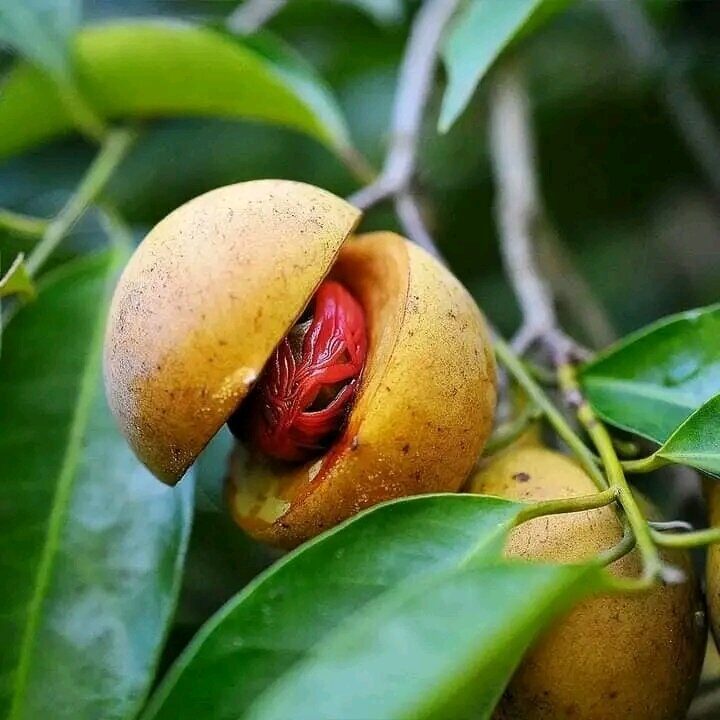
Nutmeg and mace. One fruit, two spices. The nut sits inside a shell wrapped in a scarlet lace of mace, and the guide will split one open in front of you to show it.
Cinnamon. Bark from the trunk, root and leaves all carry the scent at different strengths. Chewing a piece of fresh root is the moment most people remember from the tour.
Vanilla, cardamom and black pepper. Vanilla grows as a climbing orchid and is hand pollinated. Peppercorns hang in green strings and turn black on drying, which surprises people who assume black and green pepper are different plants.
Turmeric, ginger and lemongrass. All grown at ground level and all handed round to be crushed and smelled. Fresh turmeric root stains fingers yellow for the rest of the day.
Tropical fruit. Jackfruit, breadfruit, custard apple, starfruit, mango, papaya, passion fruit and coconut, cut and tasted as you walk depending on the season.
Guides also cover the medicinal and cosmetic uses that matter locally: iodine tree sap used as antiseptic, lipstick tree seeds used as dye, henna for hands and hair, and the plants used for stomach complaints and fever.
The Clove Trade and Why Zanzibar Became the Spice Islands
Cloves arrived on Zanzibar in the early nineteenth century and reshaped the islands completely. Sultan Seyyid Said moved the Omani capital from Muscat to Zanzibar in 1832, and the clove economy was central to that decision.
The part that a good guide will not skip: the plantations ran on enslaved labour. The same trade you learn about at the old slave market in Stone Town supplied the workforce that cleared and planted this land. Cloves and the slave trade were two halves of one economy, and the wealth on display in the merchant houses of Stone Town came from both.
Production has fallen a long way from its peak, undercut by other producers and by ageing trees, and much of what you walk through today is smallholder farming for domestic use and for visitors rather than large scale export. That does not make the tour less interesting. It makes it more honest about where the island is now.
Every spice on the tour arrived here on a boat. The islands are famous for growing things that came from somewhere else.
Cooking Classes and Swahili Lunches on a Spice Farm Trip
The best version of this half day adds food. Many farms serve a Swahili lunch cooked on site with the spices you have just walked past: pilau rice, coconut curry, grilled fish, chapati and fruit.
Cooking classes go a step further. You learn to grate fresh coconut and press it for milk, blend a Zanzibari spice mix from scratch, and build a curry from that base. It is the most useful souvenir available on the island, since you can make it again at home.
Classes are typically booked in advance rather than added on the day, and combined spice tour and cooking class packages run around three hours. Say in advance if anyone is vegetarian, since the default is fish or chicken.
Buying Spices on the Farm and at Darajani Market
Every farm sells spices at the end of the tour, packaged in small bags and gift boxes. Prices are higher than at Darajani Market in Stone Town, sometimes considerably, and the quantities are smaller.
The trade off is freshness and provenance. What you buy at the farm was picked and dried there, and you have seen the plot it came from. What you buy at Darajani is cheaper by weight with far more range, and its history is unknown. Neither is wrong; buy at the farm to support the smallholding, buy at the market for volume.
Whole spices keep much better than ground ones, wherever you buy. Cloves should be deep brown rather than grey. Vanilla pods should bend rather than snap. And be aware that most cinnamon sold across the region is cassia bark rather than true Ceylon cinnamon.
Choosing a Spice Farm Tour That Is Worth the Money
Quality varies more than the price does, and the difference is almost entirely the guide.
Good tours walk a genuine working shamba with plots at different stages, spend real time on each plant, and are led by someone who grew up on the land. Weaker tours run a short loop through a display garden, hurry the walk and put most of the effort into the shop at the end.
Two things worth asking before booking: whether the farm is a working smallholding rather than a demonstration plot, and whether lunch is included or extra. Also ask whether the guide is paid by the operator or working for tips, since it affects how hard the sales push comes at the end.
The climbing display, where a young man scales a coconut palm barefoot and sings on the way up, is standard on almost every tour. It is genuinely worth watching and a tip is expected. So are the woven palm leaf hats, bags and jewellery made for you as you walk. Both are fine; just carry small notes.
Combining a Spice Farm Tour With Other Zanzibar Trips
Spice farms sit in the middle of the island, which makes them easy to attach to almost anything.
The most common pairing is a Stone Town walking tour in the morning and a spice farm in the afternoon, or the reverse. Others combine the farm with Mangapwani caves and slave chambers on the northwest coast, with Jozani Chwaka Bay National Park to the southeast, or with the ruins at Kidichi and Maruhubi.
Anyone staying on the north or east coast can do a spice tour on transfer day, since the farms lie roughly between the airport and both coasts. That turns a wasted travel afternoon into something useful.
Getting to the Spice Farms and Best Time to Visit
Most farms open to visitors sit in the Kizimbani, Kidichi and Bumbwini areas north and east of Zanzibar City, roughly twenty to forty minutes by road from Stone Town. From the north coast beaches allow around an hour, and from the east coast about the same.
Transport is included in almost every booked tour. Independent visits are possible with a taxi or a rental car and a local Zanzibar driving permit, and farms will take walk in visitors, though a guide has to be arranged on arrival.
Tours run year round. The plants are evergreen and something is always fruiting, so there is no dead season, though what you taste changes month to month. Cloves are harvested twice a year and the drying yards are worth seeing if your dates coincide. Morning tours are cooler than afternoon ones, and during the long rains of April and May the paths get muddy but the farm stays open.
Frequently Asked Questions About Zanzibar Spice Farms
How much does a Zanzibar spice tour cost?
Standard group spice tours run roughly $20 to $35 per person including transport from Stone Town and a guide. Versions with a Swahili lunch or a cooking class cost around $35 to $50. Private tours cost more. Spices bought on the farm run a few dollars per bag, more than at Darajani Market where the same weight costs considerably less.
How long does a spice farm tour take?
Two to three hours including the drive from Stone Town, with the walk itself taking about ninety minutes. Adding lunch brings it to three or four hours, and a full cooking class extends it further. Combined days with Stone Town or Jozani run five to seven hours.
Are Zanzibar spice tours worth it?
For most visitors yes, and they are among the best value excursions on the island. The quality depends almost entirely on the guide and whether the farm is a working smallholding rather than a display plot. Ask before booking. Anyone who has done a similar tour elsewhere in the tropics will find less that is new.
What should you wear on a spice farm tour?
Closed shoes, long trousers and insect repellent. The paths are uneven and mosquitoes are active in the shaded plots. Cover shoulders and knees, since you may pass through village land. Bring cash in small notes for tips, the palm climbing display and any spices you buy.
Is it better to buy spices at a farm or at the market?
The farm for freshness, provenance and supporting the smallholding directly, at a higher price for smaller quantities. Darajani Market in Stone Town for range and value by weight, though you will not know how old the stock is. Buy whole spices rather than ground in either place, since they keep far longer.
Can you do a spice tour with children?
Yes, and it usually works well. The tasting and guessing format holds children’s attention better than most cultural sites on the island, and the coconut palm climbing is a highlight for them. The walk is short and flat. Bring repellent and water, and be aware the plots offer patchy shade.
The gap between a good spice tour and a poor one comes down to which farm you end up at and who walks you round it, and that is invisible when you are booking from home. Holidays To Zanzibar uses working smallholdings with guides who farm the land themselves, and they will tell you straight whether the cooking class is worth adding for your group.
For a spice morning built into a Stone Town day or a transfer between coasts, contact Holidays To Zanzibar and someone on the island will get back to you.