Mangapwani Caves are two separate sites on Zanzibar’s northwest coast about twenty kilometres north of Stone Town: a natural coral cave with a freshwater pool, and a man made slave chamber cut into the rock a few kilometres further along. Both are visited on half day tours booked from Stone Town. The Mangapwani slave chamber was built around 1880 to conceal captives after the trade had officially been abolished.
Most visitors come for the caves and leave thinking about the chamber. It is a short trip and a heavy one, and it belongs in any honest picture of the island.
What a Mangapwani Caves Tour Covers
A Mangapwani caves tour takes half a day from Stone Town, around three to four hours including the drive. The two sites sit a few kilometres apart along the coast and are usually done together, though some operators sell them separately.
The natural coral cave comes first on most itineraries. A narrow entrance in the ground opens into a large chamber with a freshwater pool at the bottom, reached by steps cut into the rock. It is dim inside and a torch helps, though the guides carry lights.
The slave chamber follows, a short drive north. That visit takes twenty minutes and needs no equipment beyond a willingness to go down into a small stone room.
Take a torch or a phone with a decent light. The coral cave is genuinely dark away from the entrance, and the guides’ lamps do not always reach where you want to look.
The Natural Coral Cave and Its Freshwater Pool
The coral cave is a limestone chamber formed by water working through the fossilised reef that makes up this coastline. Local accounts hold that it was found by a boy searching for a lost goat, and that the freshwater spring at the bottom became a water source for the surrounding village long before anyone thought of it as a site to visit.
Inside, the chamber is large, cool and echoing, with stalactites and a pool of clear fresh water at the base. Swimming is permitted at some times and depends on the water level, which rises and falls with the season and the tide. Ask on arrival rather than assuming.
Bats live in the roof, which is normal for a cave of this type and bothers some visitors more than others. The steps down are steep and worn, so closed shoes with grip matter here more than at the other cave sites on the island.
The Mangapwani Slave Chamber and What It Was Used For
The second site is not a cave at all. It is a square cell cut out of the coral rock with a roof placed over it, reached by a flight of steps down through a narrow opening, and it was built by human hands for a single purpose.
Its construction is attributed to Mohammed bin Nassor Al Alwi, a prominent slave trader, and it dates from around 1880. Boats from Bagamoyo on the mainland unloaded their human cargo on a secluded beach nearby, separated from the main Mangapwani beach by outcrops of coral rock. Captives were held in this chamber before being moved on to Zanzibar Town for resale or to plantations on the island.
The date is the point. Sultan Barghash signed the treaty abolishing the slave trade in 1873. This chamber was built roughly seven years afterwards, in a hidden spot away from the port, precisely because the trade continued illegally and needed somewhere out of sight. It stayed in use into the early twentieth century.
The room is small, low and unventilated. Guides explain the numbers held in it. There is nothing to soften it and nothing that should be softened.
Abolition on paper in 1873. A concealed holding cell cut into the rock in 1880. The gap between those two dates is what Mangapwani exists to show you.
Mangapwani Beach and the Coastline on a Half Day Trip
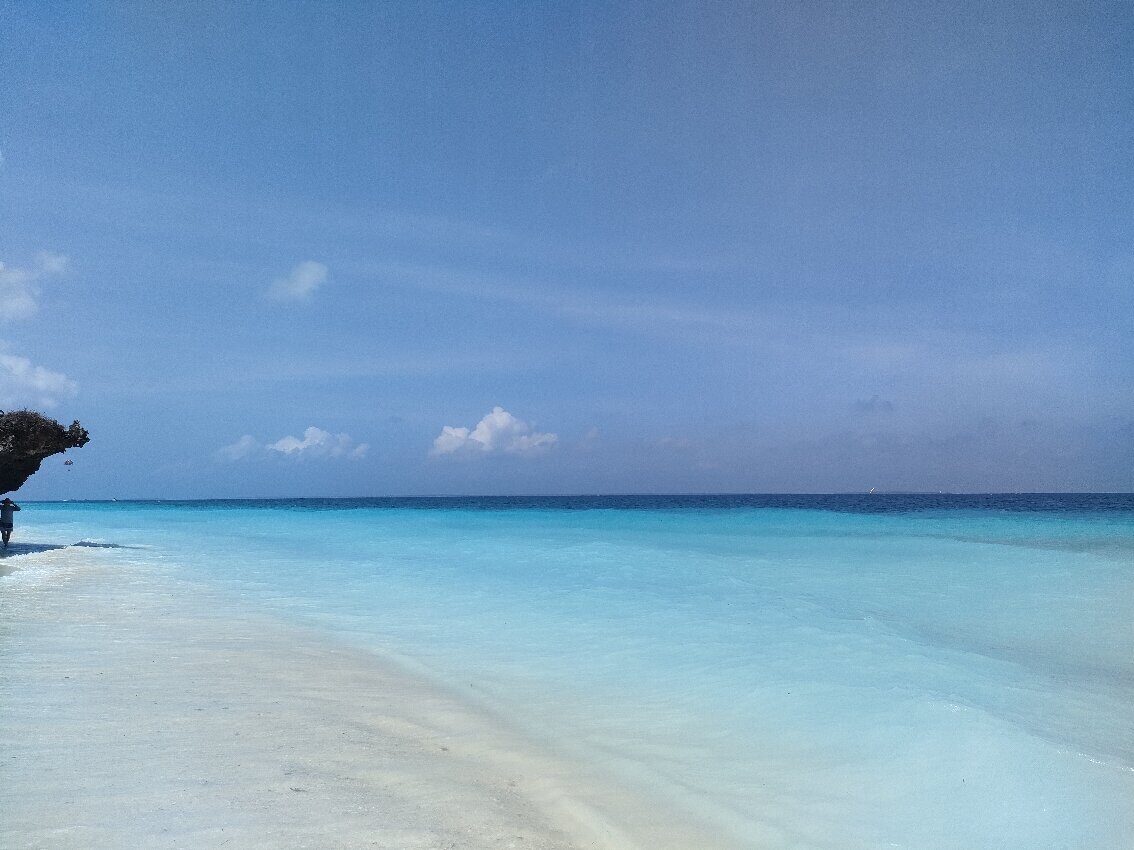
The coast here is quiet, undeveloped and largely free of the resort strip that defines the north and east. Mangapwani beach itself is a strip of sand between coral outcrops, used mainly by local villages and by a small number of visitors who make the trip out.
Swimming is tide dependent and there is little in the way of facilities, so it is a stop rather than a destination. A beach club operates in the area and some tours build a lunch stop into the itinerary.
The road out passes through villages and clove and coconut plantations rather than tourist development, which makes the drive itself part of the trip.
Combining Mangapwani With a Spice Farm Tour
Mangapwani sits north of Zanzibar City on the same side of the island as most of the working spice farms, which makes the pairing straightforward and it is the most common way the caves are sold.
A morning spice farm tour at Kizimbani or Bumbwini followed by the caves and the slave chamber makes a full and well balanced day: the crop that built the island’s wealth in the morning, and the labour system that produced it in the afternoon. Guides who make that connection explicitly give you the better version of the day.
Other combinations run the caves with a Stone Town walking tour, or with the ruins at Maruhubi and Kidichi, or as a stop on the way north to Nungwi and Kendwa. Anyone transferring to the north coast can slot the caves in without losing a separate day.
How Mangapwani Fits With the Stone Town Slave Trade Sites
Mangapwani makes far more sense after you have been to the former slave market at Mkunazini in Stone Town, where the Anglican cathedral now stands over the market site and two holding chambers survive beneath the neighbouring building.
The Stone Town site covers the legal trade at its height and the abolition that closed it in 1873. Mangapwani covers what happened next: the trade driven underground, moved out of the port and onto a hidden beach, continuing for decades after the treaty was signed.
Doing them in that order, town first and coast second, gives you the whole arc. Doing Mangapwani alone gives you a small stone room with no context, which is a poor use of a difficult site.
Getting to Mangapwani Caves and Practical Details
The sites lie roughly twenty to twenty five kilometres north of Zanzibar City on the northwest coast of Unguja, around forty five minutes to an hour by road depending on conditions. From the north coast beaches at Nungwi or Kendwa allow around an hour. From the east coast, closer to an hour and a half.
You need transport. Taxis, hired drivers and organised tours all serve the sites, and a self drive is possible with a local Zanzibar driving permit. Ask your driver to wait, since there is no reliable way to pick up a ride back from either site.
Entry fees are collected at each site separately and are modest. Guides are available on arrival and are worth taking, particularly at the slave chamber where the room tells you nothing on its own. Bring cash in small notes, a torch, closed shoes and water.
Best Time to Visit Mangapwani
The sites are open year round and neither depends much on weather, since one is underground and the other is a covered cell. That makes them a reasonable option during the long rains of April and May when boat trips are cancelled and the beaches are washed out.
Morning visits are cooler for the walk between the road and the sites, and the light entering the coral cave is better before midday. Whether you can swim in the cave pool depends on the water level rather than the month, so ask at the gate.
Frequently Asked Questions About Mangapwani Caves
How much does a Mangapwani caves tour cost?
Organised half day tours from Stone Town run roughly $20 to $30 per person, with the coral cave tour and the slave chamber tour sometimes sold separately at around $30 and $20 respectively. Entry fees at each site are modest and collected on arrival in cash. Combining the caves with a spice farm tour typically brings the total to $40 to $60 per person including transport.
What is the difference between the two Mangapwani caves?
One is natural, one is not. The coral cave is a limestone chamber with a freshwater pool at the bottom, formed by water working through the fossil reef and used historically as a village water source. The slave chamber is a square cell cut into the rock by hand around 1880 and roofed over, built to conceal captives after abolition. They sit a few kilometres apart and are usually visited together.
Can you swim in the Mangapwani coral cave?
Sometimes. There is a freshwater pool at the base of the chamber and swimming is permitted when the water level allows, which varies with the season. Ask at the site rather than planning around it. Bring a towel and swimwear in case, and closed shoes for the steep worn steps down.
Why was the Mangapwani slave chamber built after abolition?
Because the trade continued illegally. Sultan Barghash signed the abolition treaty in 1873, and the chamber dates from around 1880, built by the trader Mohammed bin Nassor Al Alwi in a concealed spot away from the port. Boats from Bagamoyo landed captives on a hidden beach nearby, and the chamber held them out of sight before they were moved on for sale.
How long does a Mangapwani visit take?
Three to four hours from Stone Town including the drive each way. The coral cave takes thirty to forty minutes, the slave chamber around twenty, and the rest is travel and the short walks between the road and each site. Combined with a spice farm it becomes a full day of five to six hours.
Should you visit Mangapwani or the Stone Town slave market?
Both, and in that order: Stone Town first. The Mkunazini site covers the legal trade and its abolition, with the cathedral built over the market and the original holding chambers beneath. Mangapwani shows what happened afterwards, when the trade was driven underground. Visiting Mangapwani without that context leaves you looking at a bare stone room.
Mangapwani is a site where the guide carries almost all the weight, since neither the cave nor the chamber explains itself. Holidays To Zanzibar pairs the caves with a spice farm and with the Stone Town slave trade sites so the day holds together, using Zanzibari guides who handle the history carefully rather than briskly.
For a northwest coast half day, or advice on the right order to see these sites in, get in touch with Holidays To Zanzibar and someone on the island will reply.