Kizimkazi is a pair of fishing villages on the southern tip of Zanzibar known for two things: morning dolphin watching trips into Menai Bay, and the Kizimkazi Dimbani Mosque, built in 1107 and one of the oldest Islamic buildings in East Africa. Boat trips run at dawn and are booked through hotels or on the beach. Kizimkazi lies about sixty kilometres and an hour and a half south of Stone Town on Unguja island.
The dolphins get all the attention. The mosque is the better reason to make the drive, and almost nobody says so.
Kizimkazi Dolphin Watching Trips and What Actually Happens
A Kizimkazi dolphin watching trip starts early, usually with a hotel pickup somewhere between five and six in the morning depending on where you are staying. You reach the fishing beach at Kizimkazi Mtendeni as the boats are being pushed out, and you leave in a small motorboat with a skipper and a guide.
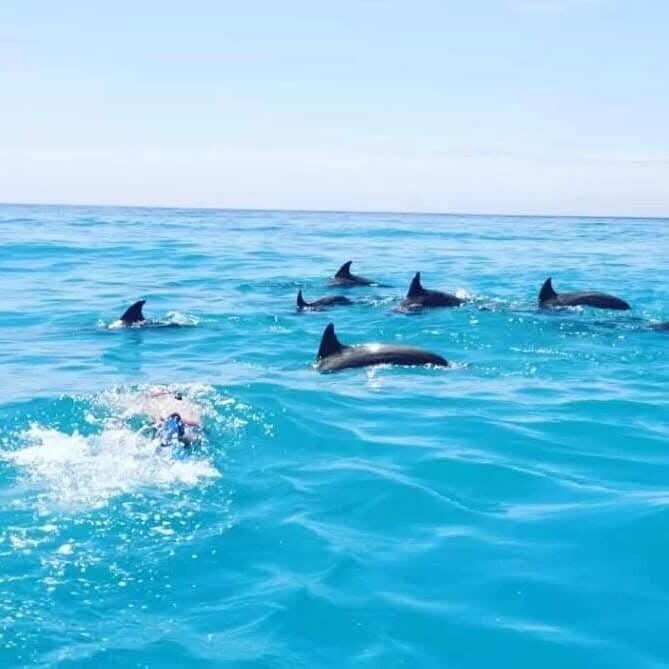
The trip runs two to three hours. The boat works the shallow water off the southern coast where pods rest and feed, and when dolphins are located the skipper cuts speed and follows at a distance. Some operators encourage everyone into the water with masks; others keep you aboard and watch.
Sightings happen on most mornings but they are not guaranteed, and nobody honest will tell you otherwise. Actually swimming alongside dolphins is rarer still, and it requires patience, calm water and a pod that is not being harassed by four other boats.
Take the earliest departure available, between six and eight in the morning. The sea is flattest, the dolphins are most active near the reef edge, and there are fewer boats on the water than there will be by nine.
Bottlenose and Humpback Dolphins in Menai Bay
Two species are the reason the trips exist. Indo Pacific bottlenose dolphins are resident here year round, using the shallow coastal water to rest, feed and nurse calves, and they are what most visitors see. Indian Ocean humpback dolphins also use these waters, though they are considerably shyer and their appearances are far less predictable.
The water off Kizimkazi sits within the Menai Bay Conservation Area, which covers around four hundred and seventy square kilometres and is the largest marine protected area in Zanzibar. It takes in coral reef, seagrass beds, mangrove and a fishery that local villages depend on.
Turtles, rays and reef fish are seen on the same trips, and a snorkelling stop over coral is usually built in on the way back.
The Ethics of Swimming With Dolphins on a Kizimkazi Trip
This needs saying plainly, because it is the part most tour listings skip.
The pods off Kizimkazi are resting animals, and repeated pursuit by boats interrupts that rest. When several boats chase a single pod, engines running, dropping swimmers in front of them, the animals go deep and move on. Research along this coast has documented the pressure that heavy, unregulated boat traffic puts on the resident population.
What a responsible trip looks like: the skipper keeps distance, cuts the engine and lets the pod set the terms. If people enter the water, they do it quietly, from the side, without swimming at the animals. Nobody touches or feeds anything. The boat does not circle or cut across the pod’s path.
You are entitled to ask for that, and to say so if a crew is doing the opposite. Choosing an operator that advertises a keep your distance policy costs no more than choosing one that promises you will swim with dolphins, and the promise itself is a warning sign.
Any operator who guarantees you will swim with a dolphin is telling you how they intend to treat the dolphin.
Kizimkazi Dimbani Mosque, East Africa’s Oldest Islamic Building
Set back from the coast at Kizimkazi Dimbani, shaded by old mango trees, stands a low coral stone building that predates almost everything else on the island. A preserved Kufic inscription dates its construction to 1107, built by Shirazi settlers from Persia, which makes it one of the oldest Islamic structures anywhere on the East African coast.
A point that confuses everyone, including some guides: the mosque is in Dimbani, not in Kizimkazi Mtendeni, which sits about three miles away. The two villages carry the joint names Kizimkazi Dimbani and Kizimkazi Mtendeni, which is where the muddle comes from. The dolphin boats leave from Mtendeni; the mosque is at Dimbani.
There are no minarets, no scale, no fanfare. It is a small whitewashed building that has been in continuous use for over nine hundred years, which is the whole point of it.
The Kufic Inscription and Coral Stone Carving on a Mosque Tour
The inscription above the doorway is the reason the building matters to historians. Kufic is an early angular form of Arabic script, and the carved panel is the dated evidence that places the structure in the early twelfth century.
Most of what stands today was rebuilt in the eighteenth century, so the building you walk into is not entirely the original. The inscription and certain carved coral decorative elements survive from the period of construction, and those are what a guide will point you towards. The mihrab, the niche indicating the direction of prayer, carries some of the finest coral carving on the island.
The material is coral rag, quarried locally, the same stone that built Stone Town seven centuries later. Inside, the Swahili style ceiling shows traditional woodwork patterns.
This is an active place of worship. Cover shoulders and knees, women should carry a scarf, remove shoes before entering, and do not visit during prayer times. A small entry fee or donation is collected and goes towards upkeep. Ask before photographing the interior.
Kizimkazi Village, Ruins and the Baobab on a Village Tour
Kizimkazi is one of the oldest settlements on Zanzibar and the ground around it shows it. Ruins of earlier mosques, stone houses and traces of a walled town lie scattered near the villages, some overgrown and none of it presented as a formal site.
The village itself is a working fishing community. Boats come in through the morning, nets are repaired on the sand, and the pace is unlike anywhere on the tourist coasts. A large baobab stands near the village and is a local landmark.
A village tour arranged locally covers the ruins, the fishing beach and daily life, and puts money into the community directly. It takes an hour or so and it is the part of a Kizimkazi day that visitors most often skip and later wish they had not.
Snorkelling and Reef Trips in the Menai Bay Conservation Area
Most dolphin boats include a snorkelling stop on the return, over coral within the conservation area. Visibility is good in the dry months and the reef holds parrotfish, angelfish, wrasse and the usual reef community, with turtles seen fairly often.
Gear is provided as standard, though quality varies enough that it is worth inspecting what you are handed. The water is shallow and calm at most stops, which suits beginners.
Longer Safari Blue style boat trips operate from Fumba further north along the same bay, running sandbanks, snorkelling and a seafood lunch aboard a dhow. That is a different, longer day and a better option for anyone whose main interest is the water rather than the dolphins.
Combining Kizimkazi With a Jozani Forest Tour
The road south passes Jozani Chwaka Bay National Park, which makes the pairing obvious and it is the most common day sold from Stone Town: dolphins at dawn, then the forest for red colobus monkey tracking, then back in the afternoon.
That works, though it is a long day with a very early start. The alternative, and the better one if you have flexibility, is to base yourself on the southeast coast at Paje or Jambiani, which cuts the drive to Kizimkazi to under an hour and leaves the rest of the day free.
Kizimkazi also has a handful of small guesthouses and lodges, so staying a night locally is possible and means reaching the boats without a pre dawn transfer.
Getting to Kizimkazi and Best Time for a Dolphin Trip
Kizimkazi sits at the southern end of Unguja, around sixty kilometres and an hour and a half by road from Stone Town or the airport. From Paje and Jambiani it is closer to an hour, from Pongwe about an hour and a half, and from the north coast beaches at Nungwi or Kendwa closer to two and a half hours.
Transfers are arranged through hotels or operators, and for a dawn departure that is the practical option. Self driving is possible with a local Zanzibar driving permit.
The dry months from June to October and the short dry season of January and February give the calmest seas and the best chance of a productive morning. During the long rains of April and May the water is rougher and visibility for snorkelling drops considerably. Whatever the month, dawn beats every other consideration.
Frequently Asked Questions About Kizimkazi
Before You Book the Dolphin Trip
The boat is open with no shade, so bring a dry bag, wear swimwear underneath, carry your own mask, and take food, water and small notes. Treat the boat ride and the reef stop as what you are paying for and the dolphins as a possibility rather than a promise, since there is no refund if they do not show. If you are staying at Nungwi or Kendwa this is a poor trade, being two and a half hours each way before a two-hour boat ride, and an early Mnemba reef trip is the better choice. Kizimkazi makes most sense if you are based on the south or east coast.
How much does a Kizimkazi dolphin tour cost?
Shared boat trips typically run around $25 to $50 per person including snorkelling gear, with private boats costing more. Tours booked from Stone Town including transfers usually fall between $50 and $90 per person, and combined dolphin and Jozani Forest days run higher again. A small entry fee or donation applies at the Dimbani mosque. Jozani entry, if combined, adds roughly $10 to $12.
Are you guaranteed to see dolphins at Kizimkazi?
No. Bottlenose dolphins are resident year round and sightings occur on most mornings, but nothing is promised and conditions matter. Swimming alongside them is considerably rarer and requires patience, calm water and a pod that has not already been pursued by other boats. Treat any operator guaranteeing a swim with real caution.
Is swimming with dolphins in Zanzibar ethical?
It depends entirely on how the boat behaves. The pods off Kizimkazi are resting and nursing, and repeated pursuit by multiple boats disturbs them. Responsible operators keep distance, cut the engine and let the animals decide, and they do not chase, circle or drop swimmers in a pod’s path. Choose on that basis rather than on who promises the closest contact.
How old is the Kizimkazi Dimbani Mosque?
A preserved Kufic inscription dates its construction to 1107, built by Shirazi settlers from Persia, making it one of the oldest Islamic buildings on the East African coast. Most of the present structure was rebuilt in the eighteenth century, though the inscription and some carved coral elements survive from the original building.
What should you wear to visit the mosque?
Shoulders and knees covered for everyone, and women should bring a scarf for their head. Shoes come off before entering. It is an active place of worship, so avoid prayer times and ask before photographing inside. Beachwear from the morning boat trip is not appropriate, so carry a change of clothes.
How far is Kizimkazi from Stone Town?
About sixty kilometres, roughly an hour and a half by road. From Paje or Jambiani it is closer to an hour, and from Nungwi or Kendwa on the north coast around two and a half hours. Dolphin boats leave at dawn, so from Stone Town or the north expect a pickup between five and six in the morning.
Kizimkazi is a place where the choice of operator changes both what you see and what the animals go through, and that is not something you can judge from a listing photograph. Holidays To Zanzibar works with skippers who keep their distance and cut the engine, and who will take you to the Dimbani mosque afterwards rather than driving straight back.
For a southern day arranged around the tide, the dawn and the animals rather than the sales pitch, get in touch with Holidays To Zanzibar and a real person will answer.