Kuza Cave is a limestone sinkhole near Jambiani on Zanzibar’s east coast with a freshwater pool at the bottom that visitors can swim in, open daily from around eight in the morning until half past six. Entry is paid at the gate and no booking is needed for the swim itself. The cave sits in coral rag forest behind Jambiani village on Unguja, and it operates alongside a Swahili culture centre run with a local social enterprise.
It is small, it takes an hour, and it is one of the few places on the island where you can get properly cool in the middle of the day. That last part matters more than it sounds.
What a Kuza Cave Tour Involves
A Kuza Cave tour starts at a gate in the scrub off the Jambiani road, which does not look like much. You cross a short bridge, pass a platform with a natural rock formation that looks rather like an altar, then take a flight of steps down into the sinkhole.
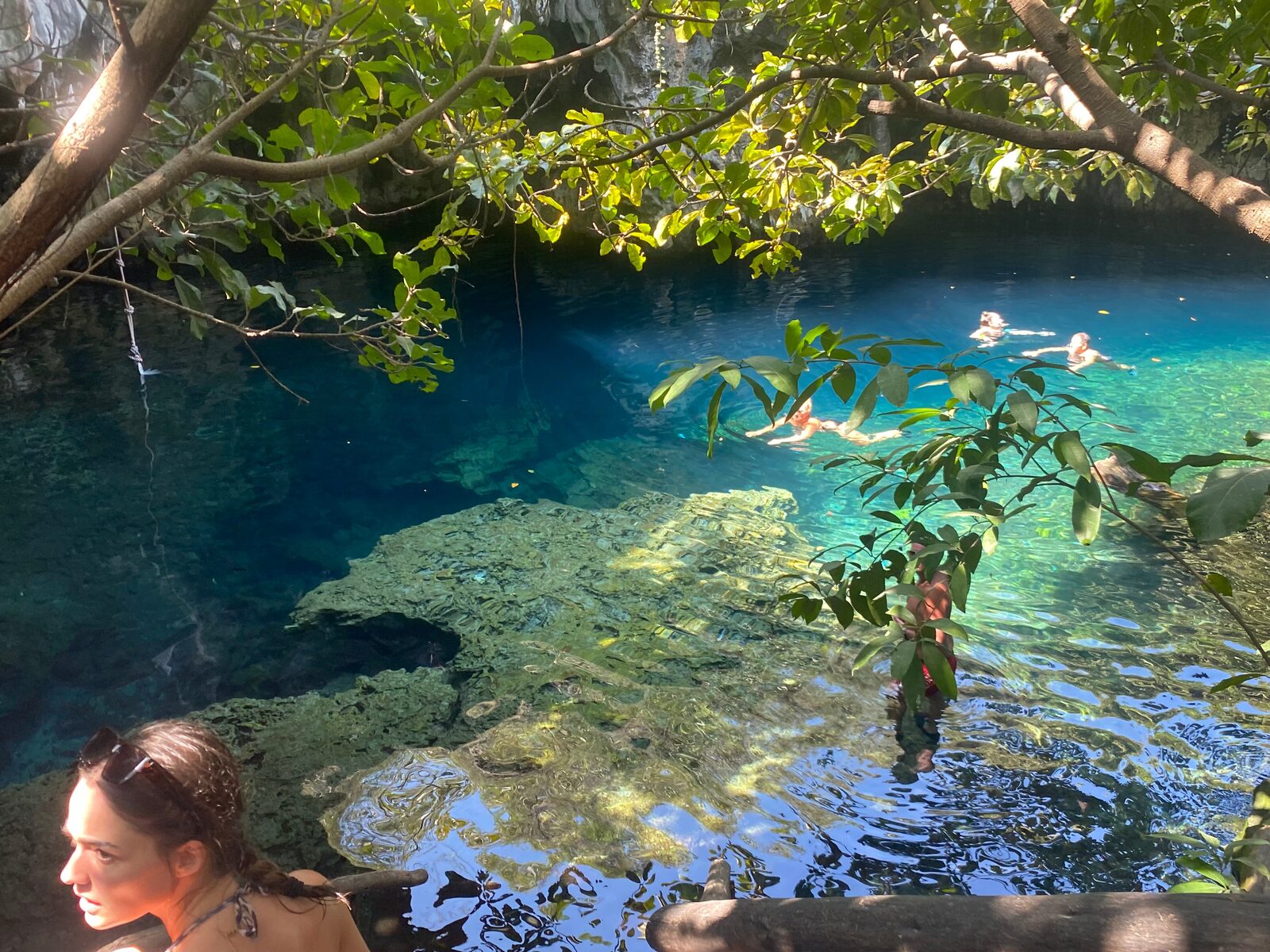
The cave is not the dark, cramped experience the word suggests. It is a collapsed limestone chamber open to the sky in part, well lit, and cool by twenty degrees or so compared with the road above. Roots hang down from the forest overhead. At the base sits a clear pool fed by groundwater seeping through the limestone from underground water tables.
The circular chamber runs around five hundred metres in circumference and was formed over roughly two hundred and fifty thousand years by rainwater eating through the limestone. Steps and railings make it easy going, and children handle it without difficulty.
Go around midday, which is the opposite of the usual advice on this island. The cave is coolest when everywhere else is hottest, and the light coming down through the opening is at its best directly overhead.
Swimming in the Cave Pool on a Kuza Cave Trip
The pool is the main reason people come. It is fresh water rather than sea water, clear enough to see the bottom, and cold in a way that is genuinely welcome after a morning on the coast. Locals have long regarded the water as having healing properties, and the cave is treated as a sacred site by the surrounding village.
Swimming is permitted and included in the entry fee. There is no depth to speak of at the edges and it shelves gradually, so weak swimmers are fine. Small freshwater shrimp live in the pool and occasionally nibble at feet, which is harmless and startling in equal measure.
Bring a towel and swimwear, since changing facilities are basic. Do not use sun cream or insect repellent before getting in, because both wash off into a small closed body of water that has been here a very long time.
The Archaeology and Swahili History at Kuza
What lifts Kuza above a swimming hole is the excavation work done on the site. Digging in the chamber has turned up animal bone including zebra, giraffe and waterbuck, species that no longer live on Zanzibar and which carry cut marks from human tools.
That matters because it points to a period when the island was connected to the mainland by a land bridge, before rising sea levels cut the Zanzibar Channel and separated Unguja from what is now Tanzania. The bones are the physical evidence of that connection.
Artefacts recovered from the site are displayed at the cave alongside a timeline of Swahili history stretching back to human origins in East Africa. It is a modest display rather than a museum, and the guides fill it in verbally. Ask questions; the staff know the material well and they are the reason the visit lands.
Giraffe bone under a Zanzibari cave floor. The island has not always been an island, and this is where you can see the proof of it.
The Culture Centre: Drumming, Dance and Cooking Classes
Kuza operates as a culture centre alongside the cave, and the extras are what turn a half hour stop into a half day.
Drumming and dance sessions. Resident artists run participatory ngoma drumming and Swahili dance, usually booked in advance rather than dropped into. Considerably more fun than it sounds from a distance.
Swahili cooking classes. The most popular addition. You learn to grate and press fresh coconut for milk, blend Zanzibari spice mixes and build a coconut curry from the base up, then eat what you made.
Craft and cultural workshops. Weaving, basketry and other village crafts taught by local artisans, depending on who is on site that day.
Village and forest walks. Guided walks in the surrounding coral rag thicket, where monkeys, birds, butterflies and bushbabies live, though the last are nocturnal and rarely seen in daylight.
Entry fees and workshop payments support education projects in the surrounding community, which is the model the site was set up on. Ask at the gate what is running that day rather than assuming, since the schedule depends on the artists available.
Combining Kuza Cave With an East Coast Day Tour
Kuza sits in the middle of the east coast attractions and is almost always visited as part of a longer day. The standard combinations are well established.
Jozani Chwaka Bay National Park for red colobus monkey tracking in the morning, then Kuza in the middle of the day, then The Rock restaurant at Michamvi for a late lunch, is the most sold day tour on the island. Others swap in Paje beach, Mtende beach in the far south, or the Blue Lagoon for snorkelling.
Full day combination tours run six to nine hours and cover a lot of ground. The trade off is that Kuza gets forty five minutes, which is enough for the swim but not for a cooking class. If the culture centre interests you, go independently and stay longer.
The Maalum Cave Alternative Nearby
Worth knowing about since visitors regularly confuse the two. Maalum Cave, also in the Paje area, is a separate limestone sinkhole with a swimming pool, operating on a booked time slot system with limited numbers and a higher entry price.
The differences are straightforward. Maalum is more managed, quieter because numbers are capped, and set up primarily as a swimming attraction. Kuza is cheaper, more informal, and carries the archaeology and the culture centre alongside the pool.
Neither is better. If you want a controlled swim in a photogenic setting, Maalum. If you want the history and the cultural side with your swim, Kuza. Doing both in one trip is entirely reasonable and takes half a day.
Getting to Kuza Cave and Practical Details
The cave lies inland from Jambiani on the southeast coast of Unguja. From Jambiani or Paje it is a five to ten minute drive. From Stone Town or the airport, around an hour to an hour and a quarter. From the north coast beaches, closer to two hours.
You need transport. It is not walkable from the beach and there is no public route to the gate, so use a taxi, a hired driver or a rental with a local Zanzibar driving permit. Ask your driver to wait, since finding a ride back from the gate is unreliable.
Opening hours run roughly eight in the morning to half past six, seven days a week. Bring swimwear, a towel, cash in small notes, and closed shoes for the steps and the forest paths, which are uneven.
Best Time to Visit Kuza Cave
Any month works, since the cave is underground and the pool is fed by groundwater rather than rain. That makes it one of the few reliable options during the long rains of April and May, when the beaches are washed out and the boats stay in.
Within the day, the middle hours are best for both temperature and light. Early morning and late afternoon leave the chamber dim, and the sun overhead is what lights the pool properly. Weekdays are quieter than weekends, when local families visit too.
Frequently Asked Questions About Kuza Cave
The Rock and the Rules
The cave is cut into coral rag, the hard fossilised reef limestone with very thin soil over it that is the same stone Stone Town is built from, which is why the surrounding land is thicket rather than tall forest. Jumping in from the edges is not permitted, so you enter from the steps. Even at midday the light underground is challenging for photographs.
How much is the Kuza Cave entrance fee?
Around $10 per person for entry including the swim, with some visitors reporting $5 in the past. Guided tours sold through operators that include Kuza run from about $20 per person. Cooking classes, drumming sessions and other workshops are charged separately and vary by activity, so ask at the gate. Bring cash in small notes, since card payment is not available.
Can you swim in Kuza Cave?
Yes, and it is the main reason most people visit. The pool is fresh groundwater, clear and cold, and swimming is included in the entry fee. It shelves gradually so weak swimmers and children are fine. Small freshwater shrimp live in the pool and sometimes nibble at feet, which is harmless. Do not wear sun cream or repellent into the water.
How long does a visit to Kuza Cave take?
Forty five minutes to an hour for the cave, the pool and the small artefact display. Add two to three hours if you take a cooking class, and an hour for a drumming or dance session. Combination day tours that include Kuza alongside Jozani and The Rock usually allocate it under an hour.
What was found in Kuza Cave?
Excavation has recovered animal bone including zebra, giraffe and waterbuck, carrying cut marks from human tools. None of those species live on Zanzibar now, which points to a period when the island was joined to the African mainland before rising sea levels created the Zanzibar Channel. Artefacts are displayed on site alongside a timeline of Swahili history.
What is the difference between Kuza Cave and Maalum Cave?
Both are limestone sinkholes with swimmable freshwater pools in the same part of the island. Maalum operates on booked time slots with capped numbers and a higher entry price, and is set up primarily as a swimming attraction. Kuza is cheaper and more informal, and adds the archaeology and a working Swahili culture centre with cooking, drumming and craft workshops.
Is Kuza Cave suitable for children?
Yes. The steps down are straightforward with railings, the chamber is well lit rather than dark, and the pool is shallow at the edges. Closed shoes help on the uneven ground. Younger children who dislike cold water should be warned in advance, since the pool is noticeably colder than the sea.
Kuza is easy to reach with a driver and rewards more time than the standard combination tours give it, particularly if the cooking class appeals. Holidays To Zanzibar arranges east coast days that either slot the cave into a wider circuit or build an afternoon around the culture centre properly, with drivers who know the turn off and will wait.
For help pairing the cave with Jozani, Jambiani or the coast further south, get in touch with Holidays To Zanzibar and someone on the island will reply.