Where to stay in Zanzibar runs from family guesthouses through boutique beach bungalows to staffed private villas, with the biggest divide being whether a property sits on the north coast, where the sea is swimmable all day, or the east, where it is not. Most visitors book one beach property plus a night or two in Stone Town. Zanzibar’s beach resorts line the coast of Unguja, the main island of this Tanzanian archipelago.
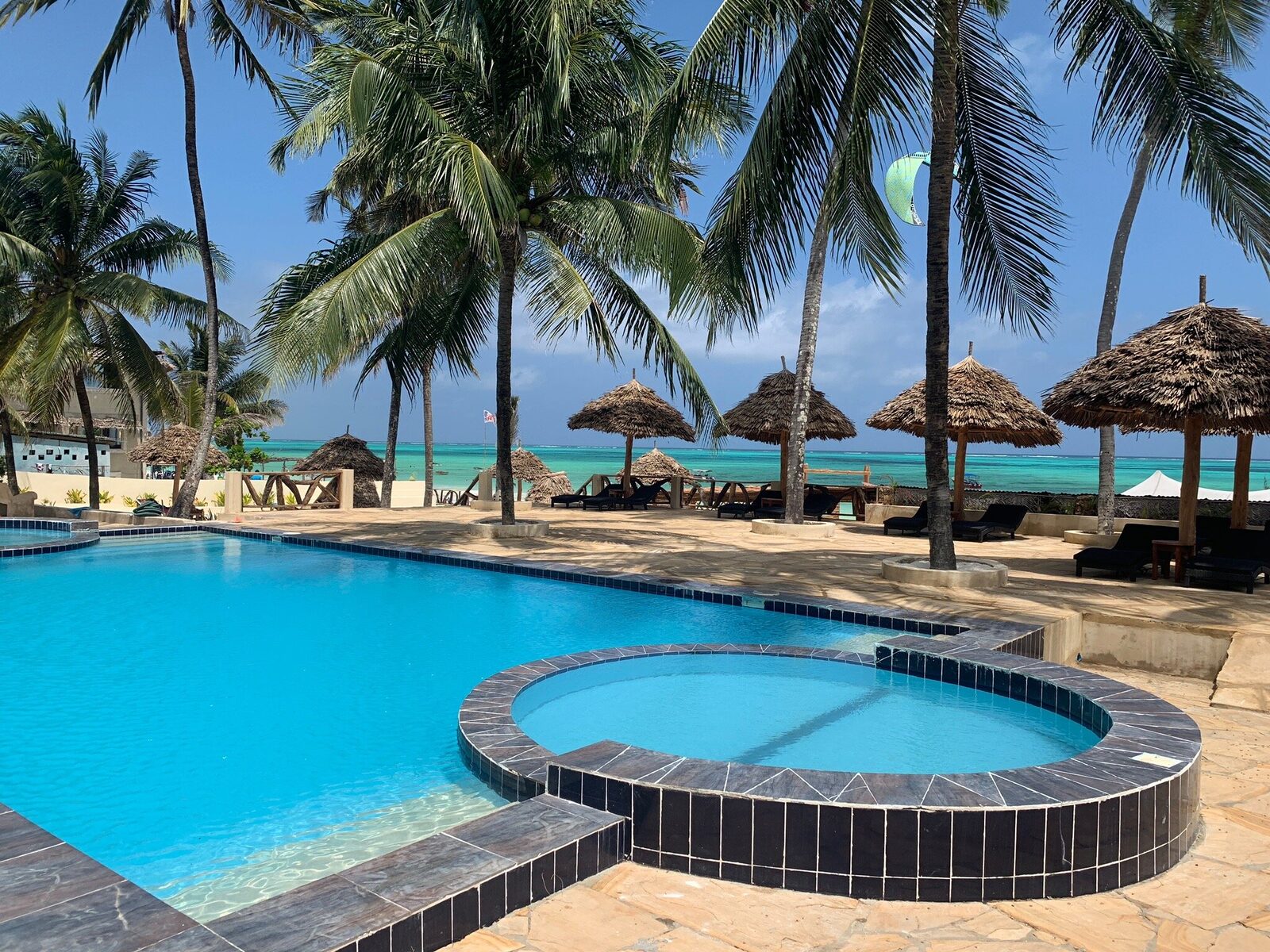
The range here is unusually wide for one small island, and the same week can be done in a fan cooled room above a village or in a villa with its own staff.
Luxury Beach Resorts on a Zanzibar Trip
The top tier clusters in three places: Matemwe and the northeast, the Michamvi peninsula, and the northern tip around Kendwa and Nungwi.
Matemwe carries the highest concentration of boutique luxury, largely because it faces Mnemba Atoll and attracts guests whose trip is built around the reef. Properties here tend to be small, spread along the coast rather than clustered, with private plunge pools and a deliberately quiet feel.
Near Stone Town, the Park Hyatt Zanzibar sits on the beachfront and pairs modern rooms with traditional Swahili architecture, an infinity pool over the sea and a spa. It is the main option for anyone wanting a high end property with the old town on the doorstep rather than an hour away.
What you are paying for at this level, beyond the room, is space between you and other guests, a private stretch of sand, and staff who arrange excursions properly rather than pointing you at a desk.
Confirm what “beachfront” means at the specific property. Some sit behind a coral wall or a reef garden, and on the east coast a beachfront room can face several hundred metres of exposed sand for half the day.
Mid Range Beach Hotels and Boutique Bungalows
This is where most visitors land and where the island offers the best value. Expect air conditioning, a pool, breakfast included and usually direct beach access, in properties of twenty to fifty rooms rather than resort scale.
Kendwa and Nungwi carry the widest choice in the north, with the trade off that Nungwi properties sit close together on a busy strip. Pongwe and the northeast have quieter mid range options in sheltered coves, including several boutique hotels with a strong following among couples. Paje and Jambiani on the east coast offer more room for the money, with the tide as the condition attached.
A pool matters more on the east coast than the north, and it is worth treating as a requirement rather than a nice extra if you book there. It is what turns the low tide hours from a problem into a rest.
Budget Guesthouses and Beach Bungalows on a Zanzibar Trip
Zanzibar is genuinely doable on a small budget, which surprises people who have only seen the resort photography.
Jambiani and Bwejuu on the east coast carry the best concentration of simple beach bungalows and family run guesthouses, often fan cooled, usually with breakfast, frequently a few steps from the sand. Paje has hostels and budget rooms aimed at the kitesurfing and remote working crowd. Stone Town has cheap guesthouses throughout the old quarter, some in beautiful old buildings.
What you give up is air conditioning, hot water reliability and a pool. What you get is a location most mid range guests would envy and, in the village properties, a stay that feels connected to the place rather than sealed off from it.
All Inclusive Resorts and When They Make Sense
All inclusive properties are concentrated at Nungwi, Kendwa and along the northeast coast at Kiwengwa, where several large resorts serve package groups.
They work well for families, for anyone who would rather not think about money for a week, and for stays where you do not intend to leave the property much. Kiwengwa in particular is built around this model.
They work badly if you plan to explore. Zanzibar’s food is one of the better reasons to be here, and eating every meal at a buffet in a compound means missing the Forodhani night market, the village restaurants and the seafood grills entirely. Anyone planning excursions on most days is usually better off on a bed and breakfast rate.
All inclusive suits the holiday where you barely leave. On an island this interesting, that is a decision worth making deliberately rather than by default.
Historic Hotels in Stone Town for a Heritage Trip
Staying in the old quarter is a different proposition from a beach stay, and for one or two nights it is worth doing properly.
Several restored merchant houses operate as small hotels. Emerson Spice occupies a nineteenth century merchant’s house with individually decorated rooms combining antique furnishings and Swahili design, and its rooftop tea house serves a mix of Zanzibari and international food with views across the old town. The Zanzibar Serena Hotel sits in a restored historic building on the waterfront with a courtyard pool and easy walking access to the Stone Town landmarks.
Below that tier, the quarter is full of family guesthouses in old buildings, many with roof terraces of their own. Rooms in coral stone houses tend to be dark, and lanes are too narrow for cars, so expect to walk the last stretch with your bags.
Book somewhere with a working roof terrace if you can. The old town from three storeys up at dusk, with the call to prayer carrying across the roofline, is the memory most people take from Stone Town.
Private Island and Off Grid Stays
A small number of properties sit away from the main island entirely.
Chumbe Island Coral Park in the southwest has seven eco bungalows running entirely off grid on photovoltaic power, rainwater harvesting, solar water heating and composting toilets, inside a protected marine and forest reserve. Guests have the island to themselves after the day boats leave, and rangers run night walks to find coconut crabs. There is no air conditioning and no pool, which is the point.
Mnemba Island inside the atoll is occupied by a private lodge and is closed to anyone not staying there, including day visitors.
These are choices for people who want somewhere genuinely remote rather than a resort with a remote aesthetic, and they book out well ahead.
Honeymoon and Couples Stays in Zanzibar
The island does honeymoons well, and the strongest options are not always the largest properties.
Matemwe, Pongwe and the Michamvi peninsula are the quiet coasts, with small boutique lodges, private plunge pools and enough space between properties that you are not sharing a beach with a hundred people. Michamvi has the added feature of a peninsula with both sunrise and sunset shores a few minutes apart.
Kendwa suits couples who want quiet by day and somewhere to eat and drink in the evening. Nungwi is the least private of the beach areas and Kiwengwa the most group oriented, so both are worth approaching carefully for a honeymoon.
Say it is a honeymoon when you book. Most properties do something, and it costs nothing to mention.
What to Check Before Booking a Zanzibar Beach Resort
Tides at that specific beach. The single biggest source of disappointment. North coast properties at Nungwi and Kendwa are swimmable all day; east and northeast properties are not. Check a tide table for your dates before you commit.
Whether there is a pool. Close to a requirement on the east coast, where it covers the hours the sea is unavailable. Less critical in the north.
What the rate includes. Bed and breakfast, half board and all inclusive are all common, and the gap between them is substantial once you add drinks. Also ask whether the nightly infrastructure levy is included or collected separately.
Transfer distance and cost. The north coast is the longest run from the airport at around an hour and a half. Ask the property to quote the transfer rather than arranging it at arrivals.
Seasonal closure. Some properties shut for part of April and May during the long rains. Confirm the property is actually open for your dates rather than assuming a booking site is current.
Excursion arrangements. Whether the property books trips itself or hands you to a beach operator makes a real difference to what you pay and to the quality of the boat.
Booking Windows, Minimum Stays and Seasonal Rates
Rates on this island swing harder by season than most people expect, and availability tightens well before the price does.
July to September and the Christmas and New Year fortnight are the two peaks, and the festive period commonly carries minimum stay requirements of five to seven nights alongside the highest rates of the year. Book those windows several months ahead.
February around the Sauti za Busara music festival fills Stone Town alone, with rates in the old quarter climbing sharply for that week. July does the same during the film festival.
April and May sit at the opposite extreme, with wide availability, the lowest rates of the year and some properties closed entirely. November and early January are the best balance of price and availability for anyone with flexible dates.
Frequently Asked Questions About Where to Stay in Zanzibar
How much do hotels cost in Zanzibar?
Guesthouses and simple bungalows run roughly $20 to $50 per night. Boutique hotels and mid range beach properties sit around $60 to $150. Resorts and luxury villas start near $200 and reach $800 or more in peak season. Reported averages put off season rates around $63 per night against roughly $118 in peak, and a typical double room across all tiers at around $49. Hotels also collect a small nightly infrastructure levy based on star rating.
Are all inclusive resorts worth it in Zanzibar?
For families and for stays where you mostly remain on the property, yes. If you plan excursions on most days and want to eat at village restaurants, the Forodhani night market and the seafood grills, a bed and breakfast rate usually works out better and you see far more of the island. All inclusive properties are concentrated at Nungwi, Kendwa and Kiwengwa.
Which is the best area to book a Zanzibar beach resort?
Kendwa or Nungwi in the north if swimming at any hour matters, since those beaches escape the extreme tides. Matemwe for reef access to Mnemba Atoll. Paje for kitesurfing. Jambiani and Bwejuu for quiet and the best value, at around thirty to forty percent below northern rates. Michamvi and Pongwe for couples wanting somewhere calm.
How far in advance should you book accommodation in Zanzibar?
Several months for July to September and for the Christmas and New Year fortnight, which also carries minimum stays of five to seven nights at many properties. A few weeks is usually enough outside those windows. Stone Town fills on its own account during the February music festival and the July film festival.
Do Zanzibar hotels close during the rainy season?
Some do, mainly during April and May at the peak of the long rains, when visitor numbers drop and staff take leave. Those that stay open cut rates hard, with off season averages close to half of peak season. Always confirm directly that a property is operating for your dates rather than relying on a booking site listing.
Should you book a hotel in Stone Town alongside a beach?
For most visitors yes, one or two nights. Stone Town has no swimmable beach of its own but it is the historic core of the island and the most convenient base for boat trips to Prison Island, Nakupenda and Chumbe. Restored merchant houses in the quarter run from around $20 for guesthouses to well over $200 for the better known historic hotels.
Accommodation listings for this island are unusually good at hiding the two things that matter most: what the tide does in front of the property, and what the rate actually covers. Holidays To Zanzibar books across every tier here and will match a property to the coast that suits your plans rather than the one with the best photographs.
For help choosing between two shortlisted properties, or finding something for dates that are already tight, contact Holidays To Zanzibar and a real person will reply.