A sunset dhow cruise in Zanzibar runs one to two hours under sail in the late afternoon, leaving from the Stone Town waterfront or from Nungwi and Kendwa on the north coast, usually with drinks included. Boats are booked on the beach or through your hotel on the day. A dhow is the traditional lateen rigged sailing boat of the Indian Ocean, and it is what carried the trade that built Zanzibar.
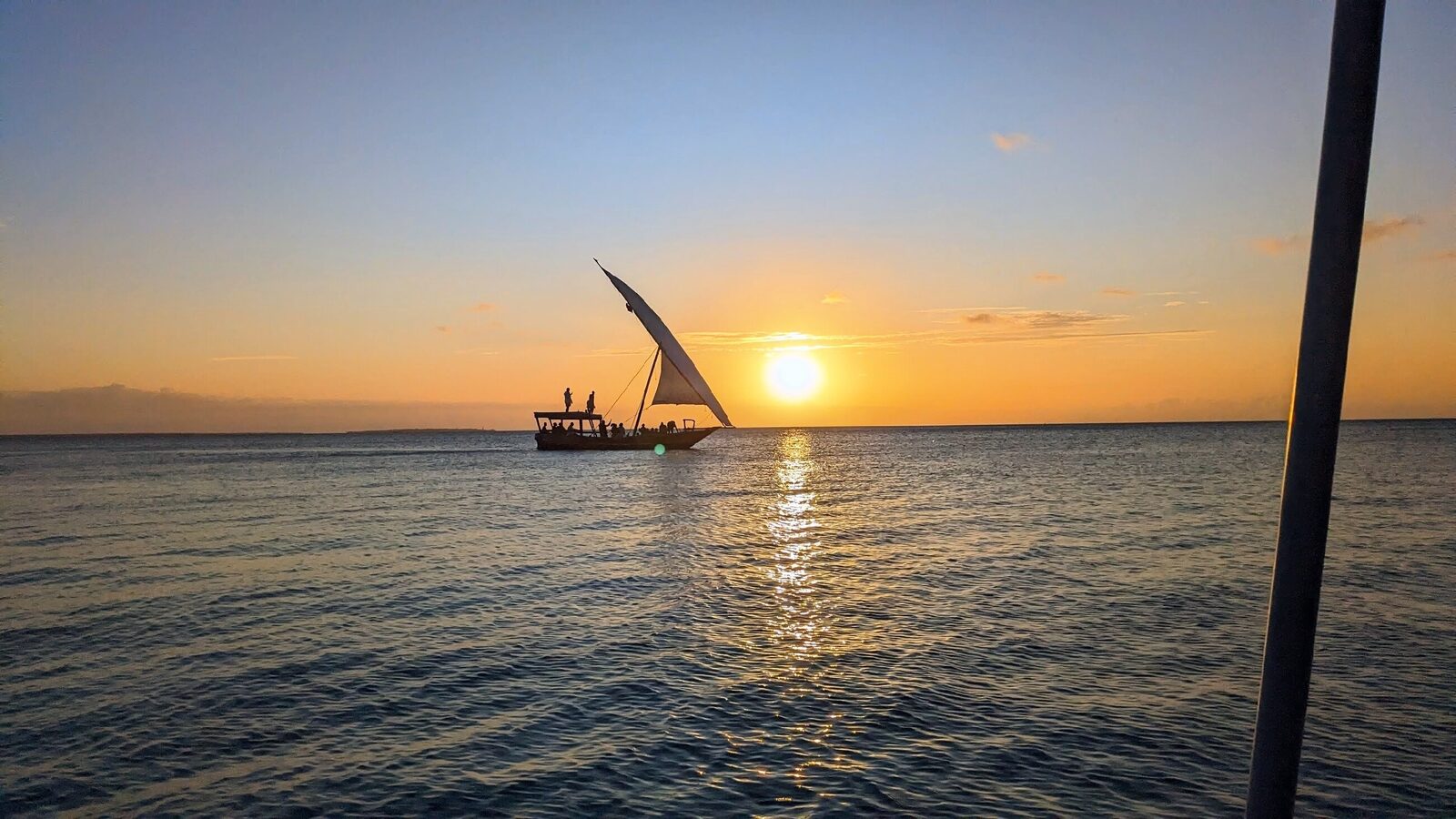
It is the cheapest good evening on the island. It is also the trip where boat quality varies most, so it is worth knowing what you are looking at before you hand over money on a beach.
What a Dhow Is and Why It Matters Here
The dhow is not a tourist prop. These boats, with their single raked mast and triangular lateen sail, are the vessels that ran the monsoon trade routes between Arabia, Persia, India and the East African coast for centuries.
The northeast kaskazi wind carried them down from December to March, and the southeast kusi carried them home from around June. Zanzibar sat at the practical southern limit of that annual round trip, which is why it became a trading centre at all.
Working dhows still fish and carry cargo along this coast, and boat builders shape hulls by hand on the sand at the northern end of Nungwi beach. When you go out on one at five in the afternoon, you are in the same hull shape that made this island what it is, which is a reasonable thing to be thinking about with a drink in your hand.
Book on the day rather than in advance. Wind and sea state decide whether the sailing is good, and a boat booked three days ahead sails whatever the conditions.
Cruises From the Stone Town Waterfront
The strongest version, because you get the sun on one side and the old town skyline on the other.
Boats leave from the beach beside Forodhani Gardens in the late afternoon and run a slow loop offshore under sail. From the water you see Stone Town as it was meant to be seen, from the sea: the Old Fort, the House of Wonders and the merchant houses stacked along the front, with the light landing on them as the sun goes down behind you over the channel.
Cruises run one to two hours and usually include soft drinks, with alcohol sometimes available depending on the operator. Some boats carry snacks.
The timing works neatly with the rest of an evening. You are back on the beach as the Forodhani night market lights its charcoal grills, which means dinner is a fifty metre walk from where you step off the boat.
Cruises From Nungwi and Kendwa
The north coast version trades the architecture for better sailing and a cleaner horizon.
These beaches face west with nothing between them and the open channel, so the sun drops straight into the sea. The trade winds also mean the sailing itself is often as good as the sunset, particularly during the kusi from June to September when there is real wind to work with.
Boats leave from the sand and are arranged on the beach or through hotels through the afternoon. Some operators run larger vessels with music and a bar, which suits some people and defeats the point for others. Ask what kind of boat you are getting.
Nungwi has the widest choice and the most competition on price. Kendwa is calmer and its beach bars are set up to receive you afterwards.
What the Evening Feels Like on the Water
Worth setting expectations, because a dhow cruise is a slow activity and people occasionally book it expecting more to happen.
Once the sail is up the engine goes off, and the boat moves at walking pace with the water going past underneath. There is no commentary, no schedule and very little to do beyond sitting, drinking and watching the light change. Crews are usually two or three men who sail the boat and leave you to it, which is the correct amount of attention.
On a good evening you will pass fishing boats coming in, working dhows heading home on the same wind, and the low profile of the coast turning gold. Dolphins occasionally cross a cruise, particularly off the north coast, though nobody sells the trip on that.
If you want music, a bar and a crowd, larger vessels operating from Nungwi provide it. If you want an hour of quiet on a boat older in design than anything else you will travel on, take a smaller dhow and go early in the week when the beaches are less busy.
Choosing a Boat and What to Check
Condition varies enormously along any beach here, and looking a boat over before committing is entirely normal rather than rude.
Check there are life jackets aboard, including child sized ones if relevant. Look at the sail and the rigging. Ask how many people will be on it, since a dhow with eight aboard is a different evening from the same dhow with twenty five.
Establish what is included: how long the cruise actually runs, whether drinks are covered and which ones, and what time you are back. Agree the price before boarding rather than settling up afterwards.
Traditional dhows are slower and considerably more pleasant in calm conditions than motorboats. In choppy water they are less so, which is another reason to book on the day and look at the sea first.
The same hull shape that carried cloves to Muscat now carries eight people and a cool box. It has aged better than most things on this coast.
Photography on a Sunset Cruise
Being on the water solves the problem that beach sunsets have, which is that everyone else is standing in your frame.
From a dhow off Stone Town you can shoot the old town profile with the sail in the foreground, which is the photograph people come home with. From the north coast the shot is cleaner and simpler: sail, sun, horizon.
Practical points. Twilight at this latitude is short, so the good light lasts perhaps twenty minutes and then collapses. Be set up before the sun touches the water rather than scrambling. Spray is constant on an open boat, so a dry bag is not optional, and changing lenses aboard is asking for trouble.
Drone use in Zanzibar requires permissions, so check the current position rather than assuming.
Full Day Dhow Trips and Other Sailing Options
If the sailing rather than the sunset is what appeals, longer options exist.
Safari Blue trips leave from Fumba on the southwest coast and work the islands and sandbanks of Menai Bay across seven or eight hours on a traditional dhow, taking in snorkelling, a sandbank, a mangrove lagoon and a seafood lunch ashore. It is the best full day on a dhow available on the island.
Private charters can be arranged from most beaches for anyone wanting a boat to themselves, and some operators run half day sailing trips that combine a reef stop with an afternoon under sail.
At the other end, some Prison Island and Nakupenda operators run their return leg under sail rather than motor when the wind allows, which is worth asking about when booking that trip.
When to Go and What to Bring
Sunset falls close to six in the evening year round, since the island sits about six degrees from the equator, so cruise departure times barely shift across the calendar. Boats typically leave between four and half past five depending on length.
The dry months from June to October give the clearest skies and the most reliable sailing, with the kusi providing real wind. December to March brings the kaskazi and warmer evenings. During the long rains from March to May, cruises still run and the cloud can produce far better colour, though rough water makes a dhow considerably less comfortable.
Bring a light layer, since it cools on the water once the sun is down, and repellent, because mosquitoes become active at dusk exactly when you are sitting still. A dry bag for anything electronic. Cash in small notes.
Frequently Asked Questions About Sunset Dhow Cruises
How much does a sunset dhow cruise cost in Zanzibar?
Typically $25 to $40 per person for a group departure of one to two hours, usually with soft drinks included. Private charters cost considerably more. Prices are negotiable on the beach and firmer through hotels, which add a markup. Full day Safari Blue dhow trips from Fumba are priced separately and run much higher, reflecting seven or eight hours plus lunch.
Do you need to book a dhow cruise in advance?
Rarely, and there is an argument against it. Boats are arranged on the beach or through your hotel on the day, and booking ahead means sailing whatever the conditions. Looking at the sea and the boat first is the better way round. In peak season the more popular operators do fill up, so a day’s notice is sensible.
Where is the best place for a sunset dhow cruise?
From the Stone Town waterfront if you want the old town skyline on one side and the sun on the other, and because you step off the boat beside the Forodhani night market. From Nungwi or Kendwa if you want better sailing and a clean horizon, since the north coast faces west with nothing in the way.
Are dhow cruises safe?
Broadly yes, and the variable is the individual boat rather than the activity. Check life jackets are aboard including child sized ones, look at the sail and rigging, and ask how many people will be on it. Conditions matter too: a dhow is lovely in calm water and much less so when the channel is choppy, which is common during the long rains from March to May.
What time do sunset cruises leave?
Between about four and half past five depending on length, since sunset falls close to six in the evening throughout the year at this latitude. Twilight is short, with darkness following within roughly half an hour, so a boat leaving too late gives you very little of the light you paid for.
Is a dhow cruise suitable for children?
Yes, on a calm evening and a well kept boat. Check child sized life jackets are aboard, choose a shorter cruise of an hour rather than two, and prefer a smaller quieter boat over one with a bar and music. Bring a layer, since it cools on the water once the sun is down.
Dhow cruises are cheap and easy to arrange, and the difference between a lovely evening and a cramped one comes down to which boat and how many people are on it. Holidays To Zanzibar works with skippers running well kept vessels in small groups, and will time a cruise around your evening rather than sailing you back after dark.
For an evening on the water arranged around the light and the conditions, contact Holidays To Zanzibar and a real person will reply.