A beach day in Zanzibar runs differently depending on the coast: at Nungwi and Kendwa you swim whenever you like, while at Paje and Jambiani the day is built around the tide table. Beach days need no booking and cost nothing beyond food and any excursion you add. All four beaches sit on Unguja, the main island of this Tanzanian archipelago in the Indian Ocean.
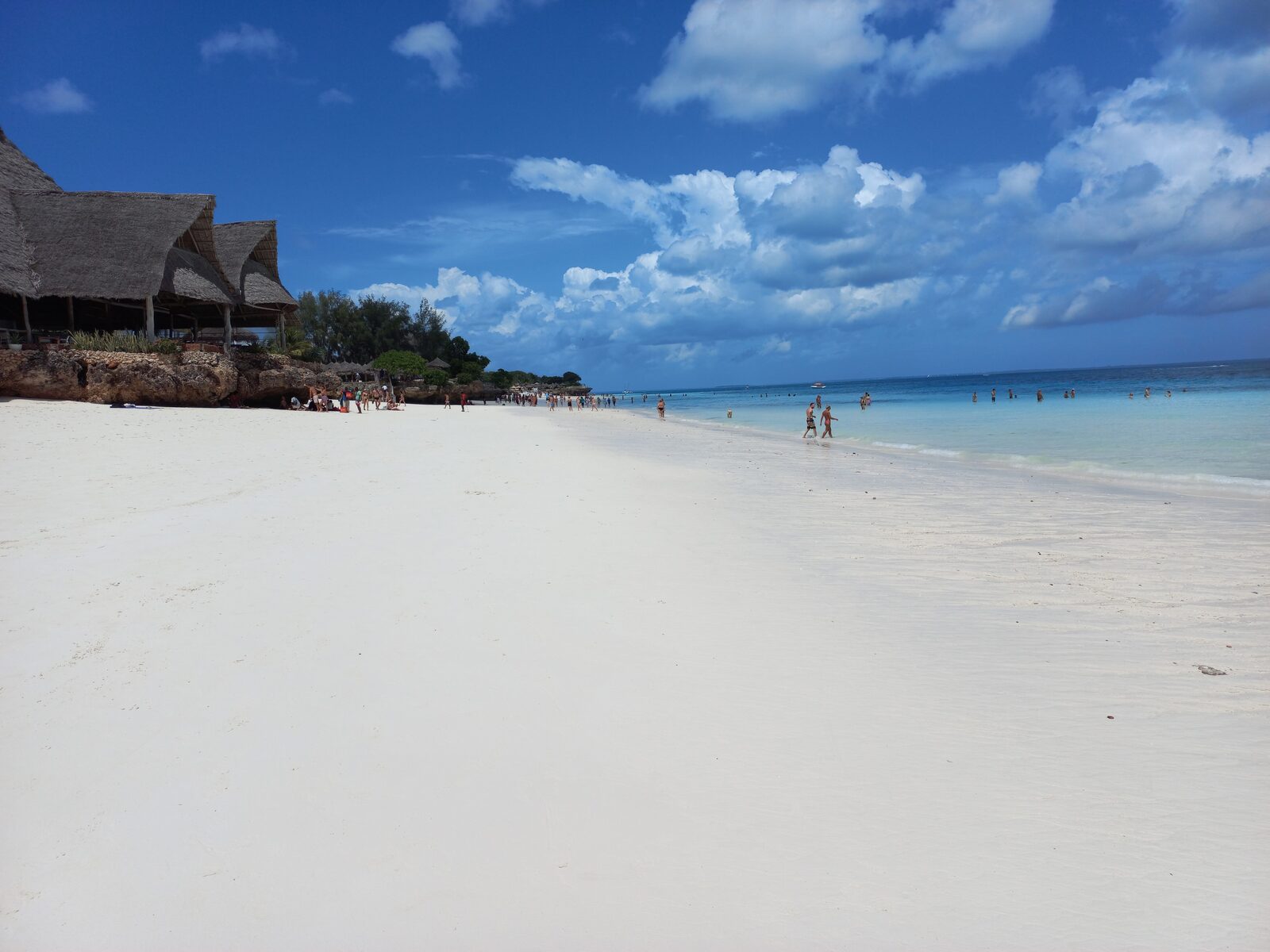
What follows is what a day actually looks like on each, hour by hour, because the four are far less interchangeable than the photographs suggest.
A Beach Day at Nungwi on the Northern Tip
Nungwi is the busiest beach on the island and the one where a day fills itself.
Mornings start early because the boats do. Fishing boats and dhow builders work the sand at the northern end from first light, and the excursion boats leave from about eight for Mnemba Atoll, Tumbatu and the fishing grounds. If you are taking a trip, this is the beach where you can arrange it the night before or simply walk down and ask.
Through the middle of the day the strip behind the sand does the work: restaurants, bars, tour desks and shops packed close together, with the sea swimmable throughout because the north coast escapes the tidal flats. Nowhere else on the island lets you go in at two in the afternoon without checking anything.
Late afternoon brings the beach vendors out in force, more persistent here than anywhere else on Unguja, selling crafts, coconuts and boat trips. A friendly repeated no works. Sunset faces west, and the evening spreads across a dozen beach bars.
On the north coast you can plan a beach day by the clock. On the east coast you plan it by the tide table, and hotels post one at reception. Check it the evening before rather than the morning of.
A Beach Day at Kendwa Just Along the Coast
Kendwa sits a few kilometres south of Nungwi with the same deep water and a completely different atmosphere.
The sand is wider, properties are further apart and the beach reads as calm rather than packed. A day here is slower by design: swim, read, walk the length of the shore, eat somewhere on the sand, repeat. Loungers face west because the whole beach is oriented around the evening.
Sunset is the fixed point of a Kendwa day. The sun drops straight into the sea in front of the beach with dhows anchored offshore, and the bars set out low tables for it. It is the most reliable sunset on the island.
Saturdays are the exception. The long standing party at Kendwa Rocks builds through the evening and turns into a full moon party when the dates coincide, drawing people from across Unguja. Book at the far end of the beach if that is not what you came for.
A Beach Day at Paje on the East Coast
Paje runs on wind and tide rather than on the clock, and a day here has a shape the north coast does not.
Early morning at low water is when the flats are exposed: a vast pale expanse of sand and coral with people walking hundreds of metres out, seaweed plots visible, and the reef edge in the distance. It is a strange and rather good hour, and the light is at its best.
As the tide comes in the lagoon fills, and this is when the kites go up. A reef sits offshore and the water between it and the beach stays waist deep across a wide area, which is what made Paje an international kitesurfing centre. Schools run lessons through the wind seasons, roughly December to March and June to September.
Between tides, the pool is where the day happens. That is why a pool matters more on this coast than on the north, and why the beach bars are set back rather than at the waterline.
Evenings are social. Paje has a young international crowd and a large remote working population, and the bars along the sand are busy without being resort like. The sun sets behind the island, so the light on the lagoon is the show rather than the horizon.
A Beach Day at Jambiani South Along the Same Lagoon
Jambiani has Paje’s water with almost none of its energy, and a day here is deliberately quiet.
At low tide the flats fill with women tending seaweed plots tied to wooden stakes, harvested and dried for export. It has supported coastal women here for decades, and village cooperatives run tours explaining the work that put money directly into the community. Watching it happen from the sand is part of the day whether or not you take a tour.
The village is strung out along the shore with guesthouses sitting between family homes rather than in a strip, so a walk along the beach passes ordinary life rather than a run of bars. Fishing boats come and go through the day.
High tide brings swimming, and the lagoon here is calm and shallow. Otherwise the rhythm is reading, walking, eating and doing very little, which is what people come to Jambiani for.
Prices sit well below the north coast for comparable standards, commonly by thirty to forty percent.
Nungwi fills a day for you. Jambiani hands the day back and expects you to do nothing with it. Both are correct answers to different questions.
Tides, Seaweed and Planning Around Both
North coast tides. Minimal variation at Nungwi and Kendwa, which sit outside the broad tidal shelf. Swimming is possible through most of the day, every day, all year.
East coast tides. At Paje and Jambiani the waterline moves hundreds of metres, and up to about a kilometre on some stretches, at low water. This happens in every month, so plan swims around high tide.
Seaweed season. Natural accumulation on the east coast from roughly November to April, heaviest in April. Much of it is farmed deliberately. The north coast stays clear year round.
Reef shoes. Close to a requirement on the east coast, where sea urchins, exposed coral and sharp rock sit on the flats. Less critical at Nungwi and Kendwa.
What to Add to a Beach Day
All four beaches sell excursions from the sand, and the geography decides which are practical.
From Nungwi and Kendwa: Mnemba Atoll reef trips of about an hour each way around the northern tip, Tumbatu Island for quieter water, sunset dhow cruises, deep sea fishing and turtle visits at the Nungwi lagoon.
From Paje and Jambiani: kitesurfing lessons, Kuza Cave a short drive inland, Jozani Chwaka Bay National Park around twenty minutes away, The Rock restaurant at Michamvi, and the Blue Lagoon for snorkelling.
From all four: a day trip into Stone Town, which is an hour from the east coast and an hour and a half from the north.
One excursion every second or third day is about right. Beach holidays here go wrong when every day has a pickup time attached.
Practical Notes for a Zanzibar Beach Day
Sun is stronger than most visitors expect six degrees from the equator, and the sand and water reflect it back. A rash vest does more than repeated sun cream, and reef safe formulations matter near the protected areas.
Beach vendors are part of the day, most persistently at Nungwi. They are not aggressive and a clear no is understood. Agree prices for anything bought on the sand before it changes hands.
Beachwear is fine on the beach and not in villages, markets or Stone Town, where shoulders and knees should be covered. Topless sunbathing is not appropriate anywhere on the island.
Beaches empty quickly after dark and there are no lifeguards on any of them. Do not swim alone at dusk, and take a taxi rather than walking an unlit shore back to your accommodation.
Frequently Asked Questions About Zanzibar Beach Days
Which beach is best for a full day of swimming?
Kendwa or Nungwi on the north coast, which sit outside the tidal shelf and stay swimmable through most of the day, every day of the year. Kendwa is the calmer of the two with wider sand and the better sunset. On the east coast at Paje and Jambiani, swimming has to be timed around high tide.
Do beach days in Zanzibar cost anything?
The beaches themselves are free and public. Costs come from food, drinks and excursions. Local restaurants charge $3 to $6 for a meal against considerably more at beach bars. Excursions from the sand run roughly $50 for a shared Mnemba trip, $25 to $40 for a sunset dhow cruise and $10 to $12 for Jozani entry including a ranger guide.
What do you do at Paje or Jambiani at low tide?
Walk the flats, which is genuinely worth doing at least once, watch the seaweed farming at Jambiani, use the pool, or take an excursion inland to Jozani, Kuza Cave or Stone Town. Kitesurfing at Paje works better as the water fills. Book accommodation with a pool on this coast; it is what covers the low tide hours.
How many beach days should you plan in Zanzibar?
Four to five nights on one beach is the most common shape, with one excursion every second or third day and real rest in between. A week split as two nights in Stone Town and five on one beach works well. Moving between beaches costs the better part of a day, since crossing from the north coast to the east takes about two hours.
Are Zanzibar’s beaches safe for swimming?
Broadly yes, with sensible care. There are no lifeguards on most beaches, currents near reef edges can be strong, and tidal channels on the east coast move fast as the water returns. Ask your hotel which zones are safe and what the tide is doing that day. Reef shoes protect against urchins and sharp coral on the east coast flats.
Which beach has the best atmosphere in the evening?
Kendwa for a sunset on the sand with bars set up for it, and a party at Kendwa Rocks on Saturdays. Nungwi for choice, with a dozen restaurants within walking distance. Paje for a young, social, international crowd. Jambiani for quiet village evenings with very little happening, which is the point of staying there.
The beach you pick shapes what your days actually look like far more than the hotel does, and that is close to invisible when you are booking from a gallery of photographs. Holidays To Zanzibar places visitors by how they want to spend a day rather than by what a beach looks like at high tide in a brochure.
For help matching a beach to your dates and your group, contact Holidays To Zanzibar and a real person will reply.