The best sunset spots in Zanzibar are Kendwa beach on the north coast, the Forodhani seafront and rooftop terraces in Stone Town, the western shore of the Michamvi peninsula, and a dhow cruise offshore. All face west, which rules out the east coast entirely. Sunset falls close to six in the evening year round on Unguja, the main island of this Tanzanian archipelago.
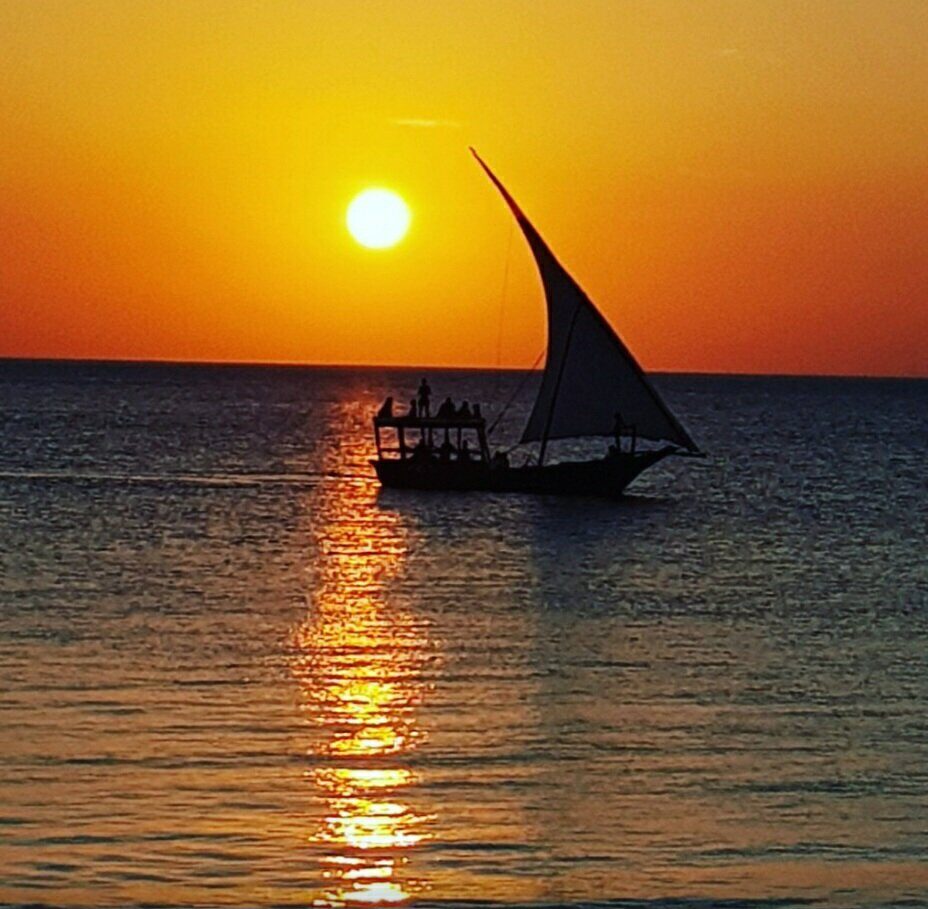
That west facing point sounds obvious and catches out a surprising number of visitors who book Paje or Jambiani expecting the sun to go down over the sea in front of them. It does not. It comes up there instead.
Kendwa Beach: The Most Reliable Sunset on a Zanzibar Trip
If you want one answer, this is it. Kendwa sits on the north west facing coast where the sun drops straight into the water in front of the beach, with dhows anchored in the foreground and the whole horizon clear.
What makes Kendwa better than its neighbour Nungwi is space. The sand is wider, the properties are further apart, and you can walk a long way along the shore without ending up in the middle of a bar. The water also stays deep here through the day, so the sea is actually there at six in the evening rather than several hundred metres away.
Beach bars line the sand and most set out loungers facing west for exactly this. On Saturdays the party at Kendwa Rocks builds through the evening, which is either the point or the reason to walk a few hundred metres up the beach first.
Be in position twenty minutes before sunset rather than five. Zanzibar sits six degrees from the equator, so twilight is short and the light collapses quickly once the sun is down.
Forodhani Gardens and the Stone Town Waterfront
The old town faces west across the Zanzibar Channel towards the mainland, which makes the whole seafront a sunset location and gives it something the beaches cannot: architecture behind you.
From the sea wall at Forodhani Gardens you get the sun going down behind moored dhows, with the Old Fort and the House of Wonders catching the last of the light at your back. Local families fill the wall in the early evening, boys leap from it into the water at high tide, and the food stalls light their charcoal grills as the light goes.
This is the most sociable sunset on the island and the one that feels least staged for visitors. It also costs nothing, and you can eat at the night market immediately afterwards.
Rooftop Terraces Above the Old Quarter
Several restored merchant houses in Stone Town open their upper terraces to non residents in the late afternoon, and three or four storeys up the quarter reads completely differently.
From that height you see the roofline of coral stone, satellite dishes and minarets against the channel, with the sun setting beyond it. The call to prayer carrying across the roofs at dusk is the detail most visitors remember afterwards.
Drinks and food are served, and some terraces require a booking in high season. It is a calmer alternative to the seafront crowd and a considerably better vantage point for photographs.
Sunset Dhow Cruises From Stone Town
The version that puts you on the water rather than beside it.
Sunset dhow cruises leave from the beach beside Forodhani in the late afternoon and run a slow loop offshore under sail, usually for an hour or two with drinks included. From out there you get the sun on one side and the old town skyline on the other, which is the combination nothing on land offers.
Boats vary enormously in condition and it is entirely reasonable to look one over before committing. Booking is done on the beach or through your hotel.
Similar cruises run from Nungwi and Kendwa on the north coast, and the trade winds mean the sailing itself is often as good as the sunset.
The east coast gets the better sunrise and the west coast gets the sunset. On an island this narrow, that is a thirty minute drive rather than a compromise.
The Michamvi Peninsula: Sunset and Sunrise on One Headland
Michamvi is the geographical oddity worth knowing about. The peninsula hooks north from the bottom of the east coast, which gives it an eastern shore facing sunrise and a western shore facing sunset, a few minutes apart by road.
The eastern side at Pingwe holds The Rock restaurant, and a common misunderstanding is that you can watch the sunset from its terrace. You cannot; the rock faces east. What you get there is the light on the water and the sky behind you.
For the actual sunset, cross to the western shore. Kae Funk and the beaches along that side look out across the bay towards the interior, and anyone staying at Paje, Jambiani or Bwejuu can reach them in twenty to thirty minutes. It is the standard evening run for people on the east coast.
Sunset Spots for People Staying on the East Coast
If your accommodation is at Paje, Jambiani, Bwejuu, Matemwe or Pongwe, the sun rises out of the sea in front of you and sets behind the island. That is not a bad deal, and sunrise on the east coast is genuinely one of the better sights on Unguja, particularly during the rainy months when the skies are dramatic.
For sunset, you have three options. Drive across to the western side of the Michamvi peninsula. Take a boat out far enough to see the horizon. Or accept the reflected light, which on a shallow lagoon at high tide turns the whole flat surface pink and is worth watching in its own right.
Low tide changes it completely. With the sea withdrawn hundreds of metres, the exposed flats catch the colour in pools and channels, and photographers often prefer it to the high water version.
Quieter Sunset Locations Away From the Crowds
Fumba, southwest coast. Facing Menai Bay with sandbanks and islands offshore, quiet and about forty minutes from Stone Town. The departure point for Safari Blue dhow days.
Mtende, far south. A small cove between rock outcrops down a track, usually empty. More a striking piece of coastline than a classic sunset beach, and worth the detour if you are already in the south.
Kizimkazi. A working fishing beach on the south coast where boats come in as the light goes. Not set up for visitors at all, which is the appeal.
Bawe and Chumbe islands. Reached by boat west of Stone Town. Chumbe’s overnight guests get the island to themselves after the day boats leave, with no electric lighting to interfere.
Sunset Drinks, Beach Bars and Where to Eat Afterwards
The hour after the sun goes down is when this island is at its most pleasant, and where you spend it is worth a little thought.
On the north coast, the beach bars at Kendwa and Nungwi set loungers and low tables directly on the sand facing west, and most serve food through the evening. You can watch the light go with your feet in the sand and eat without moving, which is the whole appeal of that coast.
In Stone Town the pattern is different and better. Take the sunset from a rooftop terrace or the Forodhani sea wall, then walk down into the night market as the charcoal grills are lit around six. Seafood skewers, urojo and Zanzibar pizza for a fraction of what a resort charges, with local families filling the park around you.
On the Michamvi peninsula, the western beaches have a handful of bars set up for the evening run from Paje and Jambiani. They are informal and the food is simple, so eat properly back at your own beach afterwards.
One thing to arrange in advance wherever you are: your ride home. Beaches empty fast once the light goes, and walking an unlit shore or an unfamiliar Stone Town lane after dark is the one avoidable risk of an otherwise easy evening.
Timing, Light and What to Expect Through the Year
Sunset falls close to six in the evening throughout the year, varying by only a few minutes, because the island sits so near the equator. That also means twilight is brief: the colour arrives fast and disappears faster, and full darkness follows within about half an hour.
The dry months from June to October give the clearest skies and the most consistent sunsets, though clear can also mean plain. November to December and the long rains from March to May produce far more dramatic cloud, which makes for better colour when it works and a washout when it does not.
Two practical points. Mosquitoes become active at dusk, which is exactly when you are standing still on a beach, so carry repellent. And the beach empties quickly after dark, so arrange your ride back rather than planning to walk along an unlit shore.
Frequently Asked Questions About Zanzibar Sunsets
Which side of Zanzibar gets the sunset?
The west. Kendwa and Nungwi on the north coast, the Stone Town seafront, the western shore of the Michamvi peninsula and the southwest around Fumba all face the setting sun. The east coast at Paje, Jambiani, Bwejuu and Matemwe faces east and gets sunrise instead, which catches out visitors who book there expecting evening light over the water.
What time is sunset in Zanzibar?
Close to six in the evening throughout the year, varying by only a few minutes because the island sits about six degrees from the equator. Twilight is short, with full darkness following within roughly half an hour, so be in position twenty minutes beforehand rather than arriving as the sun touches the horizon.
How much does a sunset dhow cruise cost in Zanzibar?
Typically around $25 to $40 per person for a group departure of one to two hours from the Stone Town waterfront, usually with drinks included. Private charters cost considerably more. Similar cruises run from Nungwi and Kendwa on the north coast. Booking is done on the beach or through your hotel, and it is worth looking the boat over before you commit.
Can you see the sunset from The Rock restaurant?
Not directly. The Rock sits off Pingwe on the eastern side of the Michamvi peninsula and faces east, so the sun sets behind you rather than over the water in front. The light on the sea is still good in the late afternoon. For an actual sunset, cross to the western shore of the peninsula at Kae Funk, twenty to thirty minutes away.
Where is the best sunset spot in Stone Town?
The sea wall at Forodhani Gardens for the sociable version, free and followed immediately by the night food market from around six. A rooftop terrace at one of the restored merchant houses for the better photographs, looking across the coral stone roofline. A sunset dhow cruise for the version that puts the old town skyline on one side and the sun on the other.
What is the best month for sunsets in Zanzibar?
June to October gives the clearest and most reliable skies, though clear can mean plain. The rainy months of March to May and the short rains around November produce far more cloud and with it more colour when conditions cooperate. Sunset timing barely changes across the year at this latitude.
Sunset here is one of the few things on the island that is genuinely free, and the only trick is being on the right coast at the right hour with a way home afterwards. Holidays To Zanzibar plans east coast evenings that cross to the sunset side, and books dhow cruises on boats worth being aboard.
For help fitting the good evenings into your itinerary, contact Holidays To Zanzibar and a real person will reply.