The main cultural attractions in Zanzibar are Stone Town‘s UNESCO listed quarter, the former slave market and Anglican cathedral, the Old Fort, Darajani Market, the spice farms, the Kizimkazi Dimbani mosque and the Mangapwani slave chamber. Most are visited on guided tours booked through hotels or on arrival. Zanzibar is a Tanzanian archipelago in the Indian Ocean whose culture blends African, Arab, Persian, Indian and European influences.
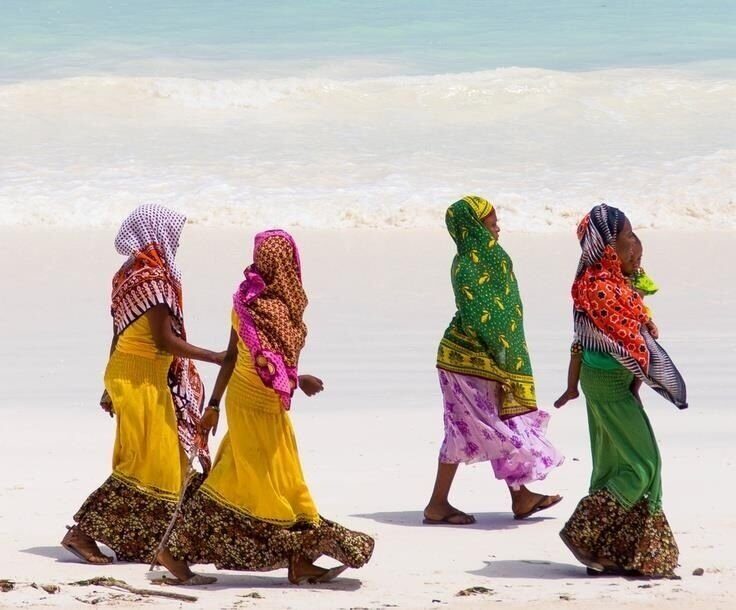
Almost all of it clusters in and around Stone Town, which means a single well planned day covers more than most visitors expect.
Stone Town’s Carved Doors and Merchant Houses on a Walking Tour
The old quarter itself is the primary cultural attraction, inscribed on the UNESCO World Heritage List in 2000 as the most complete surviving Swahili coastal trading town.
Its signature is the doors. Hundreds survive across the quarter in two broad traditions: Indian influenced frames, rounded at the top with brass studs projecting from the panels, and Omani frames, square and heavy, carved with chains, lotus motifs, fish and Arabic script. The carving announced a household’s trade, faith and standing to everyone who walked past.
Behind them stand merchant houses of coral rag bound with lime mortar, three and four storeys, packed into lanes too narrow for vehicles. A Stone Town walking tour of two to three hours covers the quarter, and getting lost between stops is part of it.
Take the cultural sites in the morning and the market and food in the evening. The middle of the day in the old quarter is hot enough that most visitors stop paying attention to what they are being shown.
The Former Slave Market and Christ Church Cathedral
The most important cultural site on the island, and the hardest.
Mkunazini held East Africa’s largest slave market, through which an estimated fifty thousand people passed annually at the height of the trade in the 1860s. After Sultan Barghash signed the abolition treaty in 1873, Bishop Edward Steere had Christ Church Cathedral built directly over the site between 1873 and 1880, with the altar placed where the main whipping post had stood.
Two underground holding chambers survive beneath the neighbouring building and are open to visitors. They are low, unventilated and very small, and guides explain how many people were confined in each. In the grounds stands Clara Sörnäs’s 1998 memorial, five figures in a pit with their necks chained together.
Allow an hour. Cover shoulders and knees; women arriving in shorts are lent a khanga wrap at the gate.
The Old Fort and the Amphitheatre Culture Tours
Ngome Kongwe is the oldest standing building in Stone Town, raised by the Busaidi Omanis between 1698 and 1701 over a Portuguese church whose fragments are still visible in the courtyard walls.
Since 1994 it has run as a cultural centre. The courtyard holds craft shops, working workshops, an art gallery in the corner towers, a restaurant and a small open air amphitheatre where taarab and ngoma performances are staged. Entry is free and the front office opens daily from eight until six.
Twice a year the fort becomes the busiest venue on the island. Sauti za Busara, East Africa’s best known music festival, takes it over in February, and the Zanzibar International Film Festival screens here in July.
Darajani Market and Forodhani Gardens Food Tours
Two attractions where the culture is daily life rather than heritage.
Darajani Market on Creek Road is where Zanzibar City actually shops: produce, spices sold loose by weight from open sacks, fabric, household goods and a fish hall that is not for the squeamish. It sits on the historic boundary between Stone Town and the Ng’ambo district beyond. Go before nine in the morning.
Forodhani Gardens on the seafront turns into an open air food market every evening from around six until nine. Charcoal grills, seafood skewers, urojo soup with fritters and chutney, sugarcane juice pressed by hand with ginger and lime, and Zanzibar pizza, a fried dough parcel filled with meat, egg and cheese.
The gardens opened in 1936 for Sultan Khalifa’s silver jubilee and were fully restored by the Aga Khan Trust for Culture between 2008 and 2009.
Spice Farm Tours and the Islands’ Trading Heritage
A spice farm tour is a cultural attraction as much as an agricultural one, because the crops explain how the island became what it is.
You walk a working smallholding while a guide crushes leaves, splits pods and digs up roots for you to identify: cloves, nutmeg with its scarlet mace still wrapped around the shell, cinnamon bark, cardamom, vanilla, turmeric, lemongrass and black pepper. Almost none of it is native; all of it arrived by boat.
Guides also cover the medicinal and cosmetic plants that matter locally, including henna and the lipstick tree. Many farms add a Swahili lunch or a cooking class where you grate coconut, press it for milk and build a curry from a spice blend you make yourself.
Tours run two to three hours including transport from Stone Town.
Every spice on the tour arrived here on somebody’s ship. The farms are a map of the Indian Ocean trade routes planted in soil.
Kizimkazi Dimbani Mosque and the Island’s Oldest Buildings
At the southern end of the island, set back under old mango trees, stands a low coral stone mosque dated by a preserved Kufic inscription to 1107, built by Shirazi settlers from Persia. It is one of the oldest Islamic buildings on the East African coast.
A point worth knowing: it stands in Kizimkazi Dimbani, about three miles from Kizimkazi Mtendeni where the dolphin boats leave, which confuses a lot of visitors.
Most of the present structure was rebuilt in the eighteenth century, but the inscription and some carved coral decoration survive from the original building, including work around the mihrab. It is an active place of worship, so cover shoulders and knees, remove shoes, avoid prayer times and ask before photographing inside.
Mangapwani Caves and the Slave Trade Beyond Stone Town
North of Zanzibar City on the northwest coast sit two sites that complete the story begun at Mkunazini.
The natural coral cave is a limestone chamber with a freshwater pool at the bottom, historically a water source for the surrounding village. A few kilometres further along is the Mangapwani slave chamber, a square cell cut by hand into the coral rock and roofed over, attributed to the trader Mohammed bin Nassor Al Alwi and dating from around 1880.
That date is the point. Abolition came in 1873. The chamber was built seven years later, in a concealed spot away from the port, to hold captives landed on a hidden beach nearby from a trade that continued illegally into the twentieth century.
Visit Stone Town first. Mangapwani without that context is a bare stone room.
The Palace Museum and the Seafront Buildings on a Heritage Tour
The waterfront north of the Old Fort carries a run of buildings that together tell the story of the sultanate, and a seafront heritage tour covers them in an hour on foot.
The House of Wonders, Beit al Ajaib, built in 1883 for Sultan Barghash, was the first building in Zanzibar with electric light and the first in East Africa with a lift. It housed the Museum of History and Culture of Zanzibar and the Swahili Coast until part of it collapsed in December 2020, and it is currently viewable from the outside only while a restoration funded by Oman continues.
The Palace Museum, Beit el Sahel, stands a short walk further north and was the sultans’ actual residence rather than their ceremonial hall. Beyond it, the Old Dispensary, built between 1887 and 1894 as a charity hospital, is among the most finely decorated buildings in the quarter, with carved wooden balconies, stained glass and neoclassical stucco. It fell into decay through the 1970s and 1980s and has since been carefully restored.
The Roman Catholic cathedral of St Joseph, built by French missionaries between 1893 and 1897, adds twin spires to the skyline a few streets inland and is one of the easiest landmarks to navigate by when the lanes stop making sense.
Music, Village Tours and Living Culture in Zanzibar
Taarab and ngoma. Taarab is the orchestral Swahili song tradition drawing on Arab, Indian and African influences. Performances run at the Old Fort amphitheatre and at the Dhow Countries Music Academy near the Palace Museum.
Village and seaweed farming tours. Run by cooperatives at Jambiani and along the east coast, showing the seaweed plots tended at low tide that have supported coastal women for decades. Money goes directly into the community.
Swahili cooking classes. Offered at spice farms and at the Kuza Cave culture centre near Jambiani, covering coconut milk, spice blending and curry from the base up.
Henna and craft workshops. Henna is part of everyday and ceremonial life here rather than a tourist add on, and craft workshops in the Old Fort and at village centres teach weaving and basketry.
Frequently Asked Questions About Zanzibar’s Cultural Attractions
How much do Zanzibar’s cultural attractions cost?
The Old Slave Market and Anglican Cathedral costs around $5 including the underground chambers. The Old Fort is free. Guided Stone Town walking tours run roughly $20 to $40 per person for a group departure of two to three hours. Spice farm tours cost about $20 to $35 including transport, or $35 to $50 with lunch or a cooking class. Mangapwani caves tours run around $20 to $30. Darajani Market and Forodhani Gardens are free to enter.
Which cultural attraction should you not miss in Zanzibar?
The former slave market and Christ Church Cathedral at Mkunazini. It is the site most visitors rate highest and the one that makes the rest of the island legible, because the wealth visible in Stone Town’s architecture came from the trade that ran through this plot. Allow an hour and take a guide.
Can you visit the House of Wonders?
Not inside. Part of the building collapsed in December 2020 during restoration and it has been closed since, with a rebuilding programme funded by Oman and coordinated with UNESCO ongoing and no confirmed reopening date. You can see the exterior from Mizingani Road and from the Old Fort courtyard next door.
What should you wear to Zanzibar’s cultural sites?
Shoulders and knees covered for both men and women at all religious sites, markets and in Stone Town’s residential lanes. Women should carry a scarf for mosque visits, including at Kizimkazi Dimbani. Shoes come off before entering mosques. Beachwear is fine on the beach and nowhere else.
How long do you need for Zanzibar’s cultural sites?
One full day covers Stone Town’s main sites at a comfortable pace, and two nights lets you add the evening food market and a morning at Darajani without rushing. A spice farm tour takes a further half day, and Mangapwani caves another three to four hours. Kizimkazi is best combined with a dawn dolphin trip in the south.
Are there cultural festivals in Zanzibar?
Two major ones, both at the Old Fort. Sauti za Busara, East Africa’s best known music festival, runs in February and fills Stone Town, pushing accommodation rates in the quarter sharply higher. The Zanzibar International Film Festival screens in the same amphitheatre in July. Both are worth either planning for or planning around.
Zanzibar’s cultural sites reward a guide more than almost anywhere else in East Africa, because so much of what matters here is carried in the buildings rather than explained beside them. Holidays To Zanzibar works with licensed Zanzibari guides who know which door belongs to which family and handle the slave trade history with the care it needs.
For a cultural day built around what actually interests you rather than a fixed circuit, contact Holidays To Zanzibar and a real person will get back to you.