Prison Island, properly called Changuu, is a small coral island roughly twenty to thirty minutes by boat from Stone Town, best known for its colony of Aldabra giant tortoises. Half day boat tours run daily from the Forodhani waterfront and can be booked on the beach or through any hotel. For all the name suggests, the prison built on Changuu Island never held a single convicted prisoner.
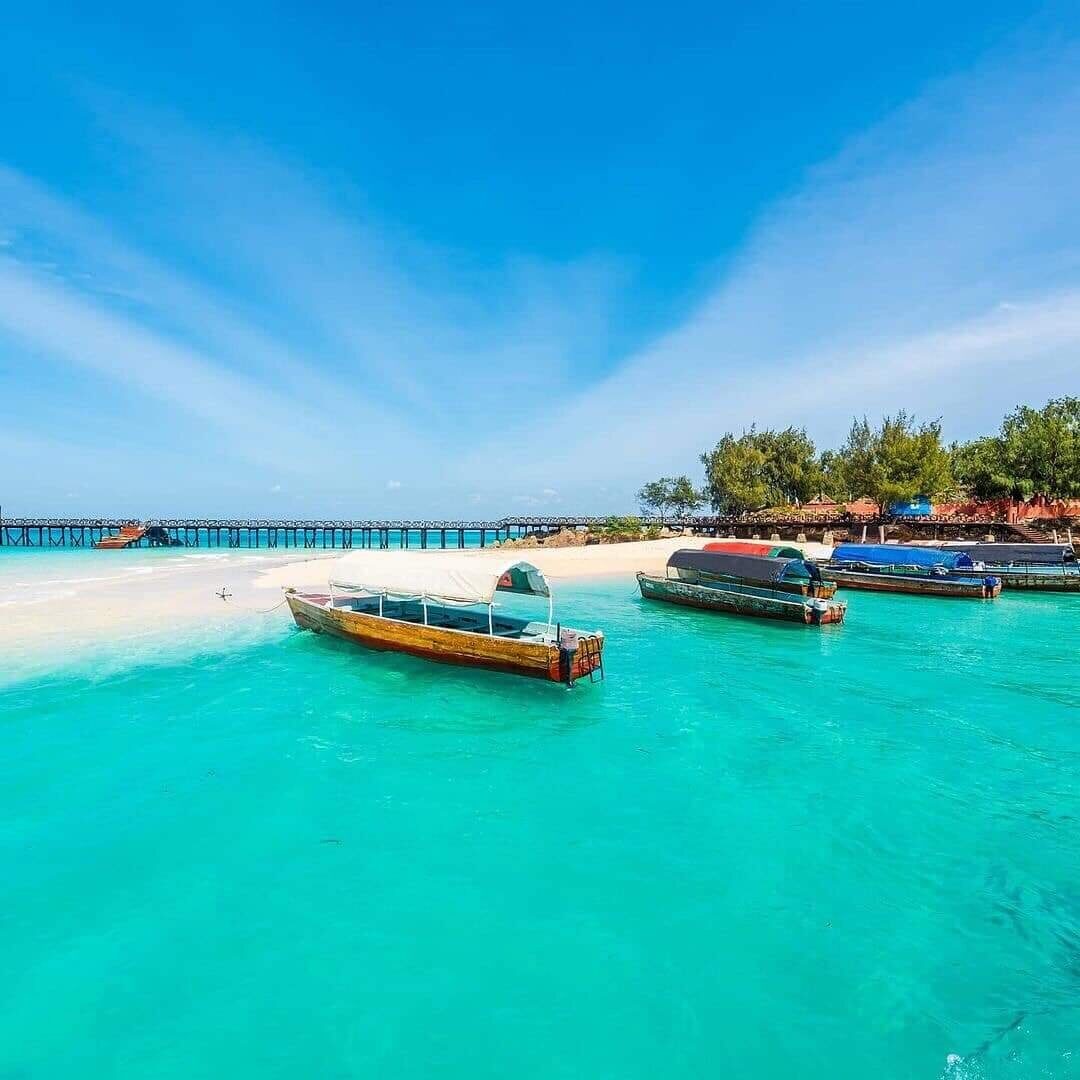
It is the easiest excursion on the island and the one most visitors do first. Three to four hours, a short crossing, and a group of animals that were alive before the prison was built.
What a Prison Island Tour From Stone Town Involves
A Prison Island tour starts at the Forodhani jetty on the Stone Town seafront. Boats leave through the morning and early afternoon, taking twenty to thirty minutes across flat water with the old town receding behind you.
On arrival you pay an island entry fee at a counter near the jetty, plus a government levy collected separately. A local guide meets each boat and walks you round. The circuit covers the tortoise enclosure, the old quarantine buildings, the prison ruins and the short coastal path, and takes about an hour and a half.
After that the beach and the reef in front of it are yours. Most tours build in an hour for swimming and snorkelling before the return crossing. Some continue on to the Nakupenda sandbank for lunch, which turns a half day into a full one.
Carry cash in small dollar notes for the entry fees. The counters do not take cards, and the fee is charged separately from whatever you paid for the boat, which catches people out regularly.
The Aldabra Giant Tortoises on a Changuu Island Tour
The tortoises are the reason the Changuu Island tour exists. They are Aldabra giants, native to the Seychelles rather than Zanzibar, and the founding animals arrived in 1919 as a gift from the British Governor of the Seychelles. The colony has grown considerably since.
The oldest individuals are hard to take in. Ages are painted in blue on their shells, and several carry numbers well past a hundred and fifty. The animals now in the enclosure were hatched before Zanzibar became a British protectorate.
Visitors can walk among them and feed them fresh spinach leaves handed out by the keepers. They move slowly and eat enthusiastically, and their beaks are strong enough that you want to hold the leaf by the very end. Younger tortoises are kept separately for protection, which is standard practice given how vulnerable hatchlings are.
The species is classified as vulnerable, and stock from this colony has been used to support conservation elsewhere. Some visitors find the enclosure conditions basic. That is a fair observation and worth going in aware of.
The History Behind the Prison That Never Held Prisoners
Changuu was uninhabited until the 1860s, when Sultan Majid bin Said granted it to two Arab slave traders who used it to hold rebellious captives before sale. That is the island’s first recorded use, and it sits alongside the slave market history you meet at Mkunazini in Stone Town.
In 1893 the island was bought by the British First Minister of Zanzibar, and a prison complex was completed in 1894. It never received a single convicted prisoner. Instead the buildings were turned over to a quarantine station for yellow fever cases arriving by sea, which is the role they filled for decades.
The ruins you walk through are those quarantine buildings and cell blocks. Some sections stand roofless, others have been partly restored, and one has been converted into a restaurant. The whole complex takes twenty minutes to walk and the guides fill in what the walls do not.
A prison that never imprisoned anyone, a quarantine station nobody remembers, and a colony of Seychellois tortoises that outlived both. Changuu has had an odd century.
Snorkelling and Beach Time on a Prison Island Trip
The reef off the island’s beach is shallow, sheltered and fine for beginners, with reef fish, sea urchins and coral gardens close to shore. It is not Mnemba, and anyone who has snorkelled somewhere serious will find it modest, but it is easy water and it suits families and first timers well.
Most boats carry masks and fins. Check the condition of what you are handed before the boat leaves, since the quality varies considerably between operators. Reef shoes are worth having, as urchins sit in the shallows.
The beach itself is small, white and backed by casuarina trees, with a bar and a restaurant beside the ruins. Peacocks wander the grounds, introduced at some point and now thoroughly at home, and they will walk straight through a picnic without breaking stride.
Birds, Peacocks and the Coastal Path on Changuu
Beyond the tortoises, Changuu carries a decent spread of coastal birdlife, and the short path that loops round the shoreline is the quietest part of the island. Most groups never walk it, which is precisely why it is worth twenty minutes.
Sunbirds work the flowering shrubs near the ruins, and terns and herons use the rocks at the northern end. Duikers were introduced to the island at one stage and the tree cover is thick enough in places to hide them, though sightings are uncommon.
Facilities are basic but adequate. There is a restaurant and bar inside one of the restored buildings, toilets near the jetty, and shade under the casuarinas. Bring your own water rather than relying on the bar, which runs out on busy days, and carry small notes since card payment is not available anywhere on the island.
Combining Prison Island With the Nakupenda Sandbank Tour
The most popular version of this trip pairs Changuu with the Nakupenda sandbank, a strip of white sand in the channel that appears at low tide and vanishes as the water comes back. Boats stop there for a couple of hours with a seafood barbecue served on the sand, then return to Stone Town.
That combined trip runs six to eight hours and is the single best value day out from Stone Town. It works particularly well for anyone based in the old town rather than out at the beaches.
Some operators also bundle in a Stone Town walking tour or a spice farm, making a full day of it. Those are long days with a lot of moving parts and are best judged against how much time you have.
Booking a Boat and Avoiding the Common Problems
Boats can be arranged three ways: through your hotel, through an operator or platform in advance, or directly with a captain on the beach at Forodhani. The beach option is cheapest and involves negotiating, and the boats vary from well maintained to visibly not.
Two things to settle before you leave the jetty. First, whether the price you agreed includes the island entry fees and the government levy, because most beach prices do not. Second, what time the boat returns, so you are not left waiting.
Look at the boat before you commit. Check there are life jackets aboard and that the engine sounds healthy. The crossing is short and usually calm, but the channel picks up in the afternoon, particularly in the windier months.
Getting to Prison Island and Best Time to Visit
Boats leave from the beach in front of Forodhani Gardens on the Stone Town seafront, on Unguja island. The crossing runs twenty to thirty minutes each way. From the north coast beaches at Nungwi or Kendwa, allow around an hour and a half by road to reach Stone Town first; from the east coast, roughly an hour; from Pongwe about forty five minutes.
Morning departures are better. The sea is calmer, the tortoises are more active before the midday heat, and you avoid the afternoon boat traffic. The dry months from June to October and the short dry season of January and February give the most reliable crossings. During the long rains of April and May the trip still runs but the channel can be choppy and visibility for snorkelling drops.
Frequently Asked Questions About Prison Island
How Changuu Compares With Zanzibar’s Other Island Trips
Against Mnemba Atoll, Changuu is the gentler, land-based half day of tortoises and a short reef rather than a dedicated snorkelling trip. Against Chumbe Island Coral Park it is cheaper and busier, with none of Chumbe’s protected-reef seclusion. And against Safari Blue from Fumba it is a shorter, simpler outing rather than a full day of sailing, sandbanks and seafood. A further donation is sometimes requested after the tortoise feeding, and any dollars you carry must be printed in the year 2000 or later.
How much does a Prison Island tour cost?
Island entry has historically been around $4 per person plus a government tax of about $3, though reported rates have risen and some visitors are quoted closer to $15. Where Prison Island and Nakupenda are combined, the entry fees are commonly charged together at around $21 to $25 per person in cash. Boat hire negotiated on the beach runs roughly $20 to $30 for a small group, and combined Prison Island and Nakupenda tours cost about $50 to $70 per boat, or from around $40 to $60 per person when booked through an operator with lunch included.
How long does the trip take?
A Prison Island visit alone takes three to four hours door to door, including a twenty to thirty minute crossing each way, an hour and a half on the island and time for a swim. Combined with the Nakupenda sandbank and lunch, expect six to eight hours.
How old are the tortoises on Prison Island?
The oldest carry painted ages well beyond a hundred and fifty years, with some reported at around a hundred and ninety. The founding animals were a gift from the British Governor of the Seychelles in 1919, and the colony has bred on the island since. Ages are marked in blue on the shells.
Why is it called Prison Island if it was never a prison?
A prison complex was built there in 1894 by the British First Minister of Zanzibar, who had bought the island the year before. It was completed but never used to hold convicted prisoners. The buildings served instead as a yellow fever quarantine station. Before that, in the 1860s, Arab slave traders used the island to hold captives, which is a separate and earlier part of its history.
Can you swim and snorkel at Prison Island?
Yes. The beach is small and sheltered and the reef sits close to shore, making it good easy snorkelling for beginners and children. Most boats carry masks and fins, though quality varies, so inspect what you are given. Reef shoes help, since sea urchins are present in the shallows.
Is Prison Island worth visiting?
For a first excursion from Stone Town, yes, particularly combined with the Nakupenda sandbank. It is short, cheap, easy on children and the tortoises are genuinely something to see. If your trip already includes Mnemba Atoll or Chumbe Island, the snorkelling here will feel modest by comparison, and some visitors find the tortoise enclosure conditions basic.
The main thing that spoils this trip is arriving at the jetty without knowing which fees are already covered and which are not. Holidays To Zanzibar arranges Changuu and Nakupenda days on seaworthy boats with the entry fees stated up front, and their captains leave early enough to reach the sandbank while it is still above water.
If you would like a day on the water arranged without the guesswork, contact Holidays To Zanzibar and a real person will come back to you.