A seaweed farming tour in Zanzibar runs at low tide on the east coast, most commonly at Jambiani and Paje, and takes one to two hours walking the tidal flats with the women who farm them. Tours are booked through village cooperatives or your accommodation. Seaweed farming began commercially in Zanzibar in 1989 at Paje and Jambiani, and it remains a mainly women’s occupation.
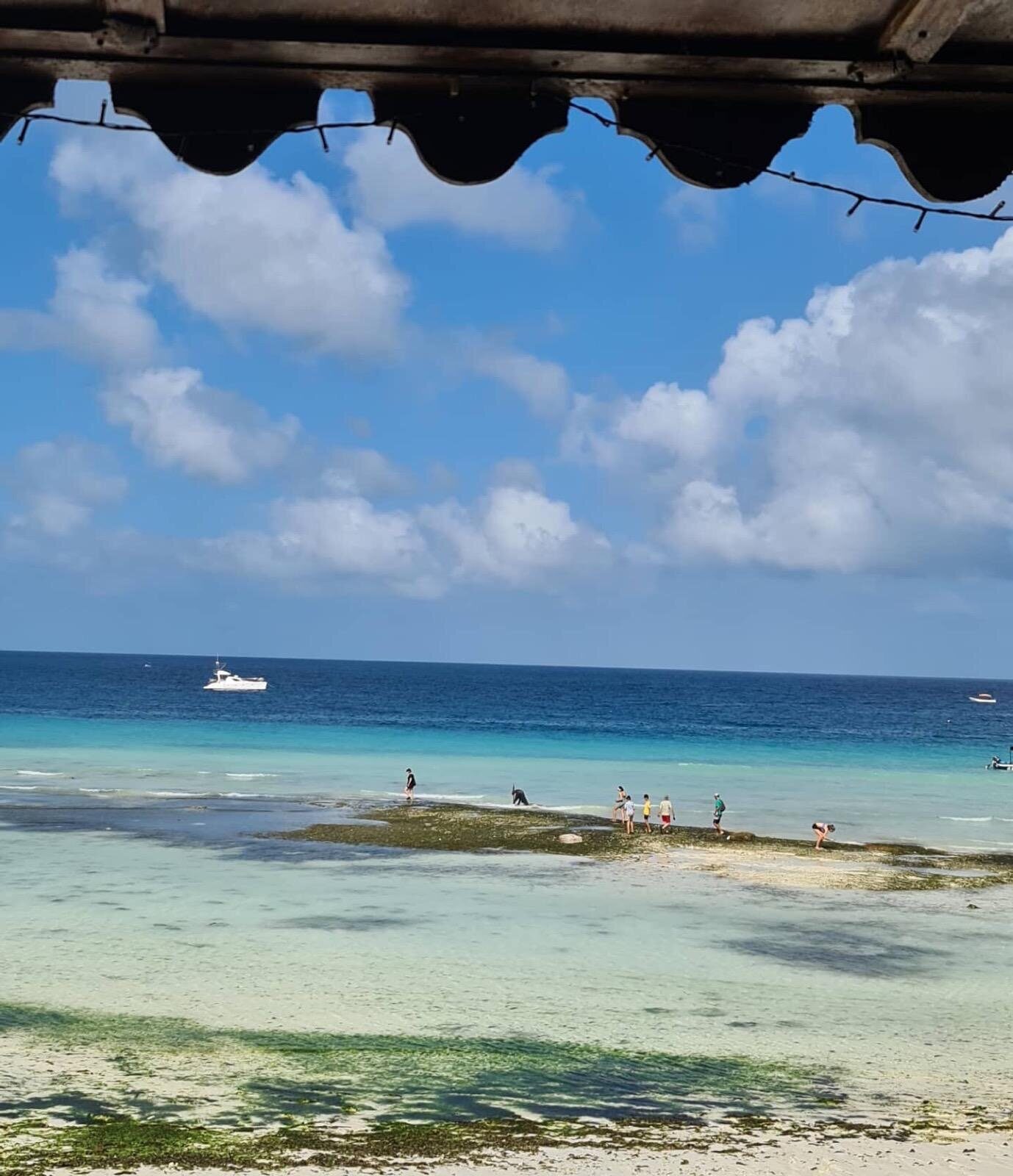
This is the trade you have already been looking at from your sun lounger without knowing what it was. An hour with the people doing it changes the view considerably.
What Happens on the Tour
Everything here is governed by the tide, so the timing is set by the sea rather than by an operator’s schedule.
At low water you walk out onto the flats with a farmer, often several hundred metres from the shoreline, into water that rarely comes above the knee. The plots are laid out in the off bottom method: rows of wooden stakes driven into the sand with nylon lines strung between them, and seaweed seedlings tied along the lines at intervals.
You see planting, tending and harvesting depending on where each plot sits in its cycle, which runs several weeks from tying on seedlings to lifting a crop. Then back to shore where the harvest is washed and spread to dry on palm leaf matting or raised racks in the sun.
One to two hours covers it. Wear something that can get wet to the knee and shoes you can walk in on coral flats, because urchins and sharp shell are part of the ground.
Ask your accommodation to check the tide table and book accordingly. A seaweed tour at high water is a conversation on a beach rather than a walk through a farm.
Who Farms Seaweed and Why It Matters
The demographics are the point of this tour.
Seaweed farming in Zanzibar is overwhelmingly work done by women, and it arrived in villages where women had very limited access to independent income. Research in Paje and Jambiani found the great majority of farmers were married women, most with primary education, and a majority aged in their thirties.
What the work provided was money of their own. In communities where a woman without education or a job depends entirely on her husband, that changes the balance in a household in ways the numbers do not show.
It is also hard work. Long hours bent over lines in shallow water under direct sun, carrying wet crop back across the flats, and prolonged sun and salt exposure that farmers describe taking a physical toll.
Many farmers earn very little from raw seaweed, with figures around thirty dollars a month reported. That is well below a living wage and it is the central problem the industry is trying to solve.
What the Seaweed Becomes
Two paths, and the difference between them is enormous for the people farming it.
Bulk export. Most raw dried seaweed is sold to export companies and processed abroad into carrageenan, used as a thickener in cosmetics, food additives and pharmaceuticals. The farmer receives the lowest price in that chain.
Local value addition. The alternative is processing on the island into finished products such as soap, shampoo, skincare, cookies and juice. Training from academics and NGOs has supported this, and it is where the income difference sits. Value addition has been reported to raise income by many multiples over selling raw crop.
Two species matter commercially. Spinosum grows well in shallow water and is worth less; cottonii is more valuable and grows better in deeper water, which is where recent projects have pushed with tubular nets, boats and swimming lessons for farmers who never learned.
Climate Change and the Pressure on the Crop
The honest context, and it is the part farmers themselves raise first.
Rising sea temperatures are the main problem. Seaweed here grows best at around thirty one degrees, and shallow water temperatures have been recorded well above that, which slows growth and reduces yields. Farmers describe seedlings rotting before they mature.
The ice ice disease outbreak, most damaging in the 2000s, caused bleaching and crop losses, driven by higher temperatures, increased salinity and intense sunlight, and it also caused blistering on farmers’ arms.
The response has been to move plots into deeper water, which brings its own problem: many women farming these flats never learned to swim. Projects providing swimming training, boats and deep water equipment exist precisely because of that.
Some farmers have moved into sponge farming instead, growing natural sponges on ropes, which is more resilient to temperature shifts, needs less maintenance and sells at higher prices to hotels and visitors.
The seaweed on your beach is not litter. It is a crop, and the women tending it in the shallows are running a business under conditions that get harder every year.
How Seaweed Farming Arrived in Zanzibar
Short history, and it is more recent than most visitors assume.
Commercial seaweed farming began here in 1989, when private entrepreneurs set up experimental farms on the east coast at Paje and Jambiani, following research into the possibilities through the 1970s. It spread to mainland Tanzania during the 1990s.
Older farmers remember a time before staked plots were needed at all, when seaweed grew in such abundance in the shallows that it could simply be gathered every morning. That changed as demand rose and as conditions in the water shifted.
More than three decades of interventions have aimed at improving coastal livelihoods through this crop, and the honest assessment from researchers is that the socioeconomic gains have not matched the effort invested. That is the context behind the recent push towards processing on the island rather than exporting raw crop.
Knowing that arc makes the tour better, because you are looking at an industry mid transition rather than a timeless tradition.
Cooperatives, Centres and Where to Book
Who runs the tour determines where the money goes, so this is the question to ask first.
Village cooperatives and women’s associations at Jambiani and Paje run tours directly, with income going into the households and the group. These are the ones to seek out.
Seaweed centres operate as social enterprises, employing farmers in processing and product making alongside farming, and offering guided farm tours at low tide alongside workshops and shops selling what is made on site. Buying there sends considerably more to the women than buying raw crop does.
Hotel arranged visits vary. Some work with the cooperatives properly; others pay a small fee to whoever is available. Ask directly.
Book through your accommodation or the cooperative rather than a platform, and ask who runs it and where the money goes. The answer comes quickly from community operations.
Etiquette on the Flats
You are walking through somebody’s farm, which is easy to forget when it looks like a beach.
Stay on the paths your guide takes and do not walk across plots or lines. Do not pull at seaweed to look at it unless invited; that is crop.
Ask before photographing anyone, every time. Many farmers will agree, some will not, and the answer should be accepted without pressing. This is a workplace rather than a scene.
Cover shoulders and knees. Beachwear on the flats reads as disrespectful in a predominantly Muslim village, and a khanga bought locally solves it.
Buy something if there is something to buy, ideally a finished product from a local centre rather than raw seaweed, and pay the asking price rather than bargaining hard over what amounts to very little money.
Combining the Tour With the Rest of the East Coast
Seaweed tours are short, local and tide dependent, which makes them easy to attach to a wider day.
A low tide farm walk at Jambiani pairs naturally with the village tour there, since both are run by the same community associations and cover complementary ground.
Kuza Cave is a short drive inland, with a swimmable freshwater pool and a Swahili culture centre running cooking classes, which fills the hours when the tide is in.
Jozani Chwaka Bay National Park sits around twenty minutes away, best visited early in the morning, which slots neatly before a midday low tide.
For anyone at Paje, a farm tour is also a useful thing to do on a day when the wind fails and the kites stay on the ground.
Frequently Asked Questions About Seaweed Farming Tours
How much does a seaweed farming tour cost?
Community run tours typically cost around $15 to $30 per person for one to two hours, with the money going into the cooperative and the households involved. Tours at seaweed centres that include workshops or product making cost more. Tipping your guide is customary, and buying finished products on site sends considerably more to the farmers than buying raw crop.
When can you do a seaweed farming tour?
At low tide only, since the plots sit on tidal flats that are underwater at high water. Tide times shift daily, so book around the table rather than the clock. Jambiani and Paje on the east coast are the main locations, and the same flats are exposed year round.
Is the seaweed on Zanzibar’s beaches farmed?
Much of what appears on the east coast flats is farmed deliberately, tied to wooden stakes in rows. Natural accumulation also occurs seasonally between roughly November and April, heaviest in April, which is a natural cycle rather than pollution. The north coast at Nungwi and Kendwa has neither.
How much do seaweed farmers earn?
Very little from raw crop, with figures around $30 a month reported, well below a living wage. That is why local processing matters: turning seaweed into soap, skincare and food products has been reported to raise income many times over. Buying finished goods from a local centre rather than raw seaweed makes a real difference.
Why is seaweed farming in trouble?
Rising sea temperatures above the roughly thirty one degrees at which seaweed grows best, which slows growth and causes seedlings to rot, alongside increased salinity and intense sunlight that drove the damaging ice ice disease outbreaks. Farmers are moving plots into deeper water, which is difficult since many never learned to swim, and some have shifted to sponge farming instead.
What should you wear on a seaweed farming tour?
Something that can get wet to the knee, and shoes you can walk on coral flats in, since urchins and sharp shell are part of the ground. Cover shoulders and knees, as this is a working village. Bring sun protection, since there is no shade at all on the flats, and a hat.
This is one of the few things on the island where a visitor’s money goes almost directly to the people doing the work, provided the tour is run by the cooperative rather than around it. Holidays To Zanzibar books with the village associations and seaweed centres directly and will tell you plainly which is which.
For a low tide farm walk arranged around your dates, contact Holidays To Zanzibar and a real person will reply.