Zanzibar offers better value, stronger culture and easier safari access, while Mauritius offers polished resorts, more varied inland scenery and smoother logistics. Both are Indian Ocean islands with white sand and warm water, and they suit different travellers rather than competing directly. Zanzibar is a semi autonomous Tanzanian archipelago off East Africa; Mauritius is an independent island nation roughly two thousand kilometres further southeast.
The short version: Mauritius is easier, Zanzibar is more interesting. Which of those matters more is the only question worth answering.
Beaches and Coastline Compared on an Island Trip
Both islands deliver the postcard. The differences are in texture rather than quality.
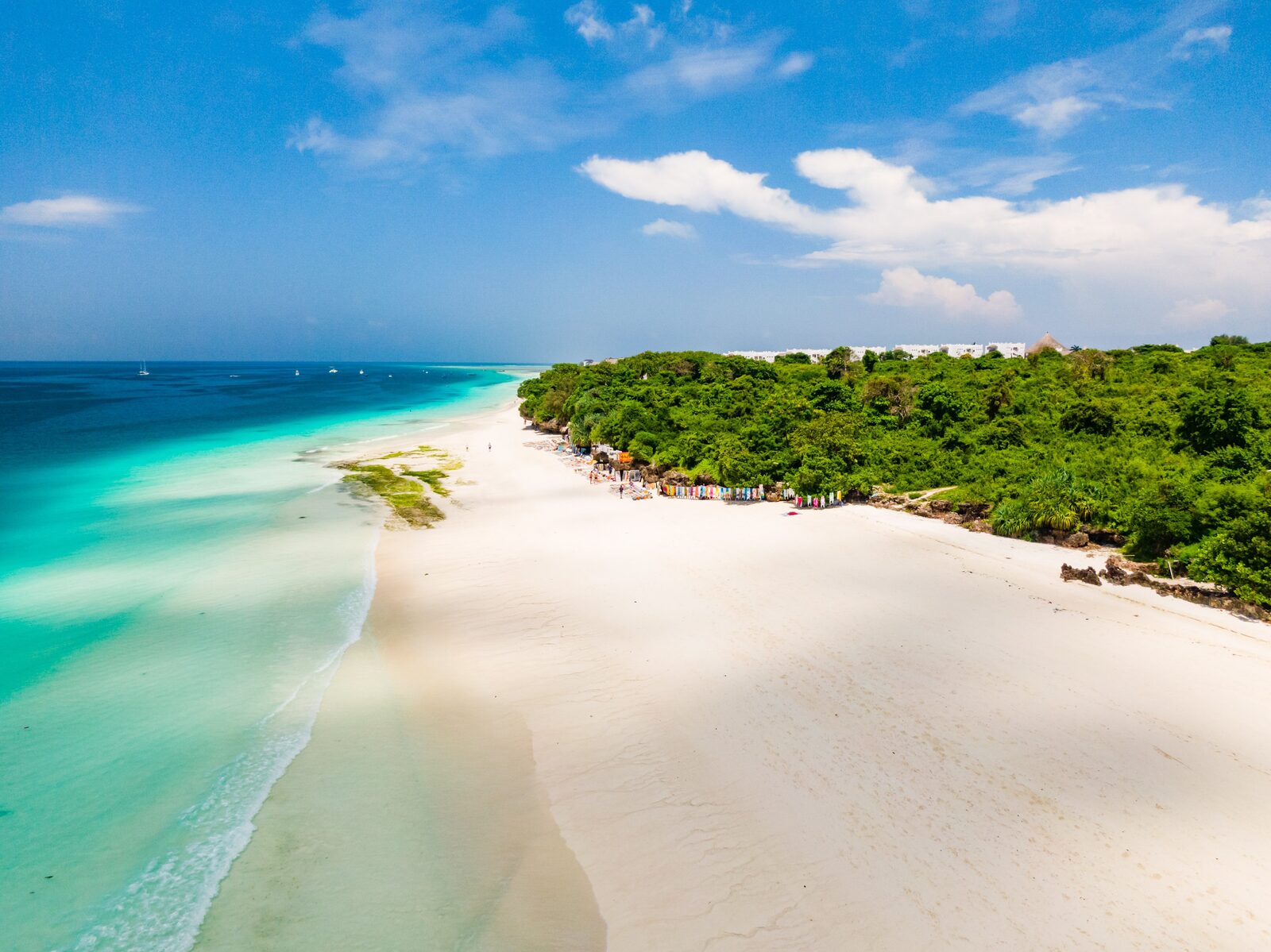
Zanzibar’s beaches carry bright white coral sand and turquoise shallows, with wooden dhows pulled up on the shore and fishermen working the water in front of you. Beach vendors selling crafts and coconuts are a constant on the busier stretches, particularly at Nungwi.
Mauritius has powdery sand and calm lagoons behind an almost continuous barrier reef, with public beaches better set up for visitors: free public toilets, showers, car parks, food trucks and organised parking. Yachts and paddleboarders replace the fishing dhows.
The tide question is Zanzibar’s main structural drawback. Its east coast sits on a shallow shelf where the sea withdraws hundreds of metres at low water, and only the north coast at Nungwi and Kendwa is swimmable at any hour. Mauritius’s reef protected lagoons do not behave that way.
If uninterrupted swimming from your own beach is the priority, Mauritius removes the problem entirely and Zanzibar solves it only if you book the north coast. That single point settles the decision for a lot of families.
Culture and History: Where Zanzibar Pulls Ahead
This is the clearest gap between the two, and it runs in Zanzibar’s favour.
Stone Town is a UNESCO World Heritage Site, inscribed in 2000 as the most complete surviving Swahili coastal trading town, with carved doors, coral stone merchant houses, the Old Fort of 1698 and the former slave market where Christ Church Cathedral now stands. A visitor can spend two days on cultural tours here without repeating anything.
Add the spice farms, the Kizimkazi Dimbani mosque dated to 1107, Darajani Market and the evening food stalls at Forodhani Gardens, and Zanzibar offers a genuinely layered destination that happens to have beaches attached.
Mauritius is multicultural and has real history of its own, including the sugar plantation past and a mix of Indian, Creole, African, Chinese and French influences. What it does not have is a walkable historic quarter of Stone Town’s calibre, and the visitor experience leans towards resorts rather than heritage.
Value for Money on a Zanzibar or Mauritius Trip
Zanzibar wins on cost across most tiers, and the gap is widest in the mid range.
Mauritius is built around five star hotels, all inclusive resorts and villa rentals, and the accommodation floor sits higher. Cheaper options exist, but they do not compare with what the same money buys on Zanzibar, where boutique hotels and beachfront guesthouses are the norm rather than the exception.
Zanzibar also has a genuine budget tier. Guesthouses and beach bungalows on the east coast at Jambiani and Bwejuu run at a level Mauritius does not really offer, and food outside the resorts costs very little.
What Zanzibar adds back are compulsory entry charges: a Tanzanian visa, the mandatory island travel insurance every foreign visitor must buy, and a nightly hotel infrastructure levy. Those are fixed rather than daily costs and they do not close the gap.
Snorkelling, Scuba and Marine Life Compared
Zanzibar is the stronger choice for anyone whose trip is built around the water.
Its waters hold over six hundred fish species and around fifty types of coral. Mnemba Atoll off the northeast coast is the headline snorkelling and scuba ground, and Chumbe Island Coral Park in the southwest protects some of the healthiest coral in East Africa with capped daily visitor numbers. Pemba, the archipelago’s second island, has reefs regarded among the best in the region, with steep walls that suit experienced divers.
Mauritius has decent lagoon snorkelling and organised water sports, often included free at resorts, but it is not a serious scuba destination in the way the Zanzibar archipelago is.
The reverse applies on land. Mauritius has real inland scenery, with the Black River Gorges, the Chamarel waterfall and volcanic terrain worth hiking. Zanzibar is flat, with its highest ground under two hundred metres, and its one national park is a small forest reserve.
Zanzibar is the better island under the water. Mauritius is the better island above the shoreline.
Polish Versus Character on an Island Holiday
Mauritius. Smooth, well organised and comfortable. Roads are good, resorts are consistent, public facilities work, and very little goes wrong. Some visitors find parts of it over developed and slightly sterile as a result.
Zanzibar. Rougher and considerably more alive. Villages sit beside the hotels, the market is a working market, and the island runs at its own pace. That is the appeal for many visitors and the frustration for others.
Development gap. The two islands sit at very different economic levels, and Mauritius has by far the higher average income. That shows up in infrastructure, roads, healthcare and how predictable a holiday feels.
Cultural expectations. Zanzibar’s population is predominantly Muslim, so modest dress away from the beach is expected and Ramadan affects opening hours. Mauritius has no equivalent constraint on visitors.
Combining an Island Trip With a Safari
This is Zanzibar’s decisive advantage and the reason many trips resolve in its favour before the beaches are even compared.
Zanzibar sits off mainland Tanzania, and light aircraft fly directly from Serengeti airstrips to the island. That makes a safari and beach trip a single itinerary rather than two holidays, and the seasons line up: July to October gives the migration river crossings alongside Zanzibar’s dry season, and late January to February pairs the Serengeti calving season with the island’s short dry window.
Mauritius has no equivalent. Reaching it from an African safari means a long flight in the wrong direction, and the two rarely combine into one trip.
For anyone who wants wildlife and a beach in the same two weeks, this alone settles it.
Getting There, Weather and Practical Differences
Access depends heavily on where you are flying from. From southern Africa, Mauritius has more frequent direct services, with daily flights from Johannesburg against roughly three a week to Zanzibar. From Europe and the Gulf both are reachable, with Zanzibar served directly in high season and also easily via Dar es Salaam or Nairobi.
On weather, Zanzibar is hot and humid year round with two rainy seasons, the long rains from March to May and the short rains around November and December. The long rains are the period to avoid outright, with sustained downpours, poor sea visibility and some hotels closing. Mauritius has a cooler winter from roughly June to September and a cyclone risk in its summer months, which Zanzibar does not share.
Zanzibar also requires more preparation: a visa, the mandatory island insurance, malaria precautions and cash in newer dollar notes. Mauritius is straightforward by comparison.
Which Island Should You Choose?
Choose Zanzibar if you want culture alongside the beach, if you plan to snorkel or scuba seriously, if you are combining the trip with an African safari, if budget matters, or if a destination that feels lived in appeals more than one that feels managed.
Choose Mauritius if you want a polished resort holiday with everything working, if you have children who need swimmable water at all hours without checking a tide table, if you want inland hiking and varied scenery, or if you would rather not think about visas, insurance requirements and malaria tablets.
There is no wrong answer here. There is a fairly common mistake, which is booking Zanzibar expecting Mauritius, and then being disappointed that the island has villages in it.
Frequently Asked Questions About Zanzibar Versus Mauritius
Is Zanzibar cheaper than Mauritius?
Yes, particularly in the mid range and budget tiers. Zanzibar beachfront guesthouses run around $40 to $80 per night, boutique hotels $100 to $200 and luxury resorts $200 to $400, with simple bungalows from $20. Mauritius is built around higher end resorts and its accommodation floor sits considerably above that. Zanzibar adds fixed entry costs of a $50 visa, or $100 for US citizens, plus $44 mandatory island insurance.
Which has better beaches, Zanzibar or Mauritius?
Both are excellent and they differ in feel. Zanzibar has brighter white coral sand with dhows and fishermen on the shore, and more beach vendors. Mauritius has powdery sand behind a near continuous barrier reef with better public facilities. The practical difference is tides: Zanzibar’s east coast can lose the sea for hours at low water, while only its north coast swims all day. Mauritius’s lagoons do not have that problem.
Which island is better for snorkelling and scuba?
Zanzibar, clearly. Its waters hold over six hundred fish species and around fifty coral types, with Mnemba Atoll as the main site, Chumbe Island Coral Park protecting some of the healthiest coral in East Africa, and Pemba offering wall sites regarded among the region’s best. Mauritius has pleasant lagoon snorkelling but is not a serious scuba destination by comparison.
Which is better for families?
Mauritius for most families, because the lagoons swim at any hour, public beaches have proper facilities, resorts are set up for children and logistics are simple. Zanzibar works well for families provided you book the north coast at Kendwa or Nungwi where the tide does not interfere, and accept that it requires a visa, mandatory insurance and malaria precautions.
Can you combine Zanzibar with a safari?
Yes, and it is the single strongest argument for choosing it. Light aircraft fly directly from Serengeti airstrips to Zanzibar, and the seasons align, with July to October covering the migration river crossings alongside the island’s dry season. Mauritius has no comparable link to an African safari.
Which island has more to do besides the beach?
They differ in kind rather than quantity. Zanzibar offers UNESCO listed Stone Town, spice farms, the slave trade sites, Jozani Forest and a great deal of marine activity. Mauritius offers inland hiking in the Black River Gorges, the Chamarel waterfall, volcanic scenery, golf and wellness tourism. Zanzibar leads on culture and water; Mauritius leads on land based variety.
Most people asking this question already know which island they are drawn to and want permission to book it, which is fair enough. Holidays To Zanzibar works the Zanzibar side and will tell you honestly when Mauritius is the better fit for your group, rather than selling you a trip that will not suit.
If you want a straight comparison against your dates, your budget and whoever is travelling with you, contact Holidays To Zanzibar and a real person will reply.