Chumbe Island Coral Park is a privately managed marine reserve and nature reserve off Zanzibar’s southwest coast, visited on all inclusive day trips that leave Stone Town in the morning and return in the late afternoon. Numbers are capped and day places must be booked in advance. The reef here is among the healthiest in East Africa, and the island also protects coral rag forest, mangrove and a nineteenth century lighthouse.
It costs several times what a standard snorkelling trip costs. Whether that is worth it depends on how much a quiet reef with nobody else on it is worth to you.
What a Chumbe Island Day Trip Includes
A Chumbe Island day trip is a single package rather than a menu. Boat transfers both ways, lunch, all soft drinks, a guided snorkelling tour over the protected reef, guided forest and mangrove walks, a visit to the historic lighthouse and the visitor centres, and a look at the island’s eco bungalows are all included in one price.
Departure is typically around ten in the morning with return in the late afternoon, giving a full day on the island. The crossing from the mainland of Unguja takes roughly half an hour depending on conditions.
Day visitor numbers are strictly limited, which is the whole basis of the operation. Some visitors report sharing the island with fewer than ten other people, which is not an experience available anywhere else on Zanzibar’s water.
Book weeks ahead in high season. Places are capped deliberately and the island regularly sells out, unlike the beach operators where you can turn up on the day.
Snorkelling the Chumbe Reef Tour
The protected reef along the western side of the island has been fully protected from fishing since the 1990s, and the difference between protected and unprotected reef is obvious within about thirty seconds in the water.
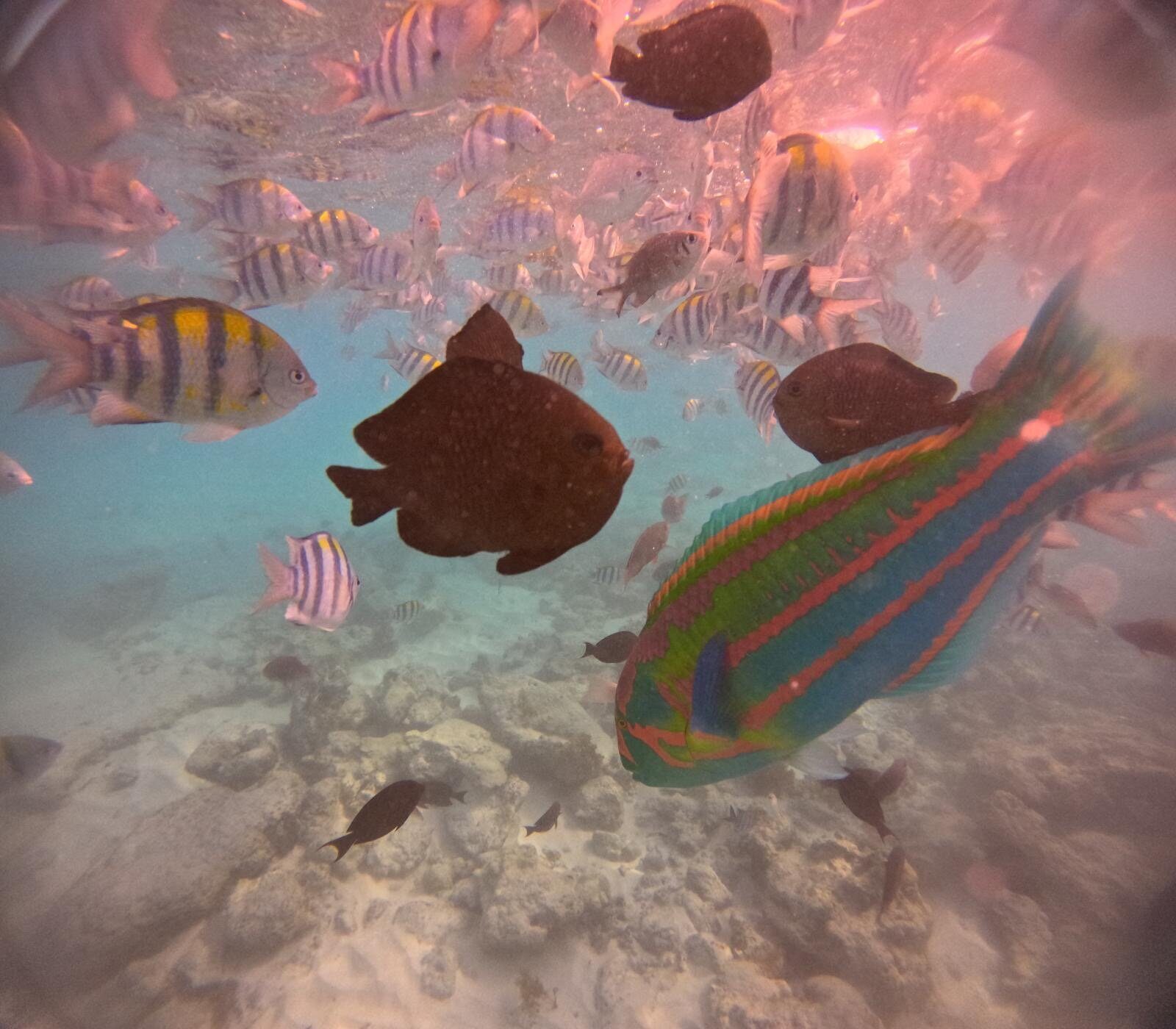
Coral cover is dense and varied, with hard and soft species in good condition rather than the bleached and broken sections common elsewhere. Fish populations reflect that: large groupers, parrotfish, wrasse, snapper, angelfish and butterflyfish in numbers that unfished reefs support and fished ones do not. Turtles are seen regularly.
The guided snorkelling tour runs around ninety minutes with a ranger in the water alongside you, and on a quiet day your boat may be the only one at the site. Visitors who have snorkelled Mnemba Atoll and then come here routinely rate the coral at Chumbe higher, though Mnemba can hold its own on sheer fish volume.
Scuba is not permitted in the reserve. This is a snorkelling site by design, which keeps pressure on the coral low.
Forest Walks and the Coconut Crabs of Chumbe
The land half of the island is a closed forest reserve, and the guided walk through it is more interesting than most visitors anticipate.
Chumbe holds one of the last stands of undisturbed coral rag forest in the region, growing directly on fossilised coral with almost no soil. It shelters a population of coconut crabs, the largest land invertebrate in the world, which climb trees and can crack a coconut with their claws. They are nocturnal and largely hidden by day, though rangers know where to look.
Ader’s duiker, a small and threatened forest antelope, was introduced to the island as a conservation measure. Roseate terns nest here seasonally. The mangrove boardwalk on the eastern side runs out over the root system into the tidal zone.
The Lighthouse and the History of Chumbe Island
A lighthouse has stood on Chumbe since the 1900s, built to guide shipping through the channel into Zanzibar harbour, and it is still operational. Visitors can climb it, and the view from the top takes in the whole island, the reef running along the western edge and the Zanzibar coastline across the water.
The island’s protection has an unusual origin. It sat in a military zone for decades, which kept fishing boats and development away entirely and left the reef in a condition that no accessible reef in the region had retained. When the area was opened up in the early 1990s, a conservation project moved to have it formally protected rather than developed, and the reserve was established.
That accident of history is why Chumbe looks the way it does. The reef was not restored; it was simply never damaged.
Chumbe’s coral was saved by a military exclusion zone before anyone thought to protect it deliberately. Sometimes conservation is a matter of being left alone.
Conservation, Education and How the Reserve Is Funded
The park runs as a not for profit operation, and income from day visitors and overnight guests funds the ranger patrols, the reef monitoring and an environmental education programme that brings Zanzibari schoolchildren and local teachers to the island free of charge.
The former fishermen who patrol the reserve boundary were recruited from surrounding communities, which converts the people most affected by a fishing closure into the people with a stake in it holding.
The seven bungalows on the island run on photovoltaic power, rainwater harvesting, solar water heating and composting toilets, with no mains connection of any kind. There is no plastic bottled water, so bring a refillable bottle.
In the water, the rules are strict and enforced: no touching or standing on coral, no collecting anything, no chemical sunscreen. Wear a rash vest instead. Rangers will say something if you break them, which is a good sign rather than a bad one.
Staying Overnight on a Chumbe Island Trip
Seven eco bungalows sit above the beach on the western side, open to the sea on one face, built from local materials and running entirely off grid. Guests eat together, the reef is on the doorstep, and after the day boats leave in the afternoon the island belongs to the people staying.
Night is when the island is most alive. Coconut crabs come out after dark and rangers run guided walks to find them, and the sky over an island with no electric lighting is worth the stay on its own.
Overnight rates are considerably higher than the day trip and include everything. It suits people who want a night somewhere genuinely off grid rather than a resort experience, and it is not the place for anyone wanting air conditioning and a swimming pool.
Chumbe Compared With Mnemba and Prison Island
Chumbe Island Coral Park. The healthiest coral and the fewest people, with an all inclusive full day and strict conservation rules. The most expensive by a wide margin and it must be booked ahead. Best for anyone who cares about the reef itself.
Mnemba Atoll. More fish and more variety of sites, reached in fifteen minutes from Matemwe. Considerably cheaper and much busier, with crowded moorings by mid morning in high season. Best if you are based on the north or northeast coast.
Prison Island and Nakupenda. The cheapest and easiest day from Stone Town, with tortoises, a sandbank and easy shallow snorkelling. The reef is modest by comparison. Best for families and first excursions.
Getting to Chumbe Island and Best Time to Visit
Boats leave from the coast southwest of Zanzibar City, with the crossing taking around half an hour. Transfers from Stone Town to the departure point are usually arranged separately and add a modest cost, or your accommodation can organise a taxi.
From the north coast beaches at Nungwi or Kendwa allow an hour and a half by road to reach Stone Town first, and from the east coast around an hour. That makes Chumbe far more practical for anyone staying in or near the old town.
The dry months from June to October give the calmest crossings and the best underwater visibility, with January and February close behind. During the long rains of April and May visibility drops and the island closes for part of the season, so check before planning around it.
Frequently Asked Questions About Chumbe Island Coral Park
How much does a Chumbe Island day trip cost?
The all inclusive day package has been quoted at around $90 to $110 per person, covering boat transfers, lunch, drinks, guided snorkelling and the forest and lighthouse tours. A government Blue Economy levy of about $25 per person is charged on top, bringing the realistic total to roughly $115 to $145. Taxi transfers from Stone Town to the departure point add around $30 return. Overnight stays in the bungalows cost considerably more.
Do you need to book Chumbe Island in advance?
Yes. Daily visitor numbers are capped deliberately as part of the conservation model, and the island regularly sells out in high season. Book several weeks ahead for July to September and the Christmas period. Turning up on the day is not an option, unlike the beach based snorkelling operators.
Is Chumbe better than Mnemba Atoll for snorkelling?
For coral condition and for having the water to yourself, yes by a clear margin, since the reef has been closed to fishing for decades and visitor numbers are limited. Mnemba often carries more fish and more site variety, and costs far less, but the moorings get crowded by mid morning in high season. Chumbe is snorkelling only; scuba is not permitted in the reserve.
What is included in the Chumbe day trip?
Return boat transfers, lunch, all non alcoholic drinks, a guided snorkelling tour over the reef with a ranger, guided forest and mangrove walks, the historic lighthouse, the visitor centres and a look at the eco bungalows. The Blue Economy levy and road transfers to the boat are the main things charged separately.
Can you stay overnight on Chumbe Island?
Yes. Seven off grid eco bungalows run on solar power, rainwater harvesting and composting toilets, with rates including all meals and activities. Overnight guests have the island to themselves after the day boats leave, and rangers run night walks to find coconut crabs. There is no air conditioning, no pool and no mains electricity, which is the point.
What should you bring to Chumbe Island?
A rash vest rather than chemical sunscreen, since sun creams are not permitted in the reserve. A refillable water bottle, since plastic bottles are not used on the island. A hat, a towel, closed shoes for the forest walk and cash for the levy. Snorkelling equipment is provided.
Chumbe is the one marine day on Zanzibar where booking ahead genuinely matters, and where the total cost is easy to underestimate because the government levy and the road transfer sit outside the headline price. Holidays To Zanzibar arranges Chumbe days with the full figure stated up front and the transfer to the departure point handled.
If you want an honest comparison against Mnemba for your dates and where you are staying, contact Holidays To Zanzibar and a real person will get back to you.