A Swahili cuisine tasting in Zanzibar is best done across one evening at the Forodhani night market and one lunch at a local restaurant in Stone Town, which together cover most of the island’s signature dishes. Guided food tours run about three hours from an early evening start. Swahili cuisine blends African, Arab, Persian and Indian traditions with Indian Ocean seafood and Zanzibari spice.
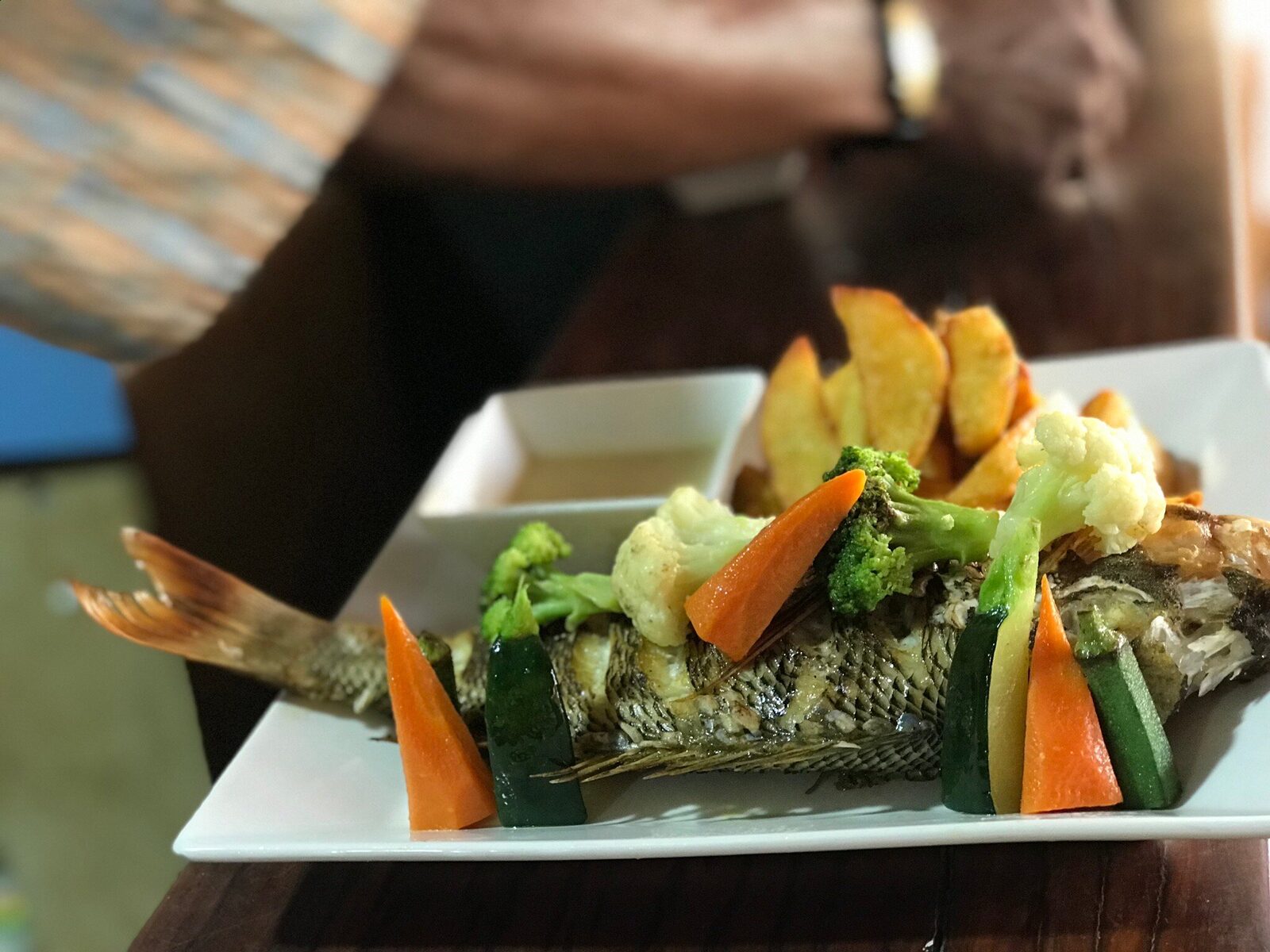
You can eat your way through the entire canon here for less than the cost of one resort dinner, which is the strongest argument on the island against booking all inclusive.
Building a Tasting Across a Trip
Three settings cover almost everything, and they work best in this order.
Forodhani Gardens in Stone Town, from around six each evening, is the single best place to sample several dishes in one sitting. Dozens of vendors, everything cooked in front of you, and portions small enough to try four or five things.
Local restaurants in the old quarter serve the everyday versions of the rice dishes and curries that street stalls do not. This is where the biryani and pilau are best, and where locals eat.
Darajani Market between seven and ten in the morning covers breakfast: samosas, mandazi, vitumbua and ugali with stew, at the lowest prices on the island.
Add a spice farm lunch or a cooking class and you have covered the whole range without eating in a hotel once.
Order the dishes whose names you cannot pronounce. Anything with an English name on a menu has usually been adapted for visitors, and it is rarely the better plate.
The Seafood Dishes to Try First
Seafood defines the coast, and coconut is what separates Zanzibari cooking from anywhere else.
Pweza wa nazi, octopus slow cooked in a spiced coconut curry until tender, is the island’s signature dish. If you eat one thing here, make it this.
Samaki wa kupaka is fish, most often kingfish, marinated in coconut and spice then grilled, so the sauce caramelises on the outside.
Kuku wa nazi, chicken in coconut sauce, is the home style version of the same idea and appears on almost every local menu.
Beyond the curries, grills carry kingfish, tuna, red snapper, calamari, prawns and lobster, usually landed that morning. Coconut crab curry turns up in some places. The coconut milk is grated and pressed by hand rather than poured from a tin, which is why the sauces here taste different from coconut curries elsewhere.
Rice Dishes: Pilau and Biryani
Two spiced rice dishes anchor the cuisine and they are not the same thing, which is worth knowing before ordering.
Pilau cooks the rice in a spiced broth together with the meat, so everything takes on one colour and flavour. Cardamom, cloves, cinnamon and cumin do the work, with beef, chicken or goat, potato, onion and sometimes raisins. Aromatic and slightly sweet rather than hot, and the dish cooked for celebrations.
Biryani arrived with Indian traders and became its own island version. Rice is cooked separately from a rich spiced curry, then layered and slow cooked together, giving distinct textures rather than a blend. Goat and fish versions are common.
The best of both are found in family run local restaurants rather than hotels. Lukmaan on Mkunazini Street in Stone Town is the name locals give when asked, and it serves the everyday versions at everyday prices.
Street Food and the Forodhani Tasting
Urojo. Also called Zanzibar mix. A tangy turmeric soup over potato, cassava chips, bhajia fritters, boiled egg and chutneys. Sour, spicy, creamy and crunchy at once. The dish most visitors walk past and the one to order first.
Zanzibar pizza. Thin dough filled with minced meat, egg, onion and cheese, folded and fried flat, then cut into squares. Sweet banana and chocolate versions follow as dessert.
Mishkaki. Charcoal grilled meat skewers marinated in spice, the everyday street food of the coast and the cheapest hot thing at the market.
Viazi karai and chipsi mayai. Deep fried battered potato, and a chips and omelette hybrid that is exactly as good and as unhealthy as it sounds.
Seafood skewers. Kingfish, tuna, calamari, octopus and prawns laid raw on ice for you to point at, grilled over charcoal in front of you.
Samosas. Another Indian arrival turned local, sold at Darajani and street stalls, and among the cheapest good things to eat here.
Breakfast, Snacks and Sweets
The gentler end of the range, and the part most visitors miss entirely by eating hotel breakfasts.
Vitumbua are small rice and coconut pancakes, slightly sweet, cooked in a dimpled pan and sold by women on Stone Town streets in the mornings. Mandazi are Swahili doughnuts, lightly sweet and often scented with cardamom or coconut, eaten with tea at any hour.
Chapati accompanies curries and stews in every local kitchen. Halwa is the dense sticky sweet flavoured with cardamom and rosewater, sold in blocks and reflecting the Omani side of the island’s history.
For vegetarians, maharage ya nazi, beans in coconut milk, and wali wa nazi, coconut rice, are the everyday home cooking staples and among the best things on any local menu.
Every dish here arrived on somebody’s boat and then became Zanzibari. That is not a weakness of the cuisine; it is the whole of it.
Drinks Worth Trying
Sugarcane juice is the Forodhani signature, pressed by hand through a mangle with a knot of ginger and a wedge of lime, sweet and sharp together. Watch the press being rinsed, and skip the ice if you are unsure.
Tangawizi tea is strong ginger spiced tea, drunk in the evening and pairing well with mandazi. Zanzibar coffee is poured from long spouted pots by vendors working the squares of the old town, served in tiny cups and worth stopping for.
Fresh juices are everywhere: mango, passionfruit, tamarind and watermelon, with mango best around April and December. Fresh coconuts are opened in front of you for the water, then split so you can scrape out the flesh.
Alcohol is available at resorts and tourist restaurants at a marked premium. Public drinking is not appropriate in a predominantly Muslim setting.
Where the Cuisine Came From
Worth a paragraph, because the food explains the island as directly as the architecture does.
Zanzibar sat at the point where monsoon winds carried dhows down from Arabia, Persia and western India and then carried them home again. Traders waited here for the wind to turn, sometimes for months, and they cooked while they waited.
Biryani and samosas arrived with Indian merchants. Pilau, halwa and the heavy use of cardamom and rosewater came with the Omani sultanate, which moved its capital from Muscat to Zanzibar in 1832. Coconut, cassava, plantain and the grilling traditions are African and coastal.
The spices that hold it all together were introduced rather than native, planted on the island’s western belt and turning Zanzibar into the world’s dominant clove producer through the nineteenth century.
What you are eating at Forodhani is the residue of a thousand years of that traffic, which is why nothing on the menu is quite from anywhere else.
Guided Food Tours and Whether They Are Worth It
You do not need a guide to eat well here. Forodhani is a public park, local restaurants are open to anyone, and the market costs nothing to walk into.
What a guided food tour adds on a first evening is ordering confidence and context: which stalls to use, what to try beyond the obvious, and what you are actually eating. These typically run about three hours from an early evening start, combining a walk through the lanes with tastings at the market and a drink at sunset.
They cost considerably more than eating alone. A reasonable middle path is a Stone Town walking tour that finishes at Forodhani as the stalls open, then eating under your own steam once the guide has pointed you at the right tables.
Eating Safely and Practical Notes
Street food here is safe with ordinary judgement. Choose stalls with visible turnover, watch food cooked in front of you, ask for seafood grilled fresh rather than taking what has sat under a lamp, and skip anything warm and uncovered.
Problems usually trace back to water rather than the grill. Tap water is not for drinking, so be cautious with ice and uncooked salad garnishes and refill from large supermarket jugs.
Agree prices before food goes on the charcoal, since the opening figure quoted to a visitor sits above the local rate at some stalls. Carry small Tanzanian shilling notes; cards are not accepted at markets or street stalls.
During Ramadan many local restaurants close during daylight and eating openly in public during the day is inconsiderate. Resorts operate normally throughout.
Frequently Asked Questions About Swahili Cuisine in Zanzibar
How much does it cost to eat Swahili food in Zanzibar?
Very little outside resorts. At Forodhani, Zanzibar pizza runs $2 to $4, seafood skewers $2 to $5 each and urojo $1 to $2, with a full dinner about $6 to $12 per person. Local restaurants charge roughly $3 to $5 for pilau and $4 to $6 for biryani. Fresh juice is $1 to $2. Higher end Swahili tasting menus in Stone Town run $30 to $40.
What is the must try dish in Zanzibar?
Pweza wa nazi, octopus slow cooked in spiced coconut curry, is the island’s signature and the single dish to order if you order only one. Urojo soup and Zanzibar pizza are the street foods not to miss, and pilau is the celebratory rice dish cooked in most homes.
Is Swahili food spicy?
Aromatic rather than hot. Cloves, cardamom, cinnamon, cumin and turmeric do most of the work, giving fragrance instead of heat. Chilli appears in chutneys and in urojo, and levels vary by cook, so you can usually ask for less. Pilau in particular is heavily spiced but mild.
Where should you eat to try Swahili cuisine?
Forodhani Gardens night market in Stone Town from around six for variety in one evening. Local restaurants in the old quarter for the best pilau and biryani at local prices, with Lukmaan on Mkunazini Street the name locals give. Darajani Market between seven and ten in the morning for samosas, mandazi and the cheapest food on the island.
Is a guided food tour worth booking?
Not necessary, since everything is open to anyone, though useful on a first evening. Guided Stone Town street food tours run about three hours from an early evening start at roughly $30 to $50 per person, adding ordering confidence and context. A cheaper middle path is a walking tour that finishes at Forodhani as the stalls open, then eating independently.
Is there good vegetarian Swahili food?
Better than most visitors expect. Swahili home cooking leans heavily on coconut, beans, lentils, rice and vegetables. Maharage ya nazi, beans in coconut milk, and wali wa nazi, coconut rice, are staples. Urojo can be ordered without meat, and vitumbua, mandazi, chapati and samosas are all vegetarian. Say so when ordering at seafood grills.
Food is one of the better reasons to be on this island and one of the easiest things to miss entirely by eating where a hotel steers you. Holidays To Zanzibar runs Stone Town evenings built around the market and the local restaurants, with guides who eat in these places rather than pointing at them from across the road.
For a food led evening in the old town, or a cooking class arranged properly, contact Holidays To Zanzibar and a real person will reply.