Snorkelling in Zanzibar is done from boats rather than from the beach, with half day trips leaving every morning from the north, northeast and southwest coasts. Most trips include equipment, and a daily marine park fee applies in protected waters. Zanzibar’s reefs hold over six hundred fish species and around fifty types of coral across this Tanzanian archipelago in the Indian Ocean.
Almost everything that determines whether you have a good morning out here happens before you get in the water: which boat, what time, and how honestly you described your swimming.
How Snorkelling Trips Work in Zanzibar
The standard snorkelling trip is a half day. A boat collects you from the beach in front of your accommodation or from a launch point nearby, runs out to a mooring, and you enter from the side of the boat and drift while the crew follows.
Most trips take in one or two sites with a break between them, and many include a stop at a sandbank or a shallow lagoon on the way back. Expect to be away three to four hours in total, with perhaps ninety minutes actually in the water.
Boats are usually small fibreglass motorboats with a skipper and a guide, no shade and no facilities. Traditional dhows are slower and pleasanter in calm conditions and considerably less so when the water gets up.
Booking happens three ways: through your hotel, through an operator or platform in advance, or directly with a captain on the beach. The beach route is cheapest and involves negotiating, and boat condition varies accordingly.
Take the earliest departure available. The water is clearer before the day’s boat traffic stirs it, the moorings are empty, and by mid morning in high season the popular sites carry a lot of people at once.
What You Will See Under the Water
The reef community here is rich and reasonably predictable, which makes a first snorkel rewarding without needing luck.
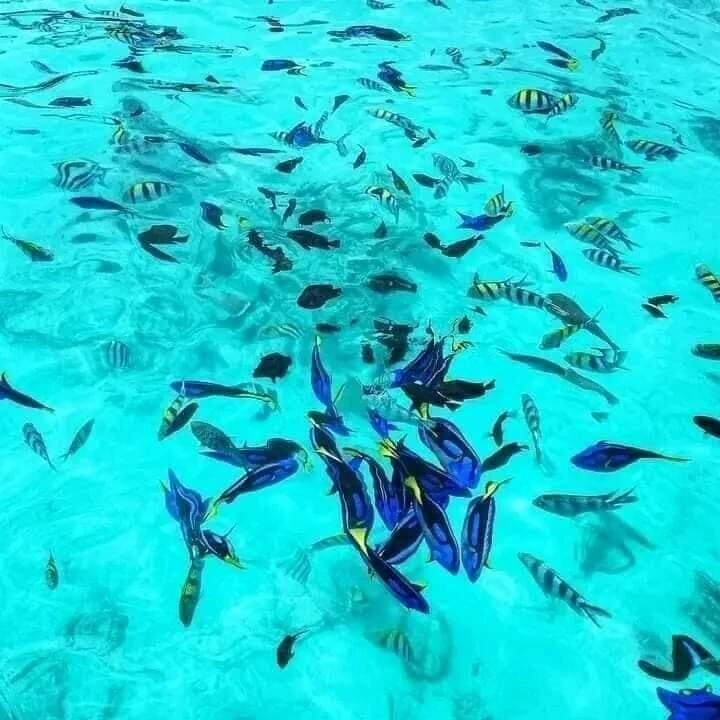
Expect clouds of anthias and fusiliers moving over the coral, angelfish and butterflyfish working the heads, parrotfish audibly grinding at the reef, wrasse, snapper, triggerfish, boxfish and goatfish. Moray eels sit in crevices and lionfish hang under overhangs, both worth looking at and not touching.
On the sand between coral heads, stingrays and occasionally cornetfish. Green turtles are seen regularly on the better sites, grazing and surfacing to breathe. Starfish sit on the shallow flats at the sandbank stops.
Dolphins move through the water at several sites and boats will detour if a pod appears, though that is a bonus rather than part of the trip.
Snorkelling by Ability: Where to Go and What to Say
First time or nervous. Prison Island and Bawe near Stone Town, or the Menai Bay reef stops. Shallow, calm, close to the boat, with life jackets available. Children handle these easily.
Comfortable but not strong. The inner moorings at Mnemba Atoll and the Blue Lagoon off Michamvi. Calm enough to enjoy, with a crew watching, and shallow enough to stand in places.
Confident swimmers. The outer Mnemba sites and Tumbatu, where a current runs and the drift covers more ground. Better fish life in exchange for needing to be at ease in open water.
Serious about coral. Chumbe Island Coral Park, with a ranger in the water alongside you for around ninety minutes over reef closed to fishing since the 1990s. Snorkelling only; scuba is not permitted.
The one thing that matters more than the site: tell the crew honestly how confident you are before the boat leaves. A good operator picks the mooring accordingly. A poor one drops everybody in the same place regardless, which is how people get frightened.
Equipment, Fit and What to Bring
Masks and fins are provided as standard on almost every trip, and the quality varies from serviceable to useless. Inspect what you are handed before the boat leaves the beach rather than discovering the problem at the mooring.
A mask that seals is the whole game. Test it by holding it to your face without the strap and breathing in through your nose; it should hold on its own. If it leaks on the boat, ask for another, and crews carry spares.
Bringing your own mask is a small thing that improves a morning out of all proportion to the effort, particularly if you wear glasses or have found rental masks leak in the past.
Beyond that: a rash vest instead of chemical sunscreen, since your back is exposed for an hour and reef safe protection matters near the protected areas. A dry bag for phones and cameras. Water, a hat and a towel. Reef shoes if the trip includes a shallow flat or a sandbank.
A leaking mask ruins a reef morning faster than bad visibility does, and it is the one variable entirely within your control.
Reef Etiquette and Protecting What You Came to See
The rules are short and they matter, because reef damage here is mostly accidental rather than deliberate.
Do not stand on or touch coral, which kills it. Fins do more damage than anything else, usually because people do not realise where their feet are in shallow water, so keep them up and behind you. Do not chase, corner or touch fish and turtles, and do not lift starfish out of the water for photographs, which kills them.
Use a rash vest rather than chemical sunscreen. At Chumbe Island Coral Park sun creams are not permitted in the water at all.
Coral bleaching from rising sea temperatures is a real and worsening pressure across the western Indian Ocean, and the difference between the protected sites and the unprotected ones is obvious within seconds of putting your face in.
Fees, Prices and What the Quote Should Cover
Tanzania applies a marine park fee per person per day in protected waters, collected separately from the tour price, and Chumbe carries an additional government levy on top of its package. Both are real and both are routinely left out of the first number an operator quotes.
Four things to settle before you pay: whether marine park fees are included, how long you actually get in the water rather than on the boat, what equipment is supplied, and what time you are back at the beach.
Shared group departures cost considerably less than private boats, and a private boat buys you a mooring choice and a crew paying attention to your group alone. For nervous swimmers or families with young children, that is often worth the difference.
Safety in the Water and on the Boat
Look the boat over before committing. Check that life jackets are aboard, including child sized ones if relevant, and that the engine sounds healthy. Crossings are usually short and calm, and the channel picks up through the afternoon and during the long rains.
In the water, stay within sight of the boat and go in pairs. Currents at some sites move faster than they look from the surface, and the drift can carry you further than you intend while you are looking down.
Do not touch anything. Lionfish spines and urchin spines both hurt considerably, fire coral stings on contact, and moray eels bite when a hand goes into a crevice.
Sun exposure is the most common problem people actually come back with. An hour face down in the water with your back up will burn straight through a single application of sun cream.
When to Go and What the Season Does to Visibility
Visibility follows rainfall almost exactly, because sediment washing off the land is what clouds the water.
July to September is the strongest window, with calm seas and the clearest water of the year. February and March give a good second period with warm clear conditions and fewer boats than the mid year peak.
March through May is the period to avoid. Runoff during the long rains cuts visibility sharply and rough crossings cancel trips outright. If snorkelling is a main reason for your trip, build the dates around this before anything else.
Sea temperatures rarely fall below twenty five degrees in any month, so no wetsuit is needed at any point in the year. Morning conditions beat afternoon ones on almost every day.
Frequently Asked Questions About Snorkelling in Zanzibar
How much does snorkelling cost in Zanzibar?
Budget trips run from about $15 to $50 per person. Shared Mnemba Atoll trips start around $50, with private boats up to $200 for two people including equipment, transfers and fees. Chumbe Island day packages cost $90 to $110 plus a government levy of about $25. A marine park fee of roughly $10 to $12 per person per day applies in protected waters and is often charged separately.
Do you need to be able to swim well to snorkel in Zanzibar?
Not for the shallow sites. Prison Island, Bawe and the Menai Bay stops are calm and shallow with life jackets available, and children manage them easily. Some Mnemba moorings carry a current and suit confident swimmers better. Tell the crew honestly how comfortable you are before the boat leaves and a good operator will choose accordingly.
Can you snorkel straight off the beach in Zanzibar?
Reliably only at Nungwi on the north coast, where the reef is reachable without a boat and the water stays deep through the day. Everywhere else the tide governs, and on the east coast the sea withdraws hundreds of metres at low water. Almost all of the good sites here require a boat.
Is snorkelling equipment provided?
Almost always, and the quality varies considerably. Inspect the mask before the boat leaves the beach, testing that it seals on your face without the strap. Crews carry spares if it leaks. Bringing your own mask is worth the space, particularly if rental masks have leaked on you before.
What is the best month for snorkelling in Zanzibar?
July to September for the clearest water and calmest seas, with February and March a good second window and fewer boats. Avoid March to May, when runoff from the long rains clouds the water and rough conditions cancel trips. Sea temperatures stay above twenty five degrees year round, so warmth is never the issue.
Is snorkelling in Zanzibar suitable for children?
Yes, at the shallow sheltered sites. Prison Island and the sandbank stops are ideal, with calm shallow water and sand to retreat to. Check the boat carries child sized life jackets rather than assuming, bring reef shoes for urchins, and prioritise sun protection, since an hour face down in the water burns backs quickly.
The difference between a good reef morning and a disappointing one comes down to departure time, mooring choice, mask fit and whether the crew was told what you can actually do in open water. Holidays To Zanzibar works with skippers who leave early, read the conditions properly and state the marine park fees before you pay rather than at the jetty.
For a reef morning matched to your beach and your confidence in the water, contact Holidays To Zanzibar and someone who works these waters will reply.