Most visitors should stay in two parts of Zanzibar: one or two nights in Stone Town for the history, then the rest on a beach chosen by whether you need the sea swimmable at all hours. The north coast never dries out; the east coast does. Zanzibar divides into six broad areas across Unguja, the main island of this Tanzanian archipelago, each within two hours of the airport.
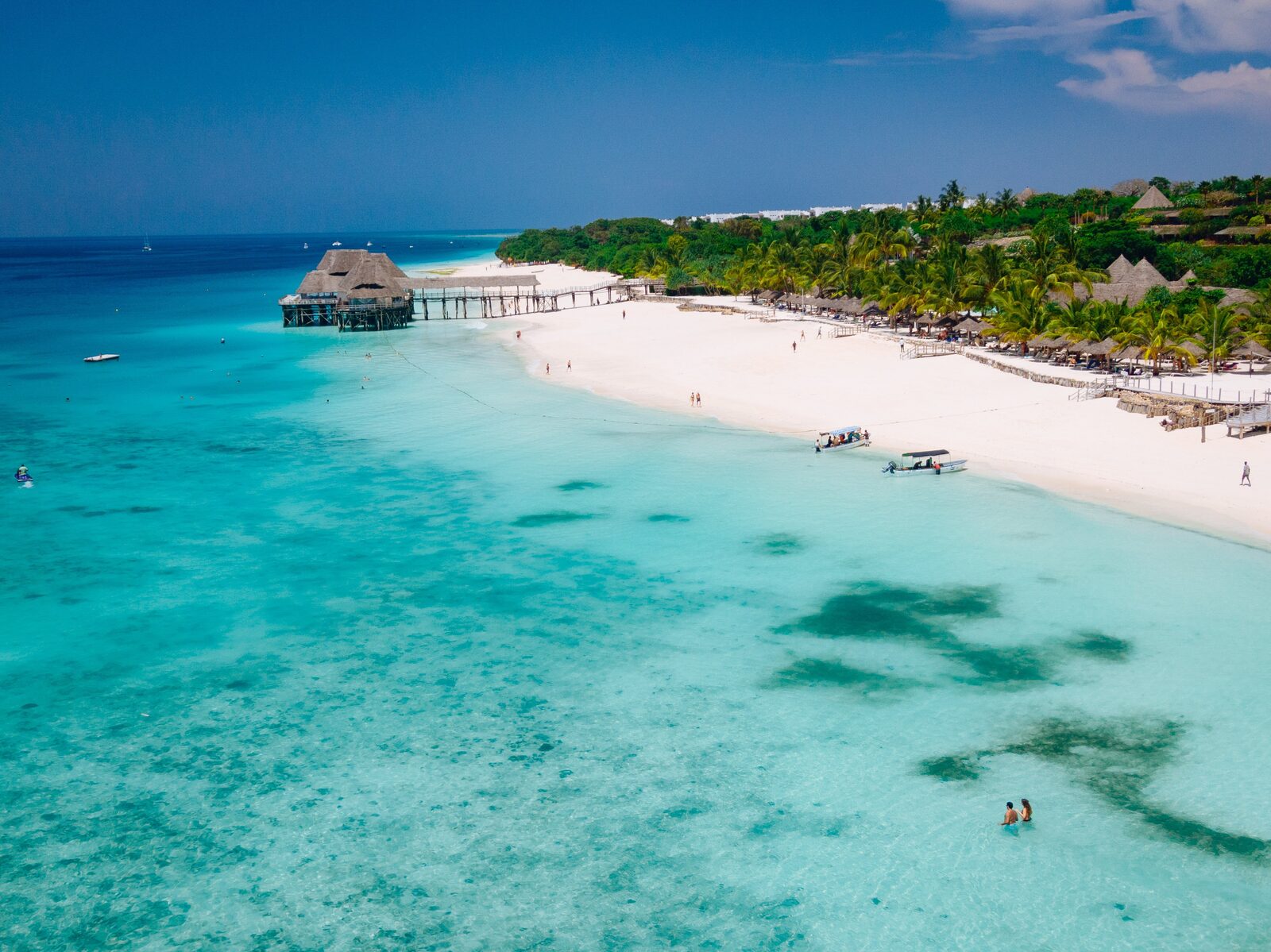
This is the decision that shapes the trip more than the hotel does, and it is the one people spend least time on.
Stone Town: Staying in the Historic Quarter on a Zanzibar Trip
The old coral stone quarter of Zanzibar City sits on the western promontory, fifteen to twenty minutes from the airport, and it is the only part of the island that is not a beach.
Stay here for the UNESCO listed architecture, the carved doors, the former slave market and Anglican cathedral, Darajani Market, the Old Fort and the evening food market at Forodhani Gardens. Accommodation runs from family guesthouses to restored merchant houses with rooftop terraces, at every price level.
What you do not get is a beach. The urban shoreline is not for swimming, though there are decent beach hotels a ten minute drive out of the centre. The lanes are also poorly lit at night and easy to get lost in, so a taxi back after dark is standard rather than cautious.
One or two nights is the right amount for most people. Longer works if the history is your main interest, and Stone Town also makes the most convenient base for boat trips to Prison Island, the Nakupenda sandbank and Chumbe Island.
Do Stone Town at the start rather than the end. Arriving tired and going straight to a beach means the old town gets squeezed into a rushed final day, and it is the part people most regret hurrying.
The North Coast: Nungwi and Kendwa for a Beach Trip
Nungwi and Kendwa wrap the northern tip and share the island’s one great practical advantage: they sit outside the broad tidal shelf, so the sea stays swimmable through most of the day.
Nungwi is the busiest place on the island, with hotels, restaurants, bars and tour desks packed tightly together and boats leaving all day. Kendwa, a few kilometres south, has the same water with more space between properties and the best sunsets on Unguja.
The cost of that is price and volume. This is the most expensive coast and the most developed, and beach vendors are noticeably more persistent than elsewhere. Transfers from the airport run around an hour and a half, the longest of the main beach areas.
Stay north if you have children, if the tide would frustrate you, or if you want restaurants and excursions within walking distance.
The Northeast Coast: Matemwe, Kiwengwa and Pongwe
The northeast faces the open ocean and Mnemba Atoll offshore, and it is the compromise coast: tidal like the east, but with reef access and quieter than the north.
Matemwe is the pick for anyone whose trip is built around the water, sitting directly opposite Mnemba with a boat crossing of about fifteen minutes. Accommodation skews boutique and high end, spaced along the coast rather than clustered.
Kiwengwa carries larger resorts and package groups, particularly Italian ones, and feels different from its neighbours. Pongwe is a sheltered cove with calmer water than the beaches either side, popular with couples wanting quiet without going remote.
All three have strong tides. Transfers run around an hour to an hour and a quarter from the airport.
The East Coast: Paje, Jambiani and Bwejuu on a Zanzibar Trip
The east coast is where the lagoon, the wind and the seaweed farms are, and where prices sit lowest for comparable standards.
Paje is the kitesurfing centre, with a flat waist deep lagoon, reliable trade winds in season and a young international crowd. It has the most social scene outside Nungwi and a large remote working population.
Jambiani runs south from it with the same water and none of the noise, a long strung out village where guesthouses sit between family homes. The best choice on the island for slow days and village life.
Bwejuu sits north of Paje and is quieter than both, with long empty sand and few properties.
All of them share the defining feature: at low tide the sea withdraws hundreds of metres, sometimes close to a kilometre. Plan around it and the coast is excellent value. Ignore it and you will be disappointed.
Choose the coast, then the town, then the hotel. Doing it in the reverse order is how people end up somewhere beautiful that does not do what they need.
The Southeast: Michamvi Peninsula Trips
Michamvi is the peninsula that hooks north from the bottom of the east coast, and it has one feature nothing else on the island shares: an eastern shore facing sunrise and a western shore facing sunset, a few minutes apart by road.
The eastern side at Pingwe holds The Rock restaurant, built on a coral outcrop offshore. The western side looks across a bay towards the interior and gets the evening light, with Kae Funk and the sunset beaches there.
Accommodation runs to boutique lodges and villas, quieter and more spread out than Paje twenty minutes to the south. It suits couples and anyone wanting somewhere calm within reach of the east coast attractions.
The South and Southwest: Kizimkazi and Fumba
The least developed areas and the least likely to suit a first trip, but worth knowing about.
Kizimkazi at the southern tip is a pair of working fishing villages, known for dawn dolphin boats and for the mosque at Dimbani dated to 1107. A handful of small lodges operate here, and staying locally means reaching the boats without a pre dawn transfer from elsewhere.
Fumba on the southwest coast is the departure point for Safari Blue dhow trips and sits near Menai Bay Conservation Area. It is close enough to Stone Town to work as a quiet base with the town in reach.
Both are choices for return visitors or for anyone actively seeking somewhere without a tourist strip.
Splitting Your Stay Across Two Parts of Zanzibar
One week, first visit. Two nights Stone Town, then five on the north coast at Kendwa or Nungwi. Covers the history and removes the tide problem. The most reliable structure there is.
Ten days, mixed interests. Two nights Stone Town, four on the east coast at Paje or Jambiani, four on the north. Gives you the lagoon and the swimmable sea without excessive moving.
Reef focused trip. Two nights Stone Town, then the rest at Matemwe for Mnemba access, with a Chumbe Island day trip taken from the town end.
Short stay after a safari. Four nights on one beach and nothing else. Moving around eats a four night stay entirely, and most people arriving from the mainland want to stop rather than travel.
Two bases is the practical maximum for a week. Three means most of your days include a transfer, and crossing between the north and east coasts takes around two hours because the roads run back through the middle of the island.
How Transfer Times Should Shape Where You Stay
Distances on Unguja are short and travel times are not. Roads are narrow, villages sit directly on them and traffic moves at the pace of the slowest thing on it.
From the airport or Stone Town, allow fifteen to twenty minutes into the old town, about an hour east to Paje and Jambiani, an hour to an hour and a quarter northeast to Matemwe, an hour and a half north to Nungwi and Kendwa, and an hour and a half south to Kizimkazi.
Pre book transfers through your accommodation rather than negotiating at arrivals, where quotes for the northern runs are routinely inflated. Shared shuttles between the main beach areas and Stone Town cost a fraction of a private car and run at fixed times.
Frequently Asked Questions About Where to Stay in Zanzibar
Which part of Zanzibar is best for first time visitors?
Two nights in Stone Town followed by the north coast at Kendwa or Nungwi. That combination covers the UNESCO listed old town and gives you a beach where the sea is swimmable at any hour, without spending days on transfers. Stone Town accommodation runs from around $20 for guesthouses to $200 and above for restored merchant houses.
Is it better to stay in Stone Town or on the beach?
Both, in that order. Stone Town for one or two nights covers the history, the market and the food, and it is the most convenient base for boat trips to Prison Island, Nakupenda and Chumbe. It has no swimmable beach of its own, so the rest of the stay belongs on the coast. Doing Stone Town first avoids it being squeezed into a rushed final day.
Which part of Zanzibar is cheapest to stay in?
The east coast, particularly Jambiani and Bwejuu, where guesthouses and bungalows run around $20 to $50 per night and comparable standards cost thirty to forty percent less than the north. Stone Town also has genuinely cheap options. The north coast and Matemwe carry the highest rates, with resorts from $200 to $800 per night in peak season.
How many different places should you stay in Zanzibar?
Two for a week, at most. Stone Town plus one beach is the standard, and it works. Three bases in seven days means most of your days include a transfer, and crossing between the north and east coasts takes around two hours. For a stay of four nights or fewer, pick one place and stay put.
Where should you stay for snorkelling and scuba in Zanzibar?
Matemwe on the northeast coast, which faces Mnemba Atoll about fifteen minutes away by boat and is closer than anywhere else. Nungwi and Kendwa also run trips to Mnemba, taking about an hour each way around the northern tip. For Chumbe Island Coral Park in the southwest, base yourself in or near Stone Town, since it is a full day from the northern beaches.
Which part of Zanzibar is best for families?
The north coast, at Kendwa in particular. The sea is swimmable at any hour, which matters far more with children than the price difference does, and there are restaurants within walking distance. East coast properties work if they have a good pool to cover the low tide hours. Check that excursion boats carry child sized life jackets.
Where you stay on Zanzibar decides how much of your holiday is spent in a car and whether the sea is there when you want it, and neither of those is obvious from a booking site. Holidays To Zanzibar has placed visitors across every part of the island and will tell you straight when a plan involves more moving than it is worth.
For help splitting a week between the right two bases, contact Holidays To Zanzibar and a real person will come back to you.