The strongest photography locations in Zanzibar are Stone Town‘s carved doors and rooftops, The Rock restaurant at Michamvi, the Nakupenda sandbank, Kendwa at sunset, the seaweed farms at Jambiani and Jozani Forest. Most are reached on half day tours booked through hotels or operators. Zanzibar is a Tanzanian archipelago in the Indian Ocean with a UNESCO listed old town and roughly two hundred kilometres of coastline.
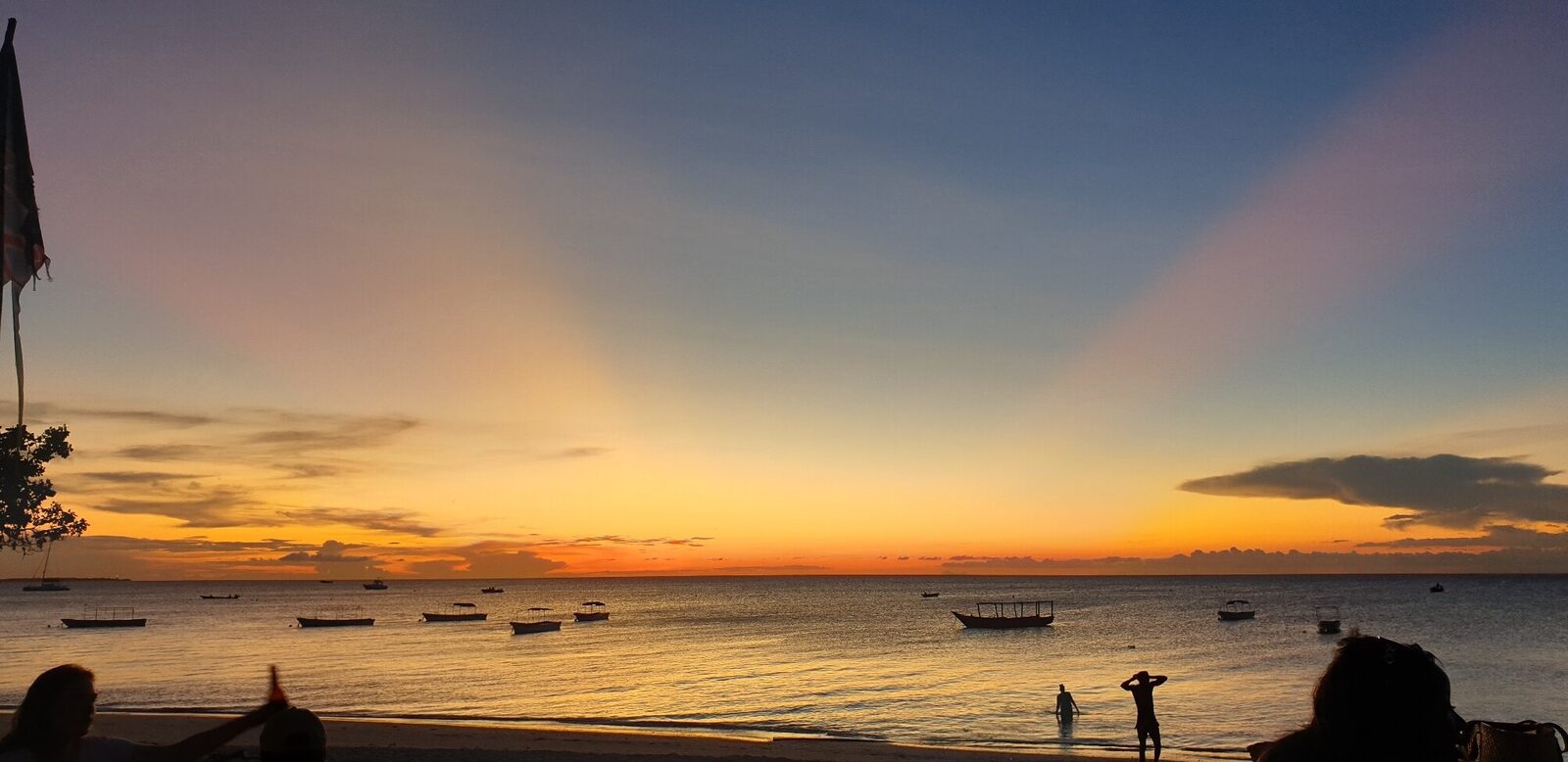
The single most useful thing to know is that this island is close to the equator, which means short twilight, hard midday light and a narrow good hour at either end of the day.
Stone Town Doors and Alleys on a Photography Walking Tour
The old quarter is the richest ground on the island and the hardest to shoot well, because the lanes are narrow and the contrast between shaded alley and bright sky is brutal.
The doors are the subject. Hundreds survive across the quarter in two traditions: rounded Indian frames with projecting brass studs, and square Omani frames carved with chains, lotus motifs and Arabic script. They reward detail work rather than wide shots, and a moderate telephoto often serves better than a wide lens.
Timing matters more than equipment. Between seven and nine in the morning the lanes carry soft reflected light and the quarter belongs to people going about their day rather than to visitors. By ten the light is flat and hard.
Ask before photographing people. Many will agree, some will not, and a few will expect a small payment, which is a fair transaction if you accept it up front. A Stone Town walking tour with a local guide makes those introductions far easier than working alone.
Shoot the lanes early and the rooftops late. Trying to do both in the middle of the day gives you neither, and the old quarter at noon is genuinely unpleasant to work in.
Rooftop Views Over the Old Town
From three or four storeys up, Stone Town’s roofline finally makes sense: coral stone, satellite dishes, minarets and the sea behind it all.
Several restored merchant houses in the quarter open their upper terraces to non residents in the late afternoon, and this is where the classic Stone Town skyline shot comes from. The light in the hour before sunset lands directly on the roofs, and the call to prayer carrying across them at dusk is the moment most photographers remember.
The Old Fort courtyard also gives a raised angle on the House of Wonders next door, which is otherwise hard to frame from street level.
The Rock Restaurant and the Michamvi Peninsula
Probably the most photographed building on the island, and the shots people want are taken from the beach rather than from the restaurant.
The Rock sits on a coral outcrop off Pingwe on the Michamvi peninsula. At high tide it appears to float alone in turquoise water, which is the image everyone is after. At low tide the sea withdraws and you can walk out to it, which makes a completely different and less popular photograph.
Morning light comes from behind the building and backlights it. Mid to late afternoon puts the sun behind you and lights the front properly. Getting low on the sand with water in the foreground beats shooting from standing height.
You do not need to eat there. Several places along Pingwe beach serve food and drinks with a clear view for a fraction of the price, and plenty of photographers do exactly that.
Nakupenda Sandbank and the Boat Trip Shots
A bar of white coral sand in the channel off Stone Town that surfaces at low tide and vanishes as the water returns. Nothing else on the island produces the same effect: turquoise water in every direction with no land behind it.
Midday gives the strongest colour, with the shallows at their most saturated against the white sand, and it is also the hardest light for people. Expect heavy reflected glare and bring something to shade the camera.
Some operators run sunset trips when the tide allows an evening low water, and those are cooler, quieter and far better for photographs, with Stone Town lit on the horizon behind you. They are less commonly advertised, so ask.
Drone use in Zanzibar requires permissions, so check the current position rather than packing one on an assumption.
The tide table is the most important piece of photographic equipment on this island. Half the shots people plan simply are not available at the wrong hour.
Sunset Locations at Kendwa and the West Coast
Zanzibar’s sunsets face west, which rules out most of the east coast entirely and concentrates the good ones on a few stretches.
Kendwa on the north coast is the most reliable, with the sun dropping straight into the sea in front of the beach and dhows anchored in the foreground. Nungwi nearby works similarly.
Forodhani Gardens in Stone Town gives you the sun going down behind moored dhows with the Old Fort and the House of Wonders catching the last light behind you. Sunset dhow cruises leave from the beach alongside and put you on the water for it.
On the Michamvi peninsula, the western shore faces sunset while the eastern shore faces sunrise, which is unusual here and means both are a few minutes apart by road.
Twilight is short at this latitude. Be in position twenty minutes before sunset rather than five, and expect the light to collapse quickly afterwards.
Seaweed Farms, Fishing Villages and Working Coast
Jambiani seaweed farms. At low tide the flats fill with women tending rows tied to wooden stakes, in bright khanga against pale sand and shallow water. Go with a village cooperative tour rather than wandering in with a camera.
Nungwi dhow builders. Boat builders still work on the sand at the northern end of the beach, shaping hulls by hand. Early morning, before the beach fills.
Kizimkazi fishing beach. Boats coming in at dawn, nets drying, and a working village on the south coast that has nothing to do with tourism.
Darajani Market. Produce in stacks, spices in open sacks and the busiest human scene on the island. Ask before pointing a camera at anyone, particularly in the meat and fish halls.
Jozani Forest and Wildlife Photography Tours
The Zanzibar red colobus monkey is the island’s one genuinely distinctive wildlife subject, endemic to Unguja and found nowhere else on earth. Habituated troops in Jozani Chwaka Bay National Park feed within a few metres of the main trail.
The conditions are harder than the proximity suggests, because you are shooting upward into a bright canopy from a dark forest floor. Arrive between eight and half past, when the animals are low in the branches and the light through the trees is softer. By eleven they are asleep high up and the coaches have arrived.
A seventy to two hundred millimetre range covers most situations without crowding the animals. Push the sensitivity up and expect to. Flash is not permitted.
The mangrove boardwalk nearby offers a completely different subject, with prop roots, fiddler crabs and mudskippers on the tidal flats.
Light, Timing and Practical Notes for Photographing Zanzibar
Sunrise and sunset sit close to six in the morning and six in the evening throughout the year, with almost no twilight either side. The usable light runs roughly six to nine in the morning and four to six in the afternoon, and the middle of the day is harsh enough that most subjects fall apart in it.
Salt, sand and humidity are hard on equipment. A dry bag on boat trips is not optional, and lens changes on an open boat are asking for trouble. Power cuts are common, so carry a power bank and spare batteries.
Underwater, the reef sites at Mnemba Atoll and Chumbe Island are the subjects, and both require a boat. Visibility is at its best from July to September and poor from March to May when runoff clouds the water.
Dress modestly when working in Stone Town and villages. A photographer in beachwear in a residential lane will find far fewer people willing to be photographed.
Frequently Asked Questions About Photography in Zanzibar
Do you need a permit for drone photography in Zanzibar?
Drone use is restricted and permissions are required, so check the current position before travelling rather than assuming. Rules change and enforcement at the airport is real. Do not plan shots around a drone until you have confirmed the position for your dates.
Can you photograph people in Zanzibar?
Ask first, every time. Many people will agree, some will refuse, and a few will expect a small payment, which is a reasonable transaction if you accept it up front. This applies particularly at Darajani Market and in villages. A local guide makes the introductions far easier, and guided Stone Town walking tours run roughly $20 to $40 per person.
What is the best time of day for photography in Zanzibar?
Roughly six to nine in the morning and four to six in the afternoon. The island sits near the equator, so sunrise and sunset fall close to six year round with almost no twilight, and the light collapses quickly after sunset. Midday is harsh and high contrast, particularly in Stone Town’s narrow lanes.
What is the most photogenic place in Zanzibar?
Stone Town for detail and atmosphere, particularly the carved doors and the rooftops at dusk. The Rock restaurant at Michamvi for the single most recognisable image, shot from Pingwe beach at high tide. The Nakupenda sandbank for turquoise water with no land in frame. Kendwa for reliable west facing sunsets.
Do you need to pay to photograph Zanzibar’s attractions?
Entry fees apply at some sites rather than photography fees. The Old Slave Market and Anglican Cathedral costs around $5, Jozani Chwaka Bay National Park $10 to $12 including a ranger guide, and the Old Fort is free. Boat trips to the sandbanks and reef sites run $40 to $70 per person, with marine park fees of about $10 to $12 per day charged separately in protected waters.
When is the best season for photography in Zanzibar?
June to October for clear skies, low humidity and the best underwater visibility, with January and February a hot but bright second option. March to May brings the long rains, which means dramatic skies and green land but poor sea clarity, cancelled boat trips and difficult conditions for equipment.
Almost every good photograph on this island depends on being somewhere at the right hour, and that means the tide table and the light rather than a fixed itinerary. Holidays To Zanzibar arranges early starts, private boats timed to the water, and guides who can get you into the lanes at seven in the morning rather than eleven.
For a trip planned around light and tides rather than a standard tour schedule, contact Holidays To Zanzibar and a real person will reply.